Zhejiang Provincial Center for Disease Control and Prevention, Hangzhou, China.
Key Laboratory of Vaccine, Prevention and Control of Infectious Disease of Zhejiang Province, Hangzhou, China.
Front Public Health. 2022 Apr 14;10:857911. doi: 10.3389/fpubh.2022.857911. eCollection 2022.
Autochthonous transmission of the dengue virus (DENV) occurred each year from 2014 to 2018 in Zhejiang province, and became an emerging public health problem. We characterized the autochthonous transmission of the DENV and traced the source of infection for further control and prevention of dengue.
Descriptive and spatiotemporal cluster analyses were conducted to characterize the epidemiology of autochthonous transmission of the DENV. Molecular epidemiology was used to identify the infection source.
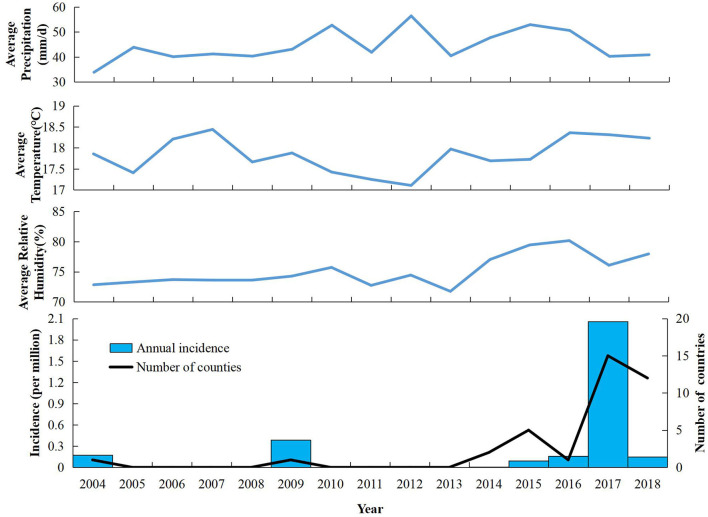
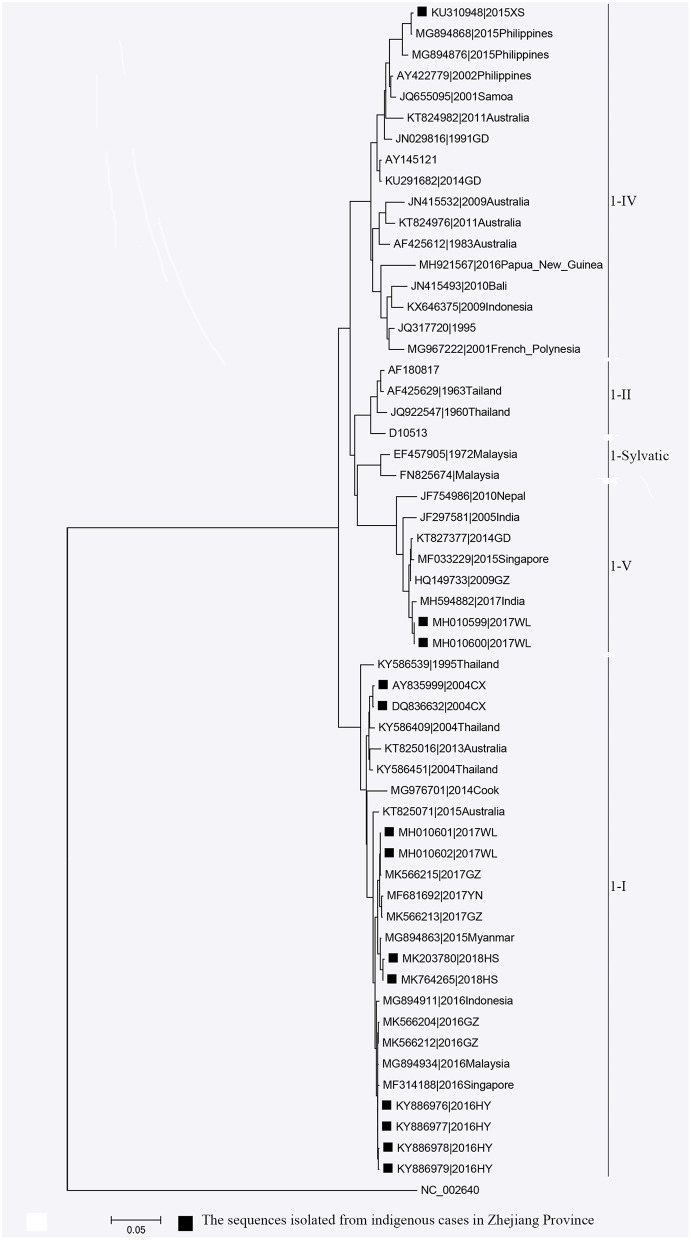
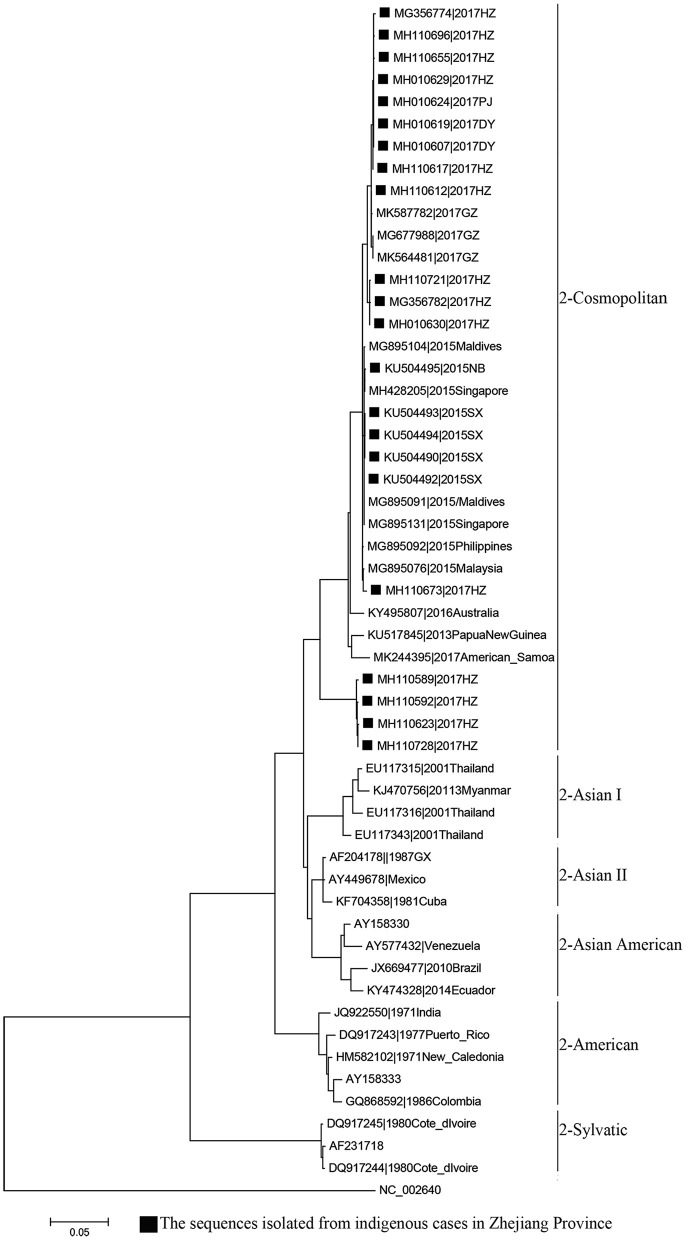
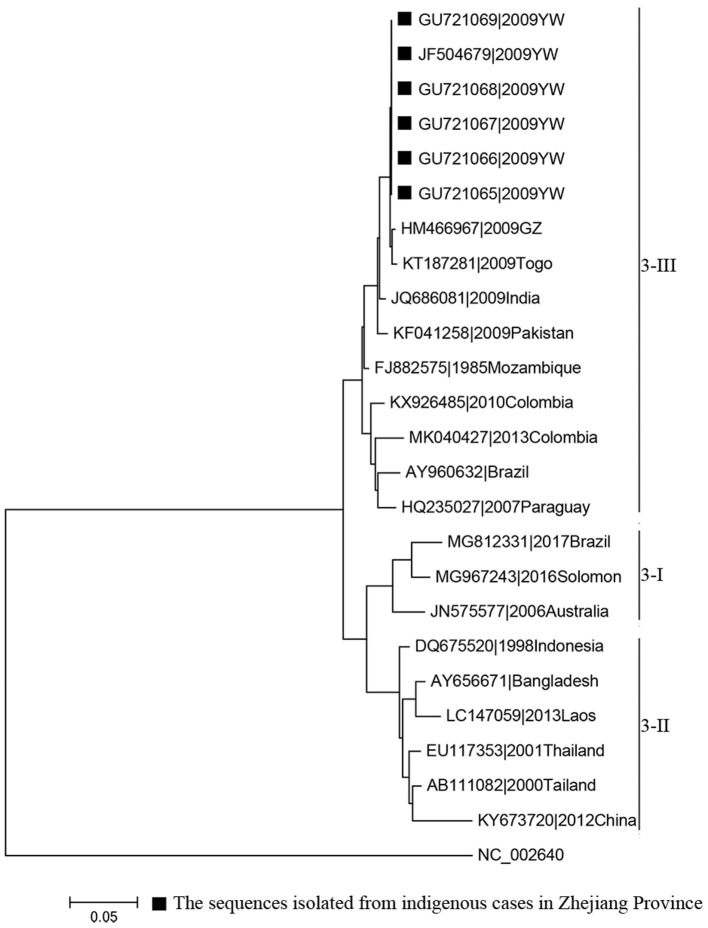
In total, 1,654 indigenous cases and 12 outbreaks, with no deaths, were reported during 2004-2018. Before 2017, all outbreaks occurred in suburban areas. During 2017-2018, five out of eight outbreaks occurred in urban areas. The median duration of outbreaks (28 days) in 2017-2018 was shortened significantly ( = 0.028) in comparison with that in 2004-2016 (71 days). The median onset-visiting time, visiting-confirmation time, and onset-confirmation time was 1, 3, and 4 days, respectively. The DENV serotypes responsible for autochthonous transmission in Zhejiang Province were DENV 1, DENV 2, and DENV 3, with DENV 1 being the most frequently reported. Southeast Asia was the predominant source of indigenous infection.
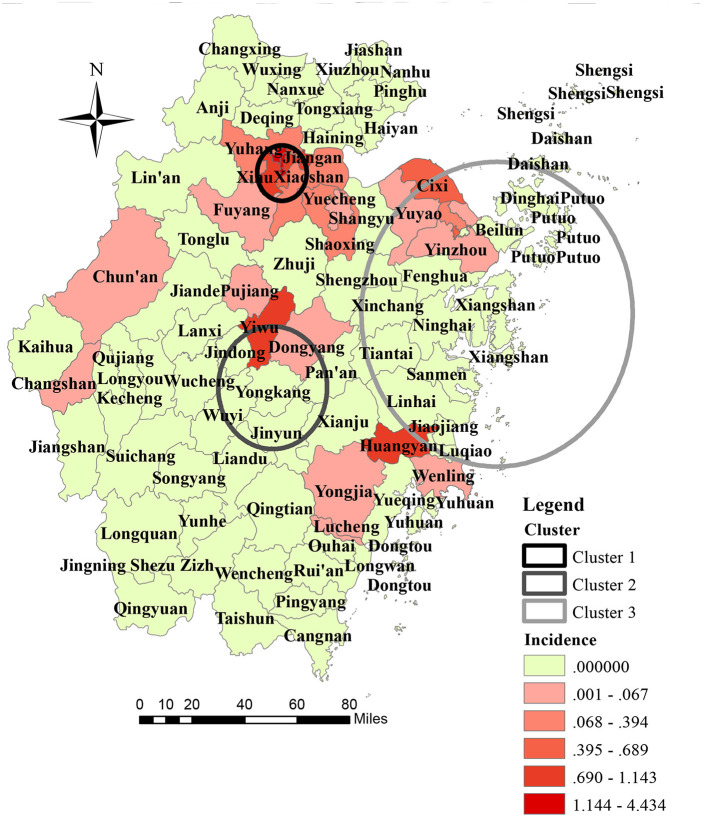
Zhejiang Province witnessed an increase in the frequency, incidence, and geographic expansion of indigenous Dengue cases in recent years. The more developed coastal and central region of Zhejiang Province was impacted the most.
2014 年至 2018 年,浙江省每年都发生登革热病毒(DENV)本地传播,成为一个新出现的公共卫生问题。我们对 DENV 的本地传播进行了特征描述,并追溯了感染源,以进一步控制和预防登革热。
采用描述性和时空聚类分析方法对 DENV 的本地传播进行流行病学特征描述,采用分子流行病学方法确定感染源。
2004 年至 2018 年共报告了 1654 例本地病例和 12 起暴发,无死亡病例。在 2017 年之前,所有暴发均发生在郊区。2017-2018 年,8 起暴发中有 5 起发生在城区。2017-2018 年暴发的中位持续时间(28 天)明显缩短(=0.028),与 2004-2016 年(71 天)相比。2017-2018 年的中位发病就诊时间、就诊确认时间和发病确认时间分别为 1、3 和 4 天。浙江省本地传播的 DENV 血清型为 DENV-1、DENV-2 和 DENV-3,其中 DENV-1 报告最多。东南亚是本地感染的主要来源。
近年来,浙江省本地登革热病例的频率、发病率和地理范围都有所增加,沿海和中部发达地区受影响最大。