Wang Yu, Huang Jin-Tian
College of Material Science and Art Design, Inner Mongolia Agriculture University China
RSC Adv. 2021 Nov 12;11(58):36607-36616. doi: 10.1039/d1ra06865b. eCollection 2021 Nov 10.
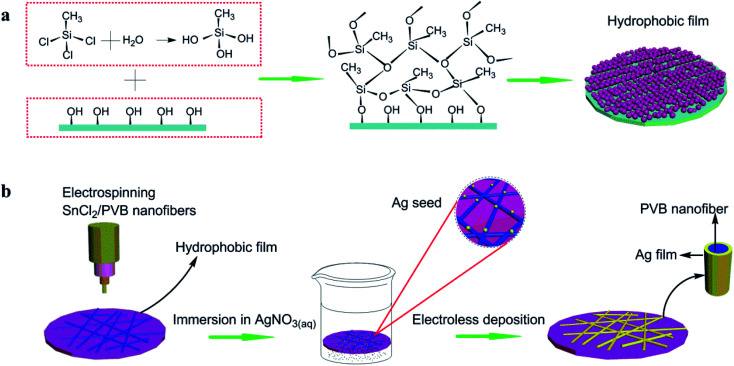
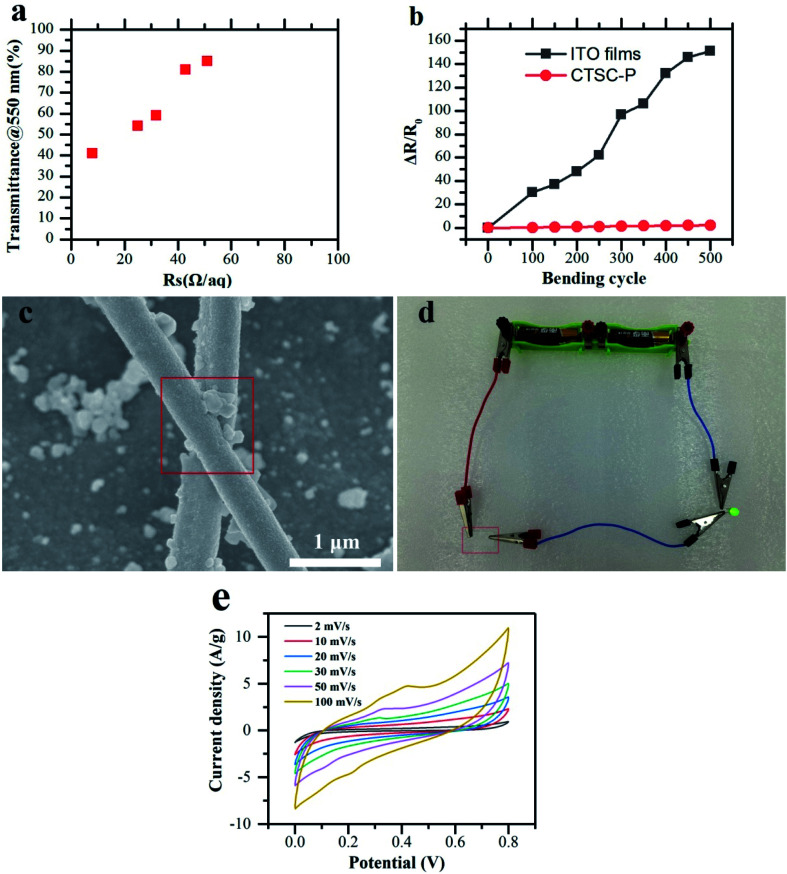
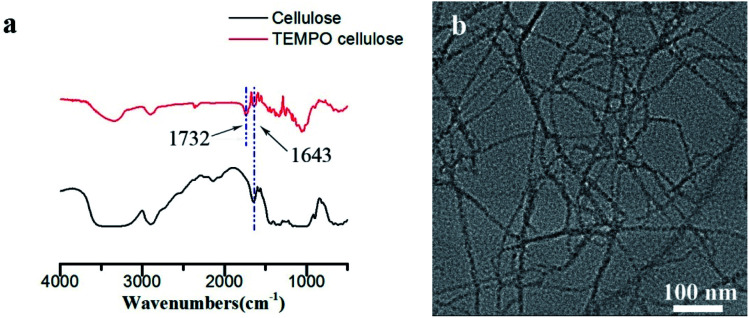
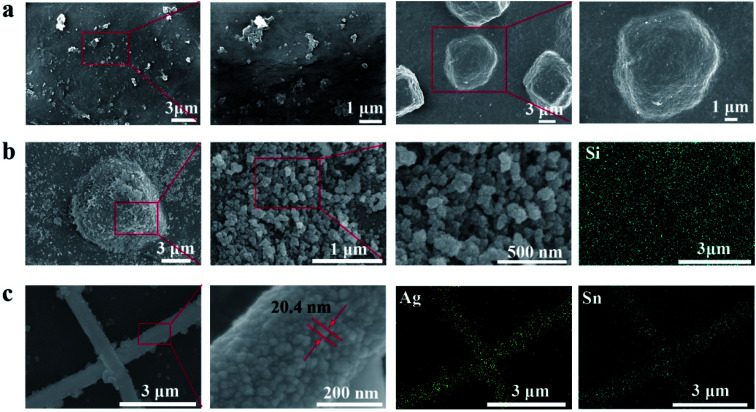
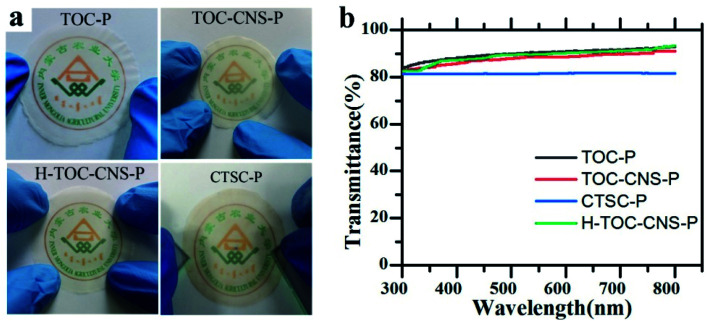
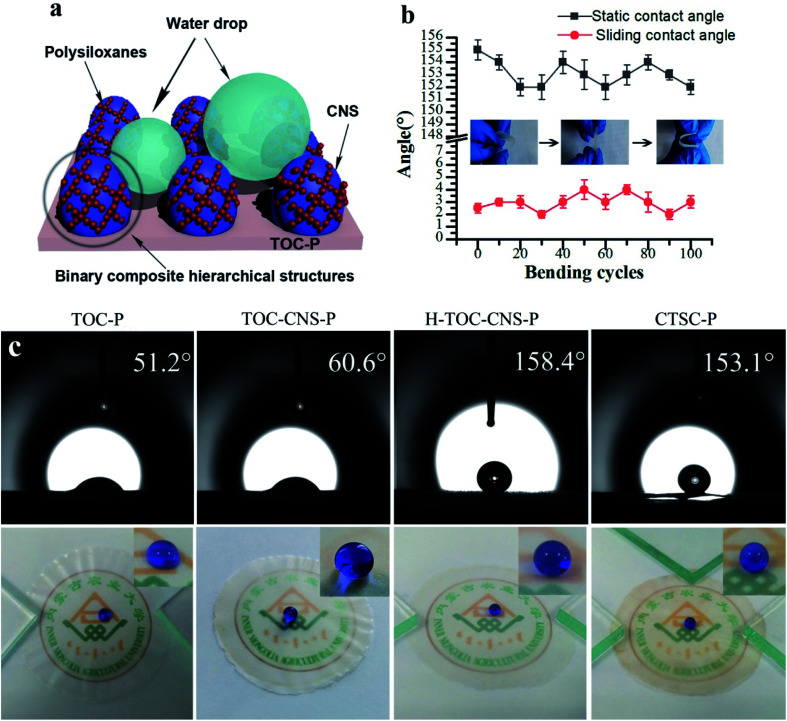
Cellulose has shown encouraging properties in many applications, such as energy storage, optical instrument and catalysis. In particular, cellulose films have shown potential applications in flexible transparent devices and are expected to replace indium-tin oxide (ITO). However, cellulose is highly hydrophilic and electrically insulating, which limits its scope of application. In this study, the conductivity ( = 40.3 Ω sq), transparency (81.4%) and superhydrophobicity (static contact angle = 153.2°, sliding angle = 4.1°) of cellulose film (CTSC-P) are reported. First, before suction filtration to prepare the film, cellulose was oxidized to improve dispersibility and mechanical strength. Then, the obtained film was hydrophobically modified by grafting long-chain silanes on the surface, followed by electrospinning and electroless plating. In general, the design is an ingenious way to manufacture transparent, conductive, and super-hydrophobic films in the future, and is transformed into a flexible electronic technically feasible device.
纤维素在许多应用中都展现出了令人鼓舞的特性,如能量存储、光学仪器和催化等领域。特别是,纤维素薄膜在柔性透明器件中已显示出潜在应用,有望取代铟锡氧化物(ITO)。然而,纤维素具有高度亲水性且电绝缘,这限制了其应用范围。在本研究中,报道了纤维素薄膜(CTSC-P)的电导率( = 40.3 Ω/sq)、透明度(81.4%)和超疏水性(静态接触角 = 153.2°,滑动角 = 4.1°)。首先,在抽滤制备薄膜之前,对纤维素进行氧化以提高其分散性和机械强度。然后,通过在表面接枝长链硅烷对所得薄膜进行疏水改性,接着进行静电纺丝和化学镀。总体而言,该设计是未来制造透明、导电和超疏水薄膜的一种巧妙方法,并有望转化为技术上可行的柔性电子器件。