Pontiggia Luca, Van Hengel Ingmar Aj, Klar Agnes, Rütsche Dominic, Nanni Monica, Scheidegger Andreas, Figi Sandro, Reichmann Ernst, Moehrlen Ueli, Biedermann Thomas
Tissue Biology Research Unit, Department of Pediatric Surgery, University Children's Hospital Zurich, University of Zurich, Zurich, Switzerland.
Children's Research Center, University Children's Hospital Zurich, Zurich, Switzerland.
J Tissue Eng. 2022 Apr 25;13:20417314221088513. doi: 10.1177/20417314221088513. eCollection 2022 Jan-Dec.
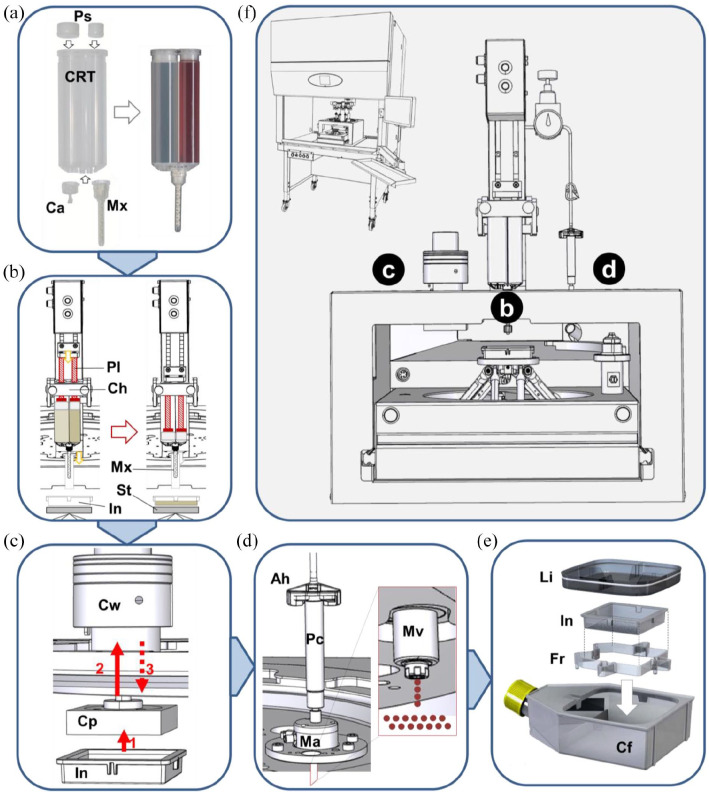
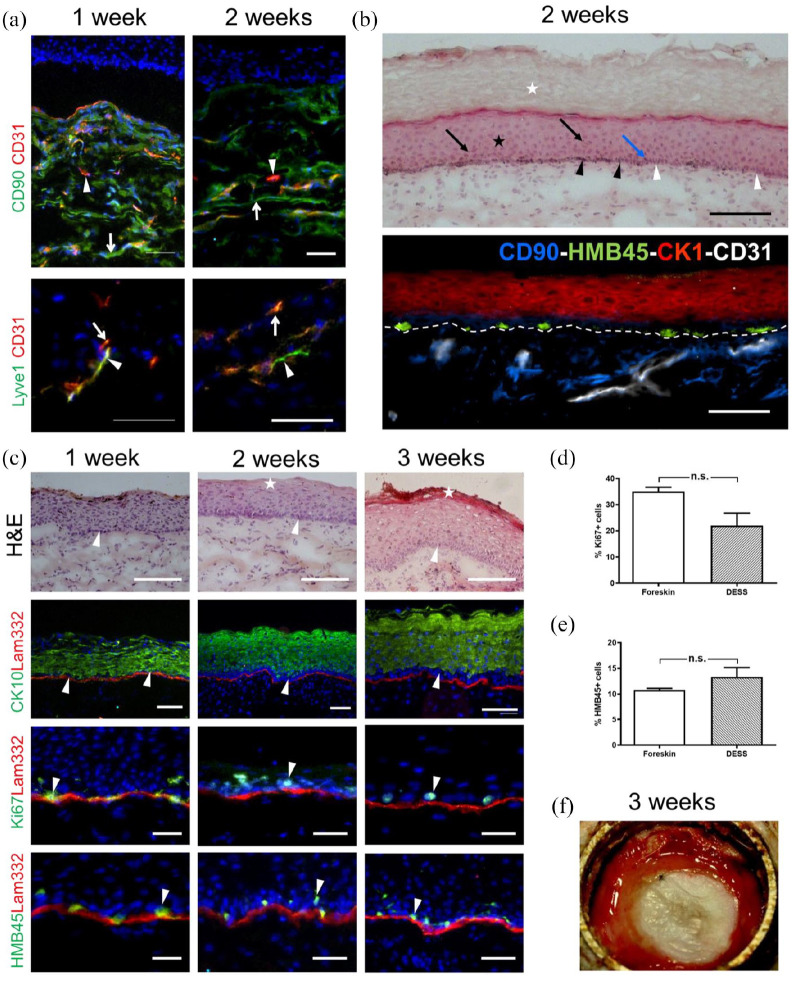
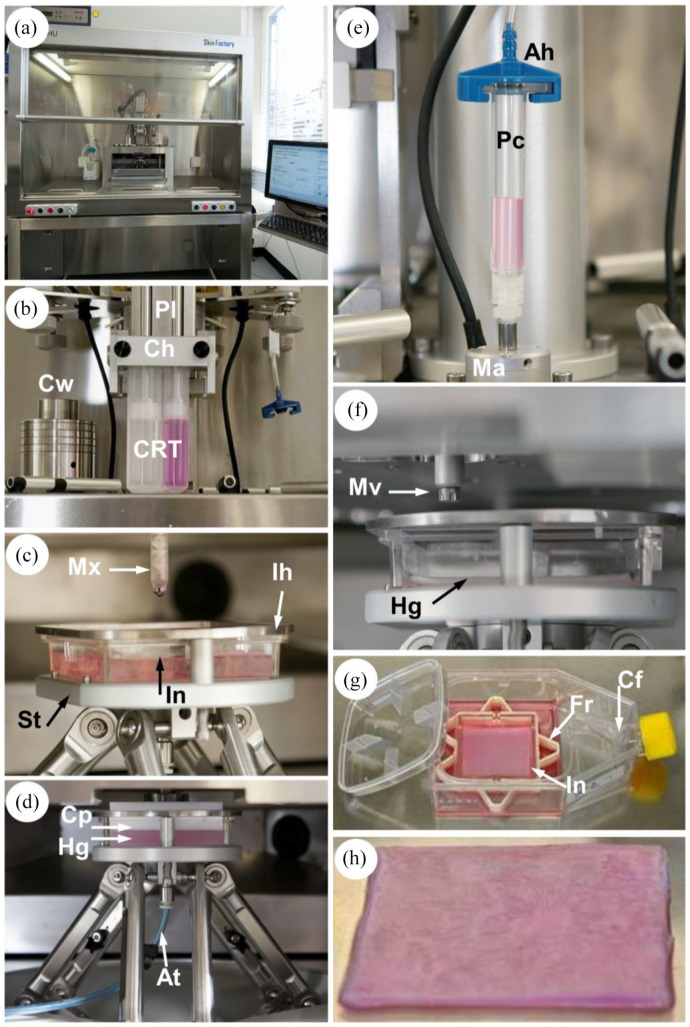
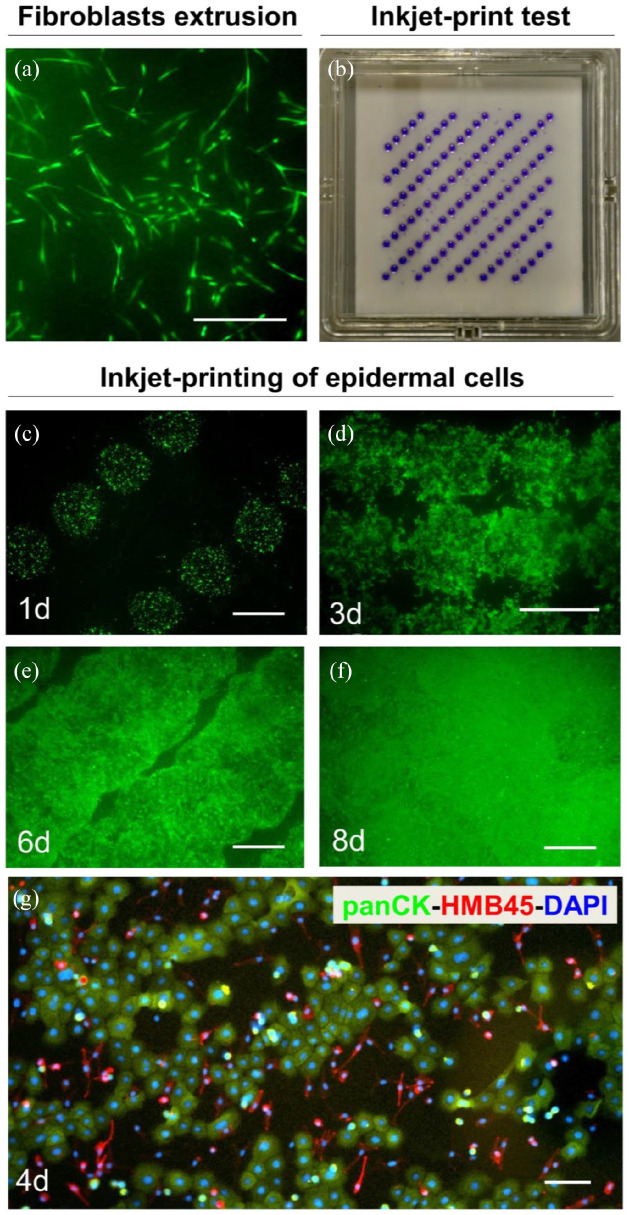
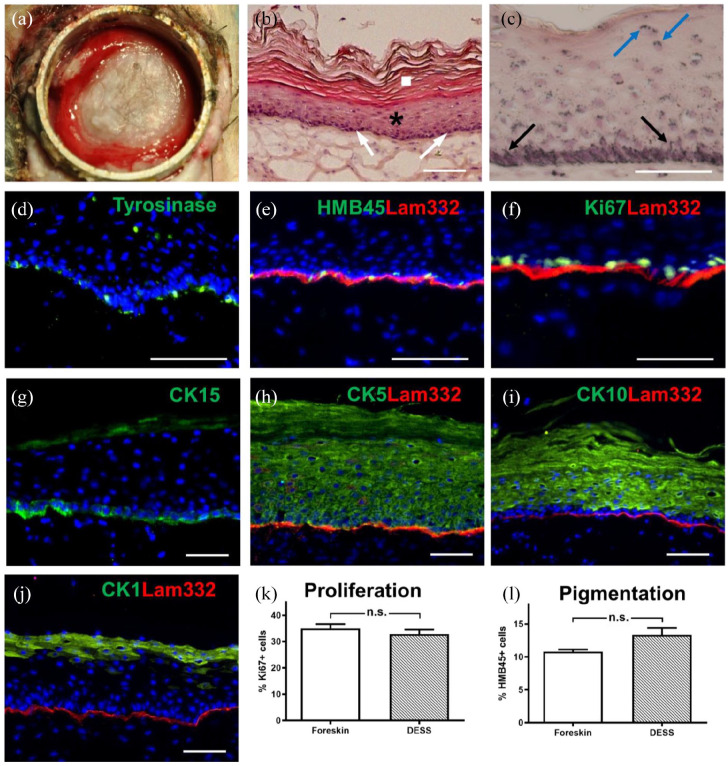
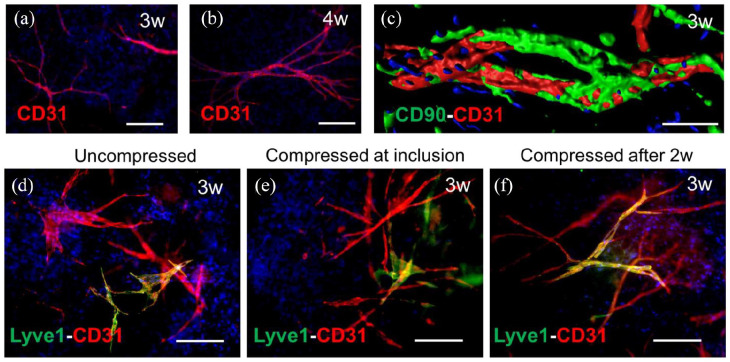
Extensive availability of engineered autologous dermo-epidermal skin substitutes (DESS) with functional and structural properties of normal human skin represents a goal for the treatment of large skin defects such as severe burns. Recently, a clinical phase I trial with this type of DESS was successfully completed, which included patients own keratinocytes and fibroblasts. Yet, two important features of natural skin were missing: pigmentation and vascularization. The first has important physiological and psychological implications for the patient, the second impacts survival and quality of the graft. Additionally, accurate reproduction of large amounts of patient's skin in an automated way is essential for upscaling DESS production. Therefore, in the present study, we implemented a new robotic unit (called SkinFactory) for 3D bioprinting of pigmented and pre-vascularized DESS using normal human skin derived fibroblasts, blood- and lymphatic endothelial cells, keratinocytes, and melanocytes. We show the feasibility of our approach by demonstrating the viability of all the cells after printing in vitro, the integrity of the reconstituted capillary network in vivo after transplantation to immunodeficient rats and the anastomosis to the vascular plexus of the host. Our work has to be considered as a proof of concept in view of the implementation of an extended platform, which fully automatize the process of skin substitution: this would be a considerable improvement of the treatment of burn victims and patients with severe skin lesions based on patients own skin derived cells.
具有正常人皮肤功能和结构特性的工程化自体真皮 - 表皮皮肤替代物(DESS)的广泛可得性是治疗大面积皮肤缺损(如严重烧伤)的目标。最近,一项针对这种类型DESS的I期临床试验成功完成,该试验纳入了患者自身的角质形成细胞和成纤维细胞。然而,天然皮肤的两个重要特征缺失了:色素沉着和血管形成。第一个特征对患者具有重要的生理和心理影响,第二个特征影响移植物的存活和质量。此外,以自动化方式精确复制大量患者皮肤对于扩大DESS生产至关重要。因此,在本研究中,我们采用了一种新的机器人单元(称为SkinFactory),用于使用正常人皮肤来源的成纤维细胞、血液和淋巴管内皮细胞、角质形成细胞和黑素细胞对色素沉着和预血管化的DESS进行3D生物打印。我们通过证明打印后体外所有细胞的活力、移植到免疫缺陷大鼠体内后重建毛细血管网络的完整性以及与宿主血管丛的吻合,展示了我们方法的可行性。鉴于实施一个扩展平台,我们的工作必须被视为一个概念验证,该平台将使皮肤替代过程完全自动化:这将是基于患者自身皮肤来源细胞对烧伤患者和严重皮肤损伤患者治疗的一个重大改进。