Widyarman Armelia Sari, Udawatte Nadeeka S, Roeslan Moehamad Orliando, Rizal Muhammad Ihsan, Richi Mario, Kusnoto Joko, Seneviratne Chaminda Jayampath
Department of Microbiology, Faculty of Dentistry, Trisakti University, Jakarta, Indonesia.
Singapore Oral Microbiomics Initiative, National Dental Research Institute Singapore (NDRIS), National Dental Centre Singapore, Oral Health ACP, Duke NUS Medical School, Singapore.
J Oral Microbiol. 2022 Apr 25;14(1):2067103. doi: 10.1080/20002297.2022.2067103. eCollection 2022.
This prospective clinical study aim was to analyze the effect of the probiotic Lactobacillus reuteri Prodentis lozenges on salivary microbiome of subjects wearing fixed orthodontic appliances.
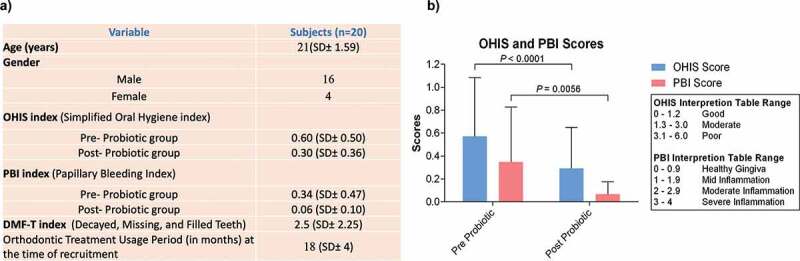
Saliva samples were collected prior to consumption and 14th-day post probiotic lozenges consumption (n=40, age 18-23). Oral hygiene index-score (OHI-S) and papilla bleeding index (PBI) were recorded. The salivary microbiome was profiled by next-generation sequencing using the V3-V4 region of 16S-rRNA. Microbial composition, diversity and taxonomic biomarkers were analysed in comparison to probiotic intervention and the clinical characteristics of the cohort using standard bioinformatics tools.
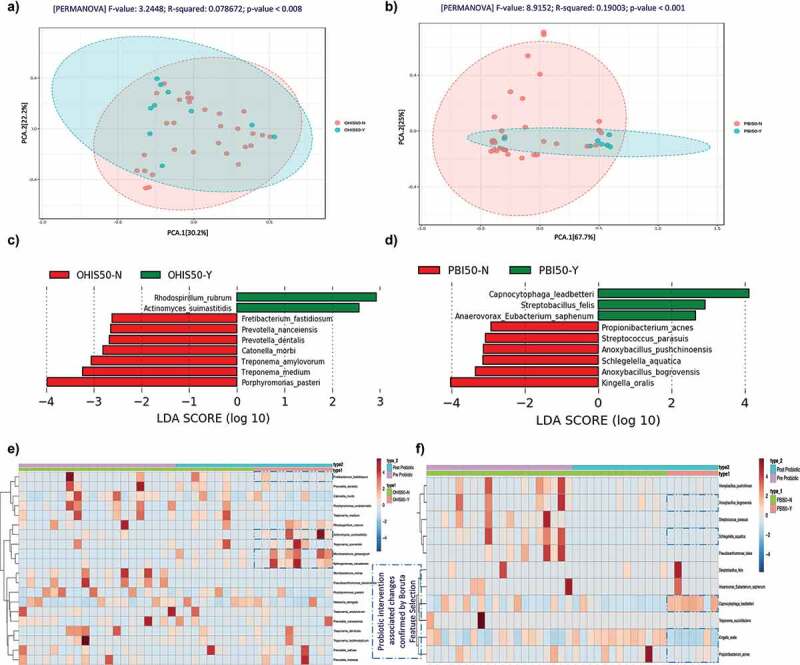
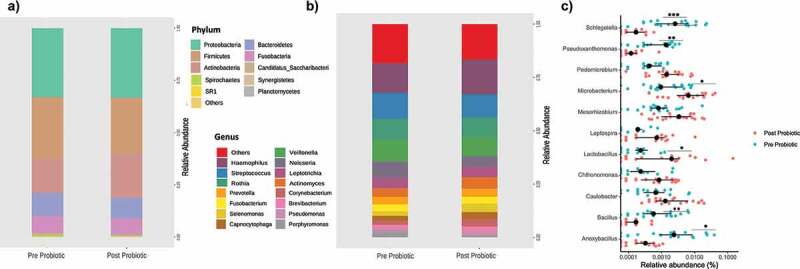
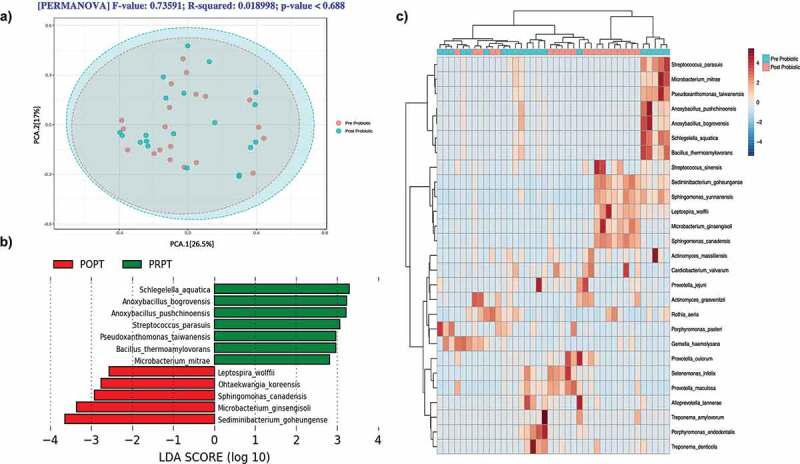
The diversity and bacterial community structures did not change significantly in salivary microbiome of periodontally healthy subjects during short-term probiotic intervention. Probiotic consumption correlated with reduction of OHI and PBI scores (50% reduction of scores, P<0.001). The reduction of clinical indices was evident in conjunction with significantly reduced abundance of oral pathogens, such as Porphyromonas pasteri, Treponema sp., Fretibacterium fastidiosum, Kingella oralis and Propionibacterium acnes.
Short-term probiotic intervention helped maintaining good oral health in patients undergoing fixed orthodontic therapy. Although overall oral microbiome structure remained largely unchanged, a significant alteration in the abundance of health and disease-associated species highlighted the beneficial effect of probiotic.
本前瞻性临床研究旨在分析益生菌罗伊氏乳杆菌Prodentis含片对佩戴固定正畸矫治器受试者唾液微生物群的影响。
在食用益生菌含片前及食用后第14天收集唾液样本(n = 40,年龄18 - 23岁)。记录口腔卫生指数评分(OHI-S)和龈乳头出血指数(PBI)。使用16S - rRNA的V3 - V4区域通过下一代测序对唾液微生物群进行分析。使用标准生物信息学工具,将微生物组成、多样性和分类学生物标志物与益生菌干预及队列的临床特征进行比较分析。
在短期益生菌干预期间,牙周健康受试者唾液微生物群的多样性和细菌群落结构没有显著变化。食用益生菌与OHI和PBI评分降低相关(评分降低50%,P < 0.001)。临床指标的降低与口腔病原体丰度的显著降低相关,如牙龈卟啉单胞菌、密螺旋体属、苛求纤细杆菌、口腔金氏菌和痤疮丙酸杆菌。
短期益生菌干预有助于接受固定正畸治疗的患者保持良好的口腔健康。尽管总体口腔微生物群结构基本保持不变,但与健康和疾病相关物种丰度的显著变化突出了益生菌的有益作用。