Shen Dayue, Feng Yating, Zhang Xilan, Liu Jing, Gong Le, Liao Hui, Li Rongshan
School of Pharmacy, Shanxi Medical University, Taiyuan 030001, China.
Department of Pharmacy, Fifth Hospital of Shanxi Medical University (Shanxi Provincial People's Hospital), Taiyuan 030012, China.
Evid Based Complement Alternat Med. 2022 Apr 21;2022:8251344. doi: 10.1155/2022/8251344. eCollection 2022.
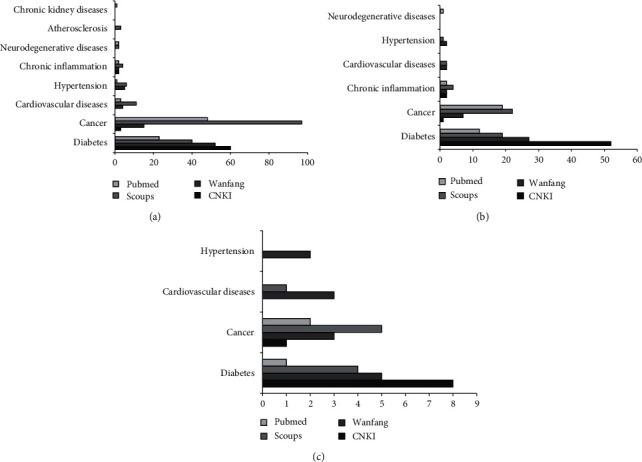
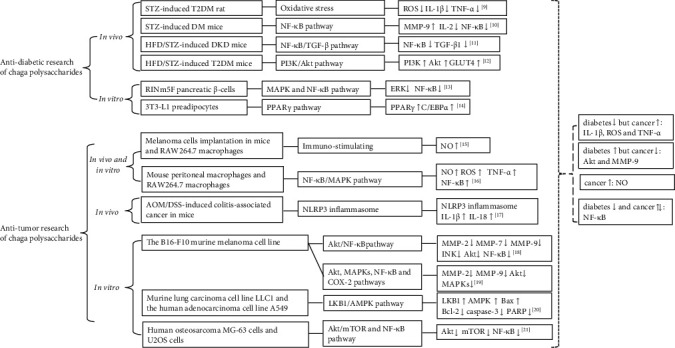
(Chaga) is a parasitic fungus that is distributed mainly in northeast China. Our literature research showed chaga polysaccharides have bilateral effects on tumor necrosis factor (TNF)- and interleukin (IL)-1 levels when they exert antitumor and antidiabetic activities. The current research tried to explore the influence of chaga extracts on inflammatory factors via macrophage polarization which has bilateral immune-regulation not only on healthy tissue homeostasis but also on pathologies.
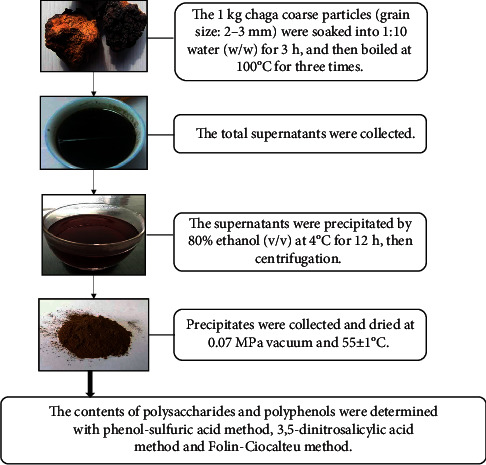
Chaga was extracted with 100°C water and precipitated with 80% ethanol. The extracts were studied on RAW264.7 macrophage at resting condition (M0) and lipopolysaccharide (LPS)-activated subtype (classic activated macrophage, M1). The IL-1, TNF-, nitric oxide (NO) level, and the protein expressions of M1 and alternative activated macrophage (M2) markers including IL-1, inducible NO synthase (iNOS), mannose receptor (CD206), and arginase (Arg)-1 were compared.
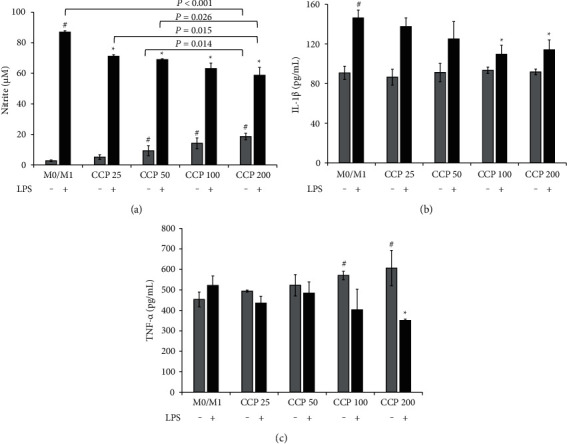
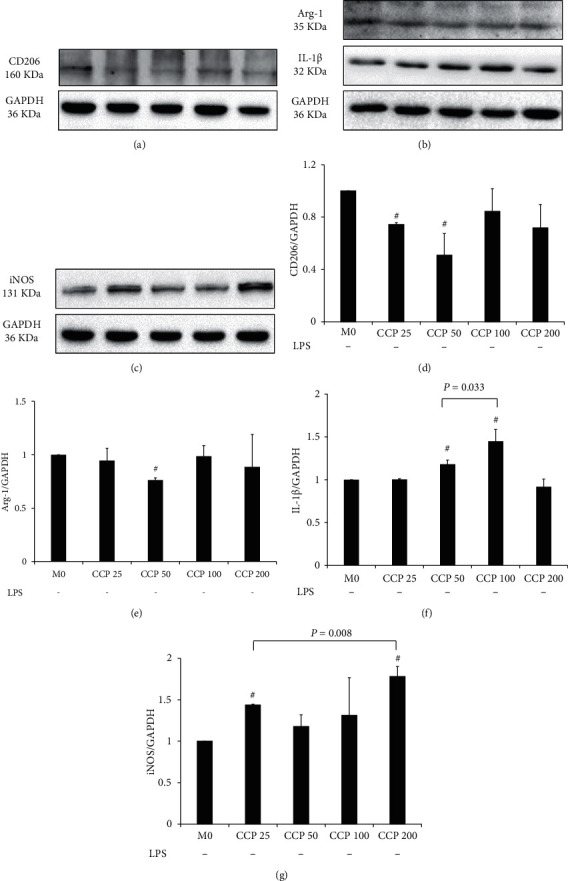
The 100 g extracts contained 13.7 g polysaccharides and 1.9 g polyphenols. Compared with M0, the 50 g/mL extracts increased NO level ( < 0.05) and decreased CD206 and Arg-1 expression significantly ( < 0.05). The extracts at 100-200 g/mL increased NO and TNF- level ( < 0.05), but increased iNOS and IL-1 expression significantly ( < 0.05). Compared with M1, the extracts decreased NO level at 25, 50, 100, and 200 g/mL and decreased IL-1 and TNF- level at 100-200 g/mL significantly ( < 0.05). At 25-200 g/mL, the extracts significantly increased CD206 and Arg-1 expression and decreased IL-1 and iNOS expression separately ( < 0.05).
Our research suggested that the bilateral effects of the chaga extracts on iNOS, IL-1 and NO level on M0/M1 macrophages might be related with chaga polysaccharides and chaga polyphenols. Some anticancer and antidiabetic research of purified chaga polysaccharides related to macrophage differentiation should be conducted further.
桦褐孔菌是一种主要分布于中国东北的寄生真菌。我们的文献研究表明,桦褐孔菌多糖在发挥抗肿瘤和抗糖尿病活性时,对肿瘤坏死因子(TNF)和白细胞介素(IL)-1水平具有双向作用。当前研究试图通过巨噬细胞极化来探索桦褐孔菌提取物对炎症因子的影响,巨噬细胞极化不仅对健康组织稳态而且对病理状态都具有双向免疫调节作用。
用100°C水提取桦褐孔菌,并用80%乙醇沉淀。对提取物在静息状态(M0)的RAW264.7巨噬细胞和脂多糖(LPS)激活的亚型(经典激活巨噬细胞,M1)上进行研究。比较IL-1、TNF-、一氧化氮(NO)水平以及M1和替代激活巨噬细胞(M2)标志物(包括IL-1、诱导型NO合酶(iNOS)、甘露糖受体(CD206)和精氨酸酶(Arg)-1)的蛋白表达。
100 g提取物含有13.7 g多糖和1.9 g多酚。与M0相比,50 g/mL提取物使NO水平升高(<0.05),并显著降低CD206和Arg-1表达(<0.05)。100 - 200 g/mL的提取物使NO和TNF-水平升高(<0.05),但显著升高iNOS和IL-1表达(<0.05)。与M1相比,25、50、100和200 g/mL的提取物使NO水平降低,100 - 200 g/mL的提取物使IL-1和TNF-水平显著降低(<0.05)。在25 - 200 g/mL时,提取物分别显著增加CD206和Arg-1表达,并降低IL-1和iNOS表达(<0.05)。
我们的研究表明,桦褐孔菌提取物对M0/M1巨噬细胞上的iNOS、IL-1和NO水平的双向作用可能与桦褐孔菌多糖和桦褐孔菌多酚有关。应进一步开展一些与巨噬细胞分化相关的纯化桦褐孔菌多糖的抗癌和抗糖尿病研究。