School of Food & Agriculture, Rogers Hall, University of Maine, Orono, ME 04469, USA.
College of Education for Women, University of Baghdad, Baghdad 17001, Iraq.
Molecules. 2022 Jun 30;27(13):4207. doi: 10.3390/molecules27134207.
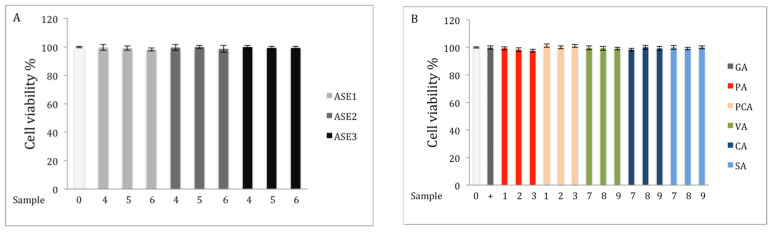
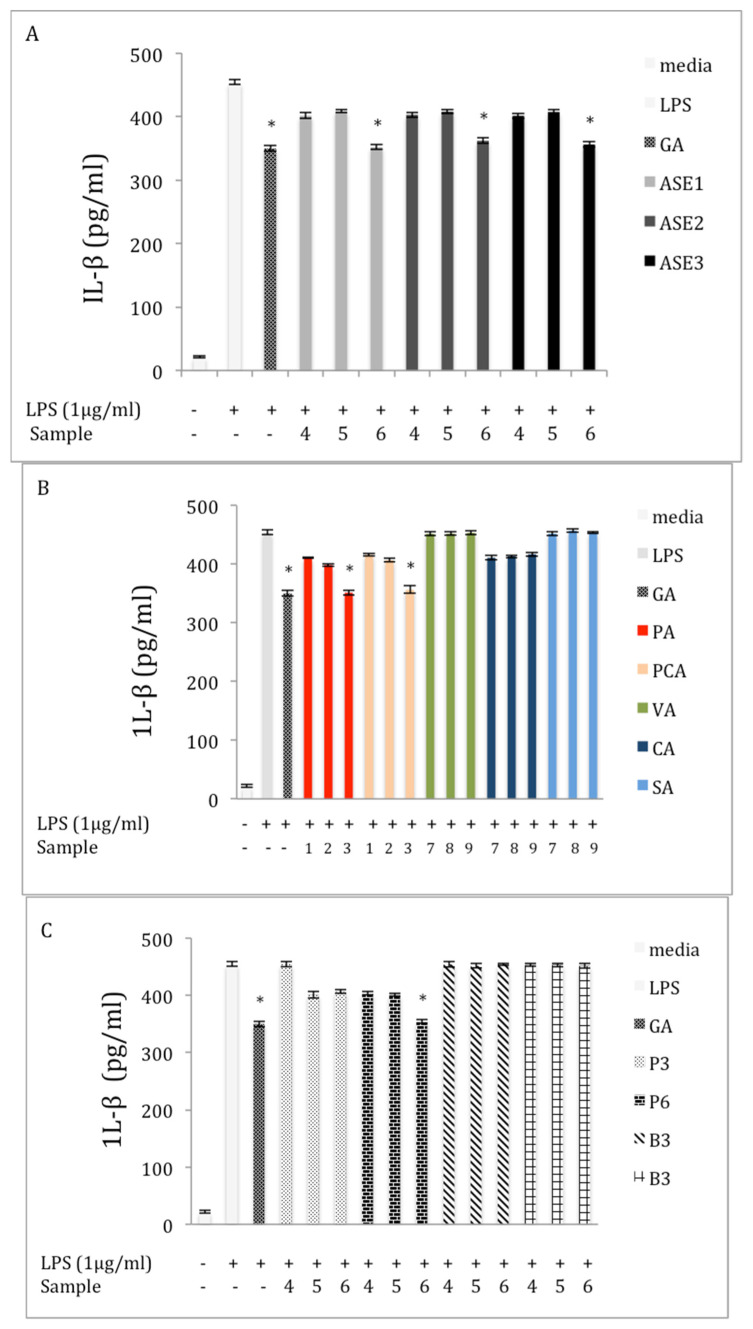
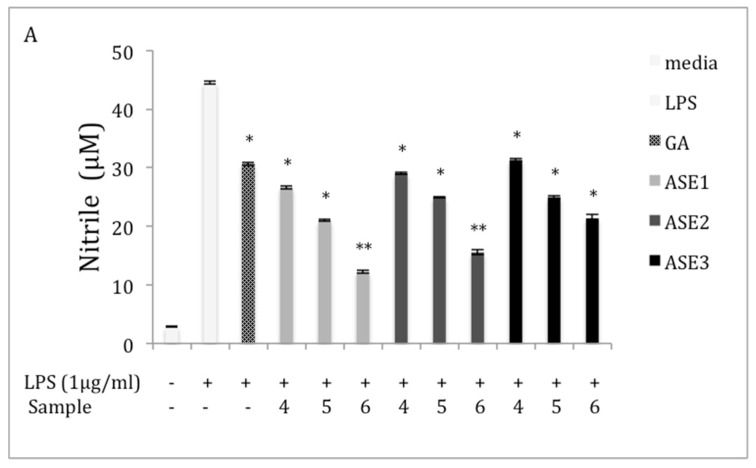
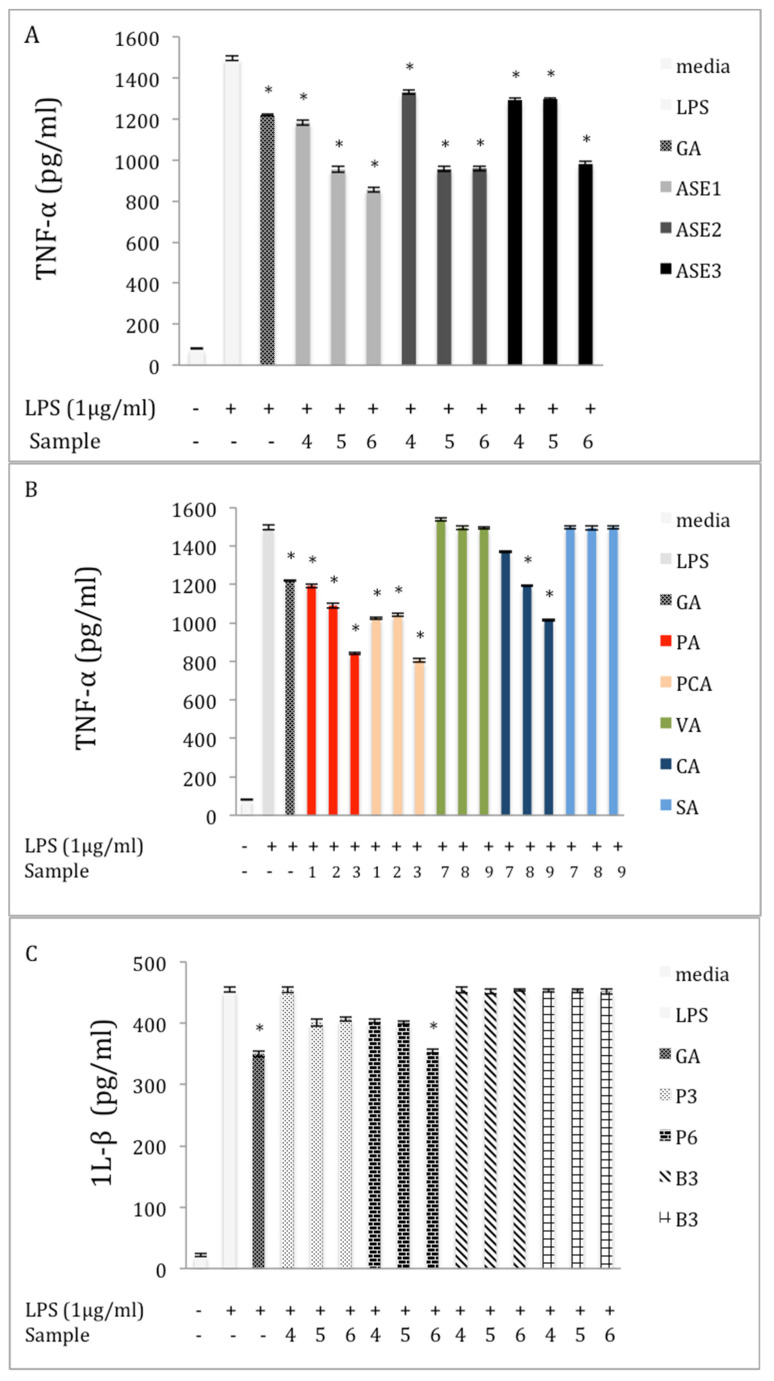
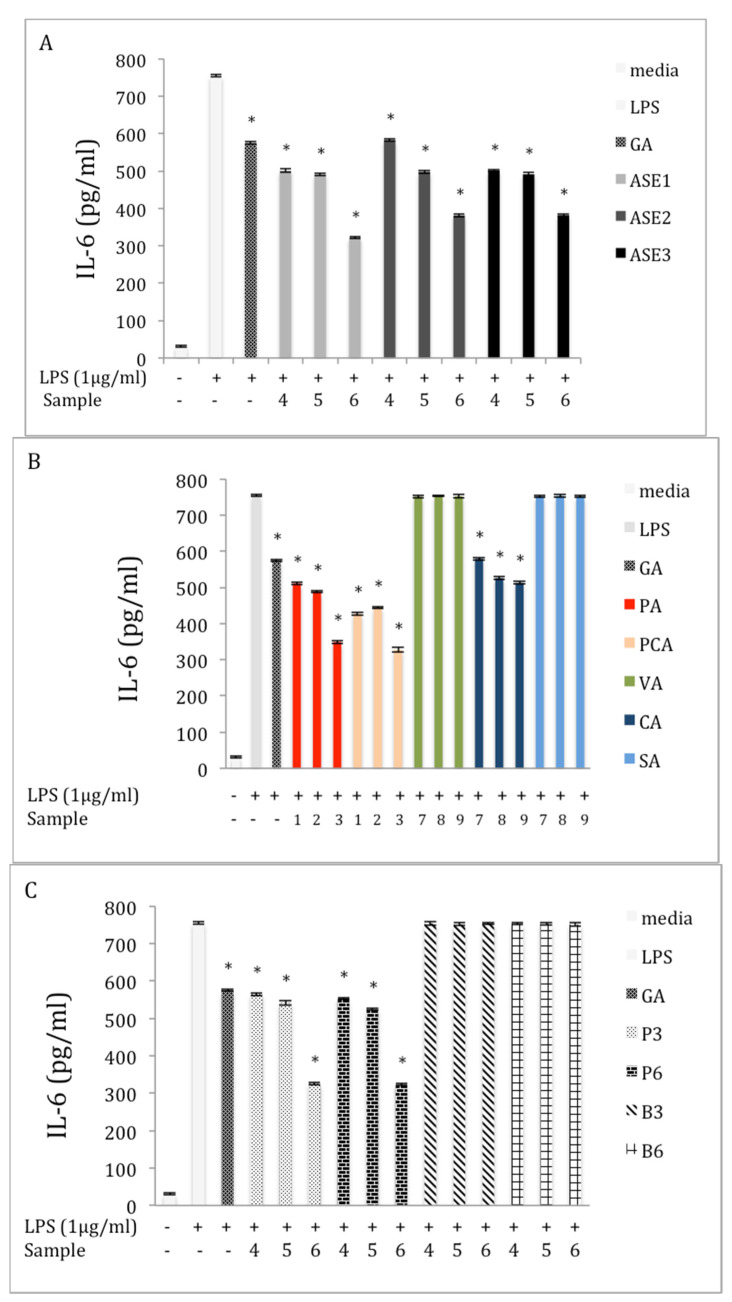
Chaga, a sclerotia formed by the fungus, has been widely recognized for a number of medicinal properties. Although numerous scientific investigations have been published describing various biological activities of chaga from different geographical locations, little work has focused on chaga harvested in the USA or extraction techniques to maximize anti-inflammatory properties. The aim of this study was to investigate the anti-inflammatory properties of chaga collected in Maine (USA) extracted using traditional aqueous (hot water steeping) methods against lipopolysaccharide (LPS)-induced RAW 264.7 macrophages. Chaga extracts obtained from both conventional (ethanol/water) extraction methods and an accelerated solvent extraction method (ASE) at optimized conditions were compared to aqueous extracts (tea) obtained from chaga in the powder form (P) and powder form in tea bags (B) based on their effect on both nitric oxide (NO) production and pro-inflammatory cytokine expression, in particular, the expression of TNF-α, interleukin-6 (IL-6), and interleukin-β (IL-1β). Phenolic acid extracts from chaga and individual phenolic acid standards were also investigated for their effect on the same parameters. Results indicated that various chaga extracts have significant anti-inflammatory activity on LPS-stimulated RAW 264.7 cells. The inhibitory effect was through a decrease in the production of NO and the downregulation of TNF-α, IL-6, and IL-1β in RAW 264.7 macrophages. ASE1 (novel, optimized ethanol/water extraction) and P6 (six-minute steeping of powder in 100 °C water) extracts showed the highest inhibitory activity on NO production and on the expression of the inflammatory cytokines, compared to extracts obtained by conventional extraction methods.
桦褐孔菌,一种由真菌形成的菌核,具有多种药用特性,已得到广泛认可。尽管已经发表了许多科学研究,描述了来自不同地理位置的桦褐孔菌的各种生物活性,但很少有工作关注在美国收获的桦褐孔菌或提取技术以最大限度地发挥抗炎特性。本研究旨在研究从缅因州(美国)采集的桦褐孔菌的抗炎特性,该桦褐孔菌使用传统的水提取(热水浸泡)方法提取,以对抗脂多糖(LPS)诱导的 RAW 264.7 巨噬细胞。比较了从传统(乙醇/水)提取方法和优化条件下的加速溶剂提取方法(ASE)获得的桦褐孔菌提取物与从粉末形式(P)和茶包形式(B)的桦褐孔菌获得的水提取物(茶),基于它们对一氧化氮(NO)产生和促炎细胞因子表达的影响,特别是 TNF-α、白细胞介素-6(IL-6)和白细胞介素-β(IL-1β)的表达。还研究了桦褐孔菌的酚酸提取物和个别酚酸标准品对相同参数的影响。结果表明,各种桦褐孔菌提取物对 LPS 刺激的 RAW 264.7 细胞具有显著的抗炎活性。抑制作用是通过降低 NO 的产生和下调 RAW 264.7 巨噬细胞中 TNF-α、IL-6 和 IL-1β的表达来实现的。与传统提取方法获得的提取物相比,ASE1(新型、优化的乙醇/水提取)和 P6(在 100°C 水中将粉末浸泡六分钟)提取物对 NO 产生和炎症细胞因子的表达具有最高的抑制活性。