Pereira Antia G, Garcia-Perez Pascual, Cassani Lucia, Chamorro Franklin, Cao Hui, Barba Francisco J, Simal-Gandara Jesus, Prieto Miguel A
Universidade de Vigo, Nutrition and Bromatology Group, Department of Analytical Chemistry and Food Science, Faculty of Science, E-32004 Ourense, Spain.
Department for Sustainable Food Process, Università Cattolica del Sacro Cuore, Via Emilia Parmense 84, 29122 Piacenza, Italy.
Food Chem X. 2022 Feb 17;13:100258. doi: 10.1016/j.fochx.2022.100258. eCollection 2022 Mar 30.
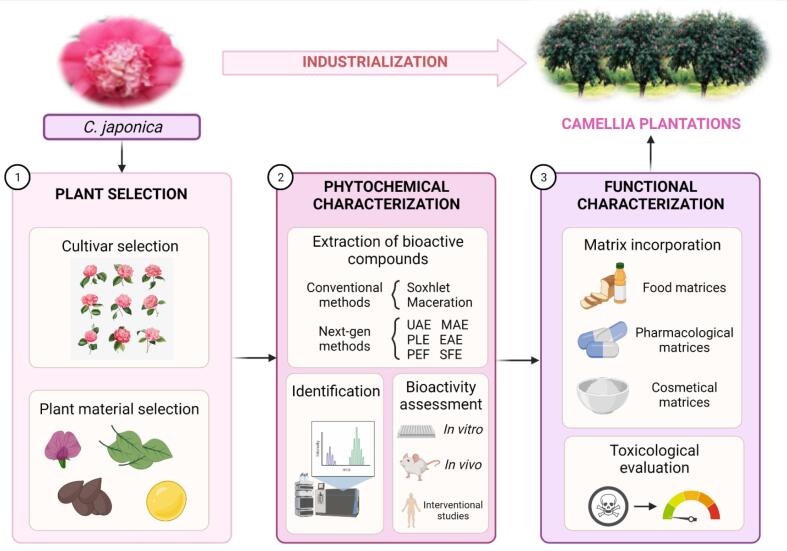
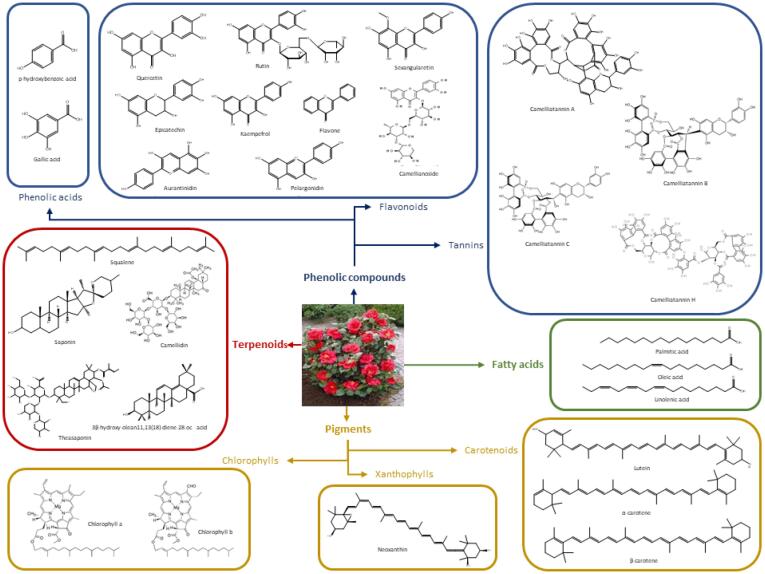
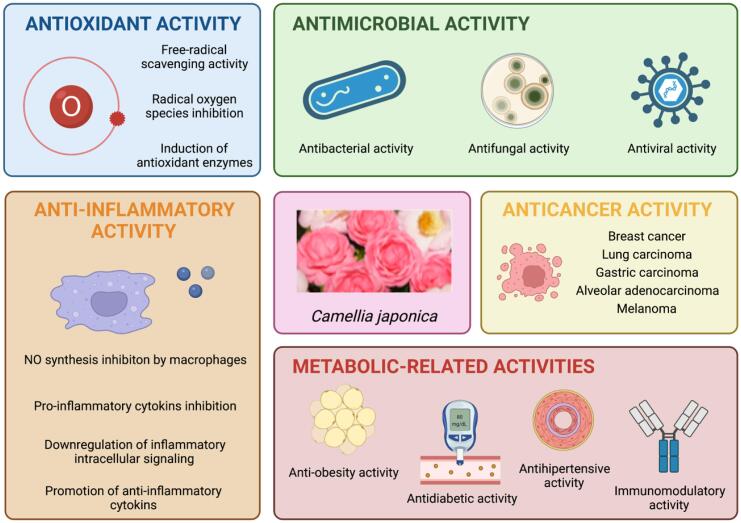
In response to the increased popularity of medicinal plants, a number of conservation groups are recommending the investigation on poorly characterized and widely distributed species, as it is the case of camellias. In particular, L. is a widespread species found in Galicia (NW Spain), where it has been largely exploited with ornamental purposes. Recent findings on its phytochemical characterization showed thousands of bioactive ingredients, mostly represented by phenolic compounds, together with terpenoids, and fatty acids. These molecules present associated biological activities, acting as antioxidant, antimicrobial, anti-inflammatory, and anticancer agents. This review is aimed at describing the main bioactive compounds of , as well as the health-enhancing properties attributed to this medicinal plant. Novel strategies are needed to implement an efficient industrialization process for , ranging from small-scale approaches to the establishment of large plantations, thus involving important sectors, such as the food, pharmaceutical and cosmetic industries.
随着药用植物越来越受欢迎,一些保护组织建议对特征描述不足且分布广泛的物种进行调查,山茶花就是这样的例子。特别是,L. 是一种在加利西亚(西班牙西北部)广泛分布的物种,在那里它主要被用于观赏目的而遭到大量开发。最近关于其植物化学特征的研究结果表明,它含有数千种生物活性成分,主要以酚类化合物、萜类化合物和脂肪酸为代表。这些分子具有相关的生物活性,可作为抗氧化剂、抗菌剂、抗炎剂和抗癌剂。本综述旨在描述L. 的主要生物活性化合物,以及这种药用植物的健康促进特性。需要新的策略来实施L. 的高效产业化进程,从小规模方法到建立大型种植园,从而涉及食品、制药和化妆品等重要行业。