Institut Pasteur, Université Paris Cité, INSERM UMR1222, Unit of Antibodies in Therapy and Pathology, Paris, France.
Laboratoire Colloïdes et Matériaux Divisés (LCMD), ESPCI Paris, PSL Research University, CNRS UMR8231 Chimie Biologie Innovation, Paris, France.
J Clin Invest. 2022 Jun 15;132(12). doi: 10.1172/JCI153580.
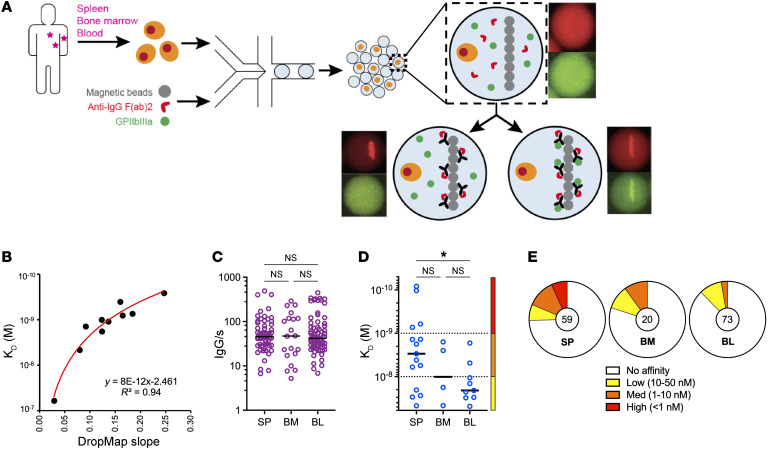
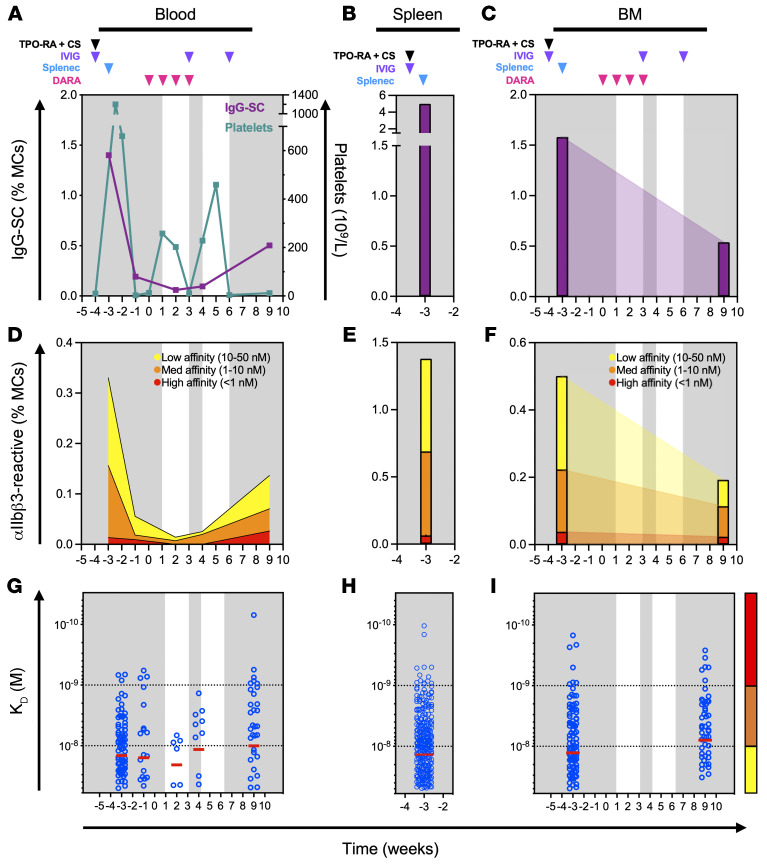
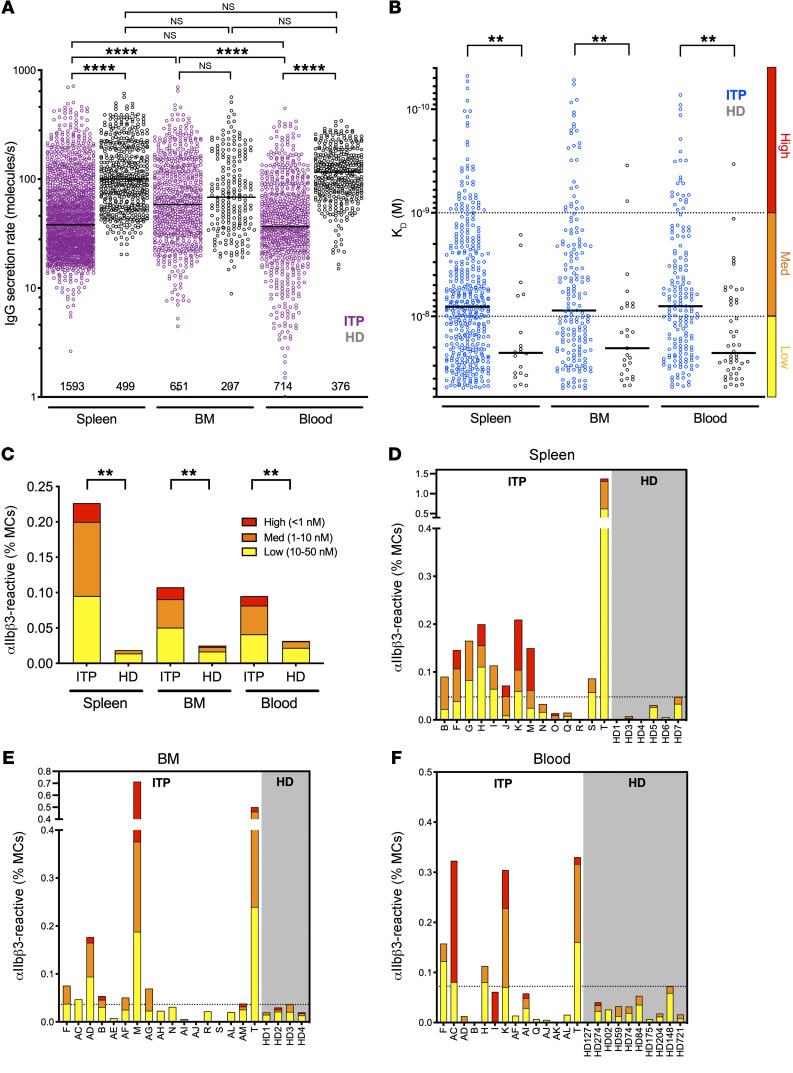
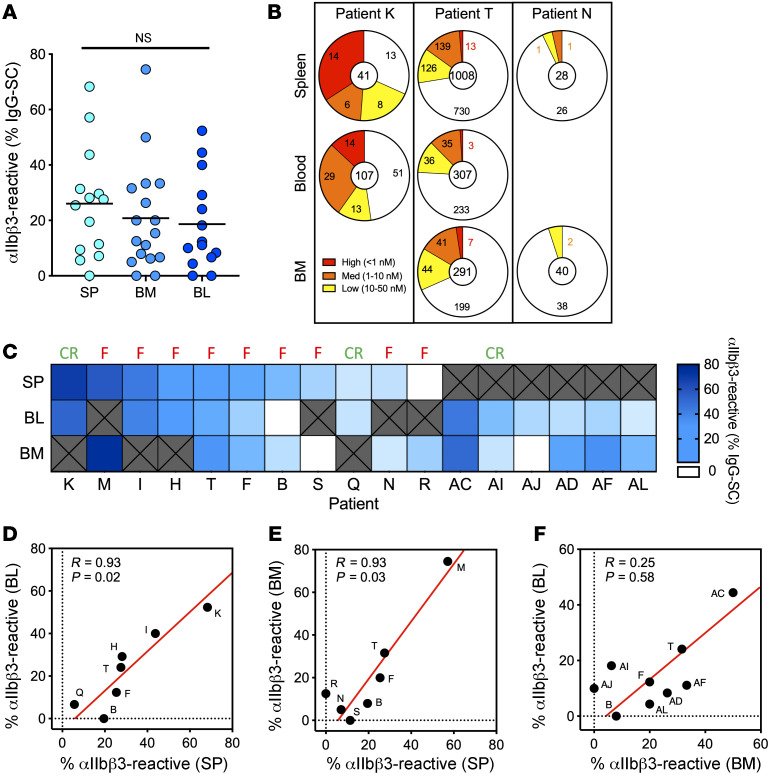
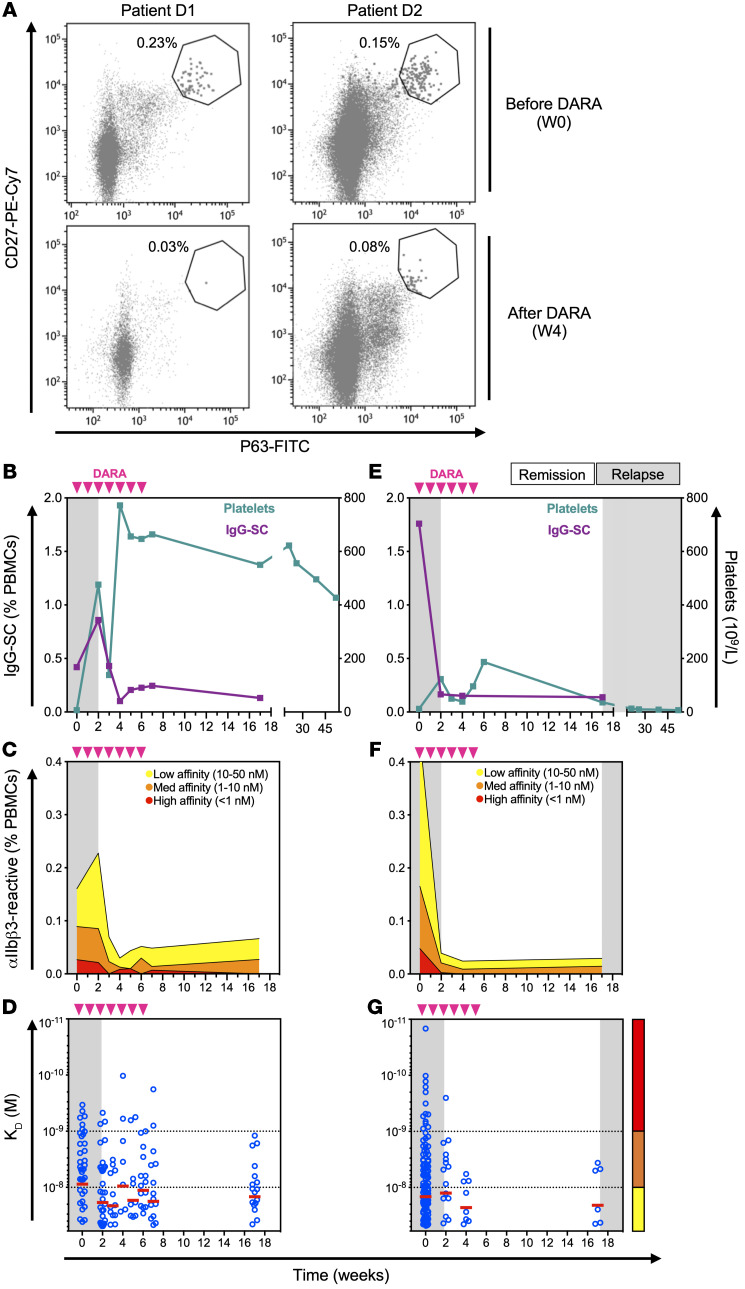
The major therapeutic goal for immune thrombocytopenic purpura (ITP) is to restore normal platelet counts using drugs to promote platelet production or by interfering with mechanisms responsible for platelet destruction. Eighty percent of patients with ITP possess anti-integrin αIIbβ3 IgG autoantibodies that cause platelet opsonization and phagocytosis. The spleen is considered the primary site of autoantibody production by autoreactive B cells and platelet destruction. The immediate failure in approximately 50% of patients to recover a normal platelet count after anti-CD20 rituximab-mediated B cell depletion and splenectomy suggests that autoreactive, rituximab-resistant, IgG-secreting B cells (IgG-SCs) reside in other anatomical compartments. We analyzed more than 3,300 single IgG-SCs from spleen, bone marrow, and/or blood of 27 patients with ITP, revealing high interindividual variability in affinity for αIIbβ3, with variations over 3 logs. IgG-SC dissemination and range of affinities were, however, similar for each patient. Longitudinal analysis of autoreactive IgG-SCs upon treatment with the anti-CD38 mAb daratumumab demonstrated variable outcomes, from complete remission to failure with persistence of high-affinity anti-αIIbβ3 IgG-SCs in the bone marrow. This study demonstrates the existence and dissemination of high-affinity autoreactive plasma cells in multiple anatomical compartments of patients with ITP that may cause the failure of current therapies.
免疫性血小板减少症 (ITP) 的主要治疗目标是使用药物促进血小板生成或干扰导致血小板破坏的机制,从而将血小板计数恢复正常。80%的 ITP 患者具有导致血小板调理和吞噬的抗整合素 αIIbβ3 IgG 自身抗体。脾脏被认为是自身反应性 B 细胞产生自身抗体和血小板破坏的主要部位。大约 50%的患者在抗 CD20 利妥昔单抗介导的 B 细胞耗竭和脾切除术后立即未能恢复正常血小板计数,这表明存在其他解剖部位的自身反应性、利妥昔单抗耐药、分泌 IgG 的 B 细胞(IgG-SC)。我们分析了 27 名 ITP 患者的脾脏、骨髓和/或血液中的超过 3300 个单个 IgG-SC,发现它们对 αIIbβ3 的亲和力存在高度个体间差异,差异超过 3 个对数级。然而,每个患者的 IgG-SC 传播和亲和力范围相似。用抗 CD38 mAb 达鲁单抗治疗后对自身反应性 IgG-SC 的纵向分析表明,存在不同的结果,从完全缓解到失败,骨髓中仍存在高亲和力抗 αIIbβ3 IgG-SC。这项研究证明了在 ITP 患者的多个解剖部位存在和传播高亲和力的自身反应性浆细胞,这可能导致当前治疗方法的失败。