Department of Microbiology, Faculty of Veterinary Science, Chulalongkorn University, Bangkok, 10330, Thailand.
College of Public Health Sciences, Chulalongkorn University (CPHS), Bangkok, Thailand.
Sci Rep. 2022 May 3;12(1):7210. doi: 10.1038/s41598-022-11340-3.
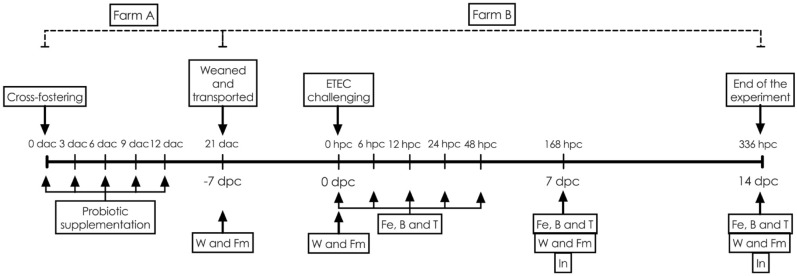
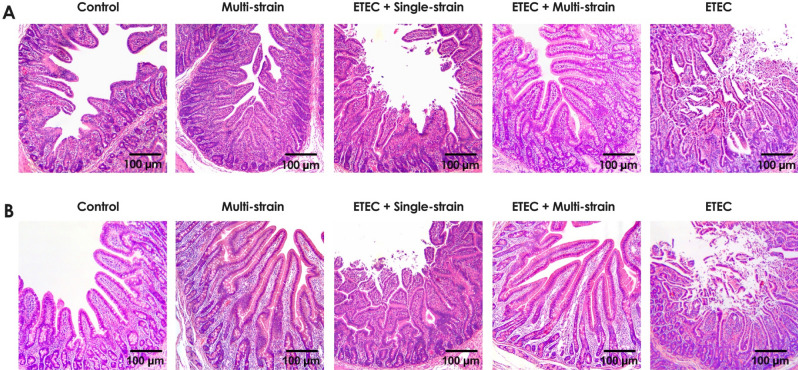
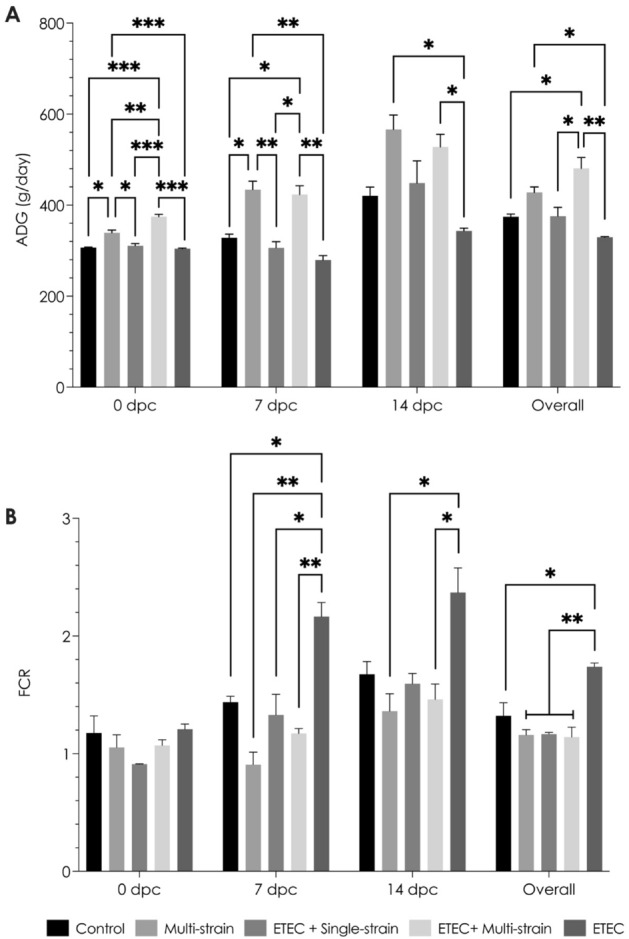
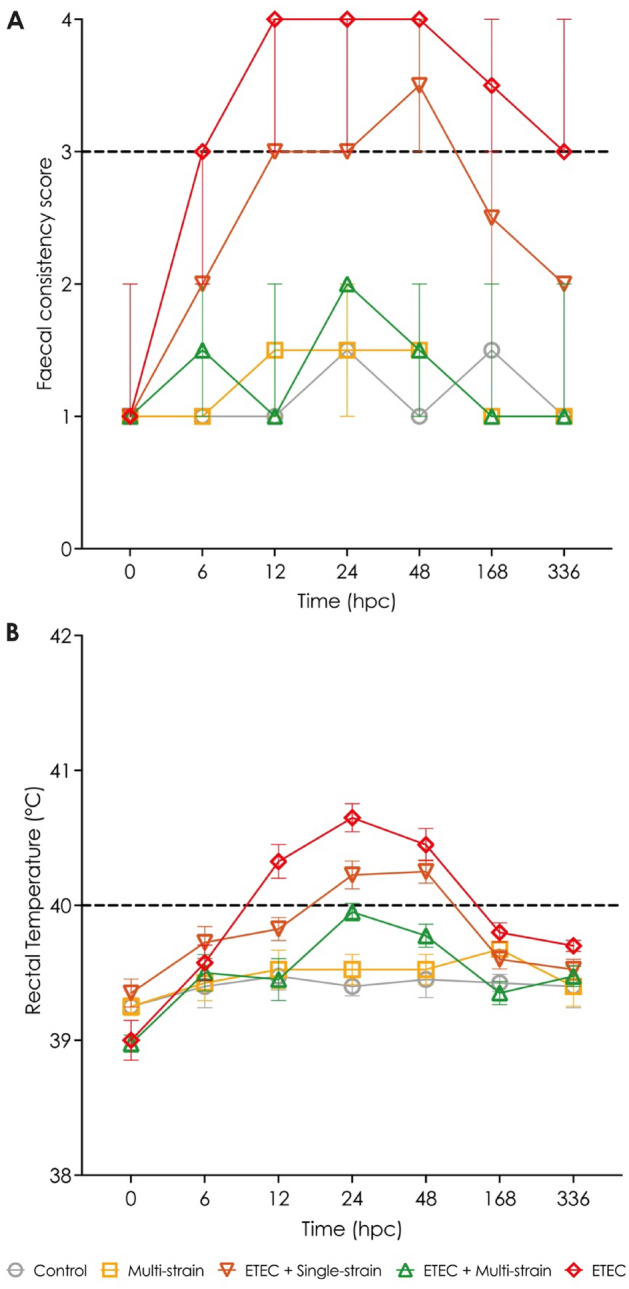
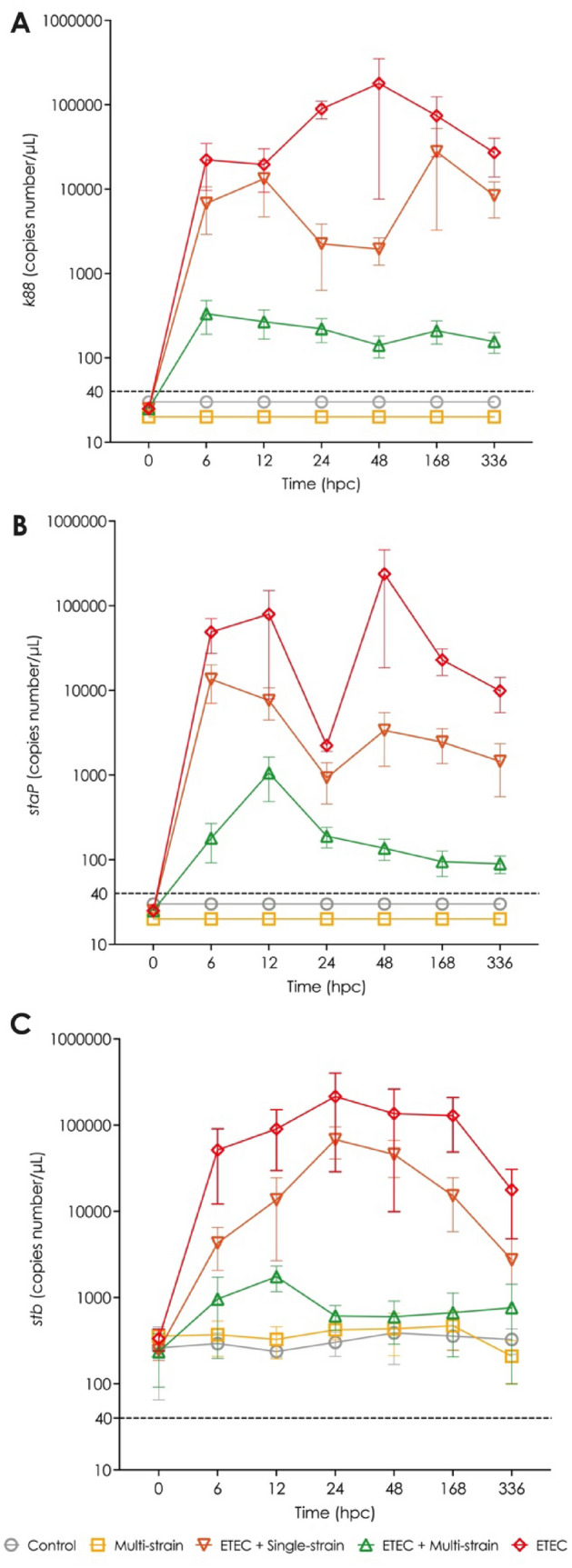
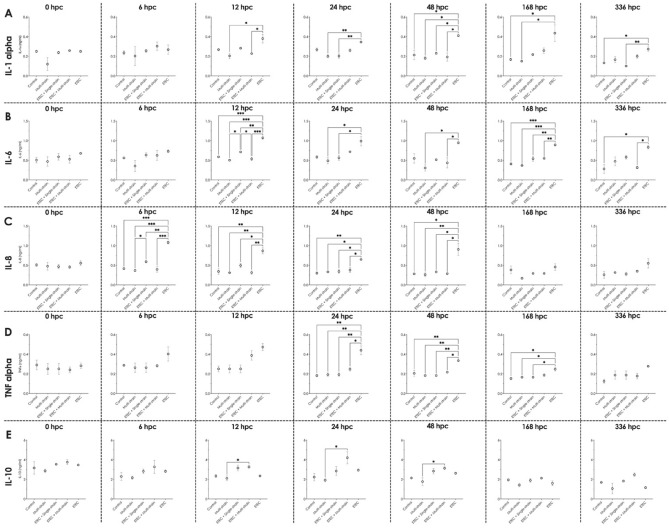
Lactiplantibacillus plantarum (strains 22F and 25F) and Pediococcus acidilactici (strain 72N) have displayed antibacterial activity in vitro, suggesting that they could be used to support intestinal health in pigs. The aim of this study was to determine if microencapsulated probiotics could reduce the severity of infection with enterotoxigenic Escherichia coli (ETEC) in weaned pigs. Sixty healthy neonatal piglets were cross-fostered and separated into five groups. Piglets to be given the microencapsulated probiotics received these orally on days 0, 3, 6, 9, and 12. Only piglets in groups 1 and 5 did not receive probiotics: those in groups 2 and 4 received the three microencapsulated probiotic strains (multi-strain probiotic), and piglets in group 3 received microencapsulated P. acidilactici strain 72N. After weaning, the pigs in groups 3-5 were challenged with 5 mL (at 10 CFU/mL) of pathogenic ETEC strain L3.2 carrying the k88, staP, and stb virulence genes. The multi-strain probiotic enhanced the average daily gain (ADG) and feed conversion ratio (FCR) of weaned piglets after the ETEC challenge (group 4), whilst supplementing with the single-strain probiotic increased FCR (group 3). Piglets in groups 3 and 4 developed mild to moderate diarrhoea and fever. In the probiotic-fed piglets there was an increase in lactic acid bacteria count and a decrease in E. coli count in the faeces. By using real-time PCR, virulence genes were detected at lower levels in the faeces of pigs that had received the probiotic strains. Using the MILLIPLEX MAP assay, probiotic supplementation was shown to reduce pro-inflammatory cytokines (IL-1α, IL-6, IL-8, and TNFα), while group 4 had high levels of anti-inflammatory cytokine (IL-10). Challenged piglets receiving probiotics had milder intestinal lesions with better morphology, including greater villous heights and villous height per crypt depth ratios, than pigs just receiving ETEC. In conclusion, prophylactic administration of microencapsulated probiotic strains may improve outcomes in weaned pigs with colibacillosis.
植物乳杆菌(菌株 22F 和 25F)和乳酸片球菌(菌株 72N)在体外表现出抗菌活性,这表明它们可用于支持猪的肠道健康。本研究旨在确定微囊化益生菌是否可以减轻断奶仔猪感染肠产毒性大肠杆菌(ETEC)的严重程度。60 头健康新生仔猪被交叉寄养并分为五组。给予微囊化益生菌的仔猪在 0、3、6、9 和 12 天口服给药。只有第 1 和第 5 组的仔猪未接受益生菌:第 2 和第 4 组仔猪接受了三种微囊化益生菌株(多菌株益生菌),第 3 组仔猪接受了微囊化的 P. acidilactici 菌株 72N。断奶后,第 3-5 组仔猪用携带 k88、staP 和 stb 毒力基因的致病性 ETEC 菌株 L3.2 进行了 5 mL(10 CFU/mL)的攻毒。多菌株益生菌增强了 ETEC 攻毒后断奶仔猪的平均日增重(ADG)和饲料转化率(FCR)(第 4 组),而单菌株益生菌的补充提高了 FCR(第 3 组)。第 3 和第 4 组仔猪出现轻度至中度腹泻和发热。在益生菌喂养的仔猪中,粪便中乳酸菌数量增加,大肠杆菌数量减少。通过实时 PCR,在接受益生菌株的猪粪便中检测到较低水平的毒力基因。通过使用 MILLIPLEX MAP 测定法,益生菌补充剂可降低促炎细胞因子(IL-1α、IL-6、IL-8 和 TNFα)的水平,而第 4 组具有高水平的抗炎细胞因子(IL-10)。接受益生菌的攻毒仔猪的肠道病变较轻,形态较好,包括绒毛高度和绒毛高度与隐窝深度比值增加,而仅接受 ETEC 的仔猪则较轻。总之,预防性给予微囊化益生菌株可能会改善患有大肠杆菌病的断奶仔猪的结果。