Abuelizz Hatem A, Marzouk Mohamed, Bakheit Ahmed H, Al-Salahi Rashad
Department of Pharmaceutical Chemistry, College of Pharmacy, King Saud University PO Box 2457 Riyadh 11451 Saudi Arabia
Chemistry of Natural Products Group, Center of Excellence for Advanced Sciences, National Research Centre 33 El-Bohouth St. (Former El-Tahrir St.), Dokki Cairo 12622 Egypt.
RSC Adv. 2020 Sep 30;10(59):35820-35830. doi: 10.1039/d0ra05604a. eCollection 2020 Sep 28.
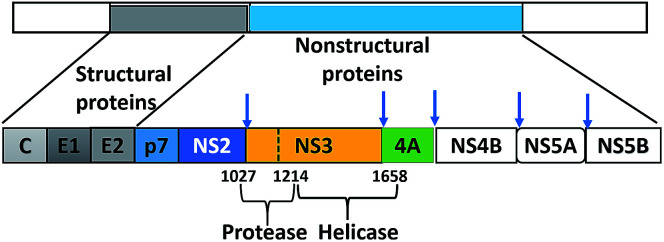
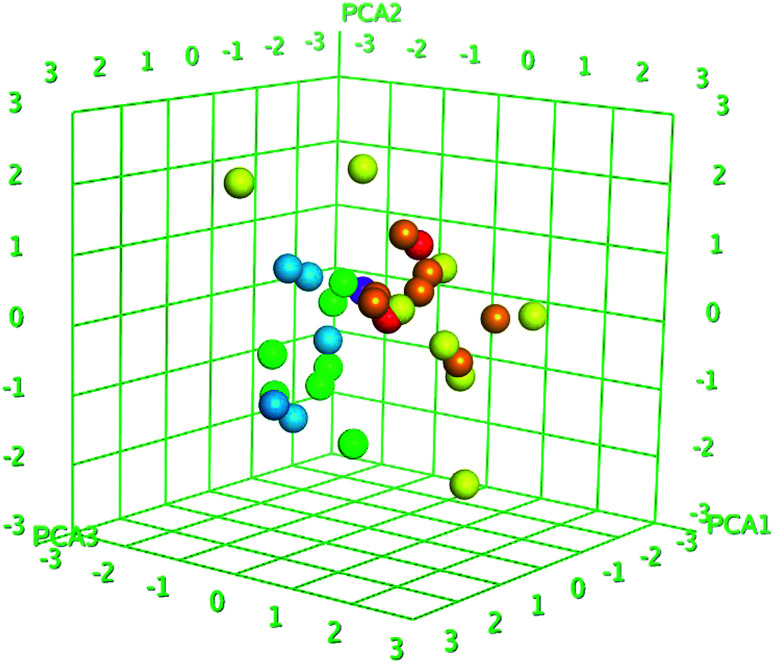
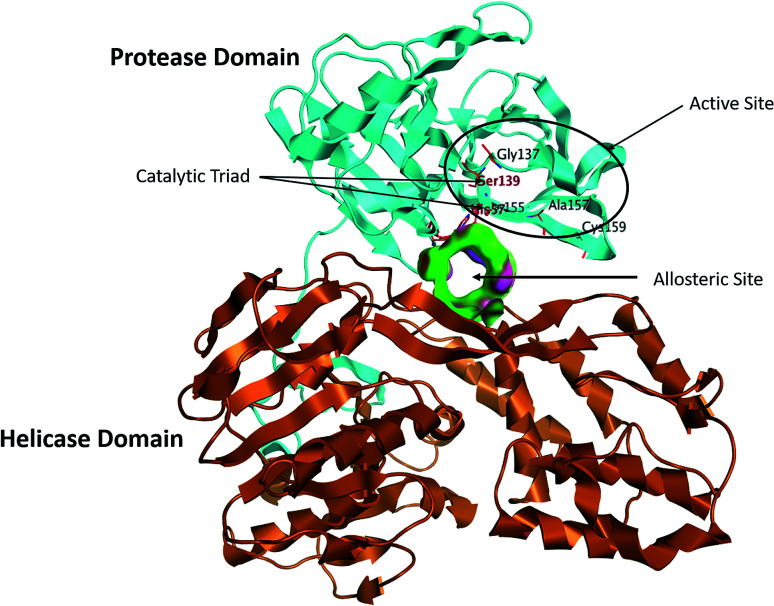
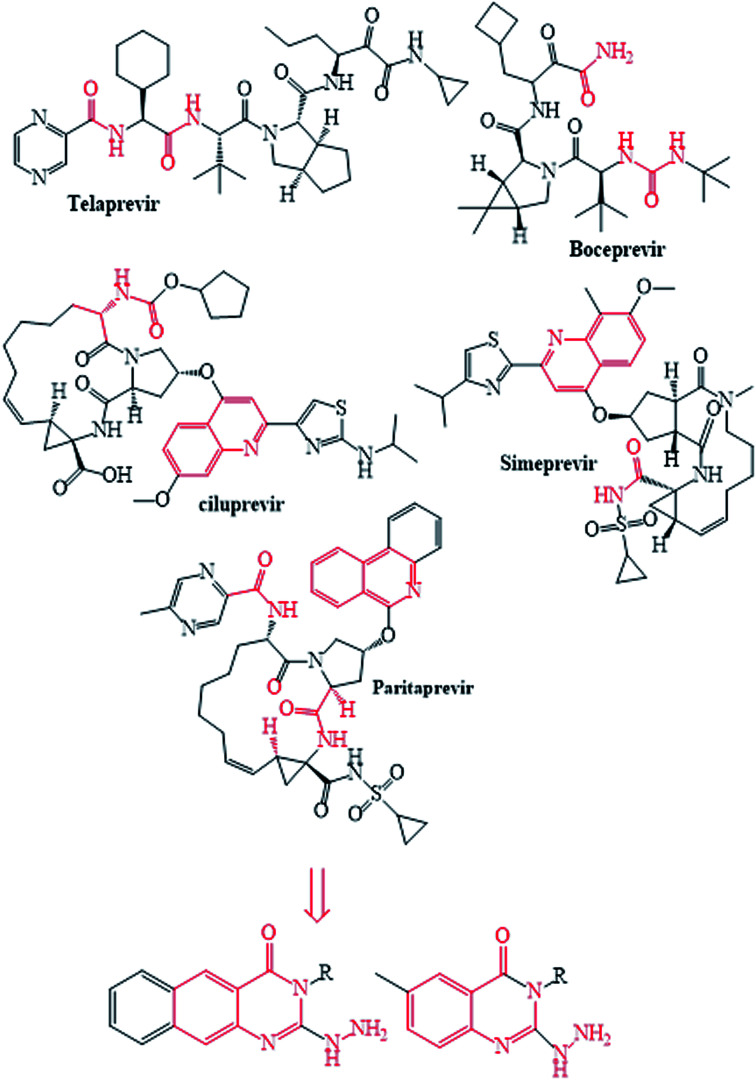
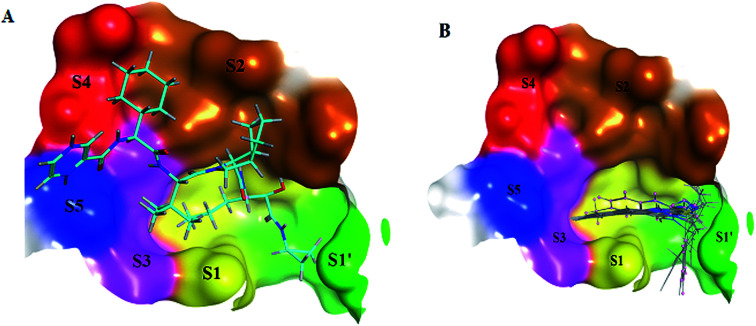
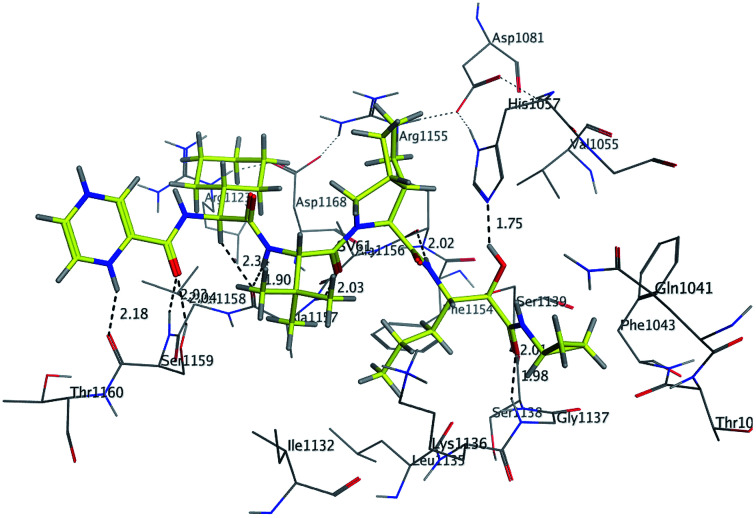
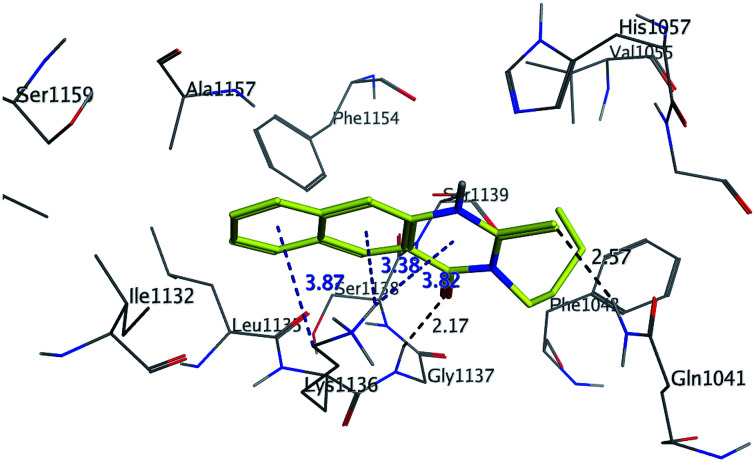
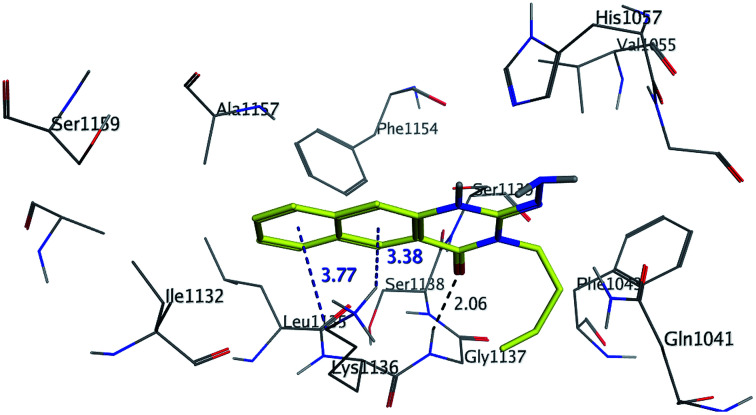
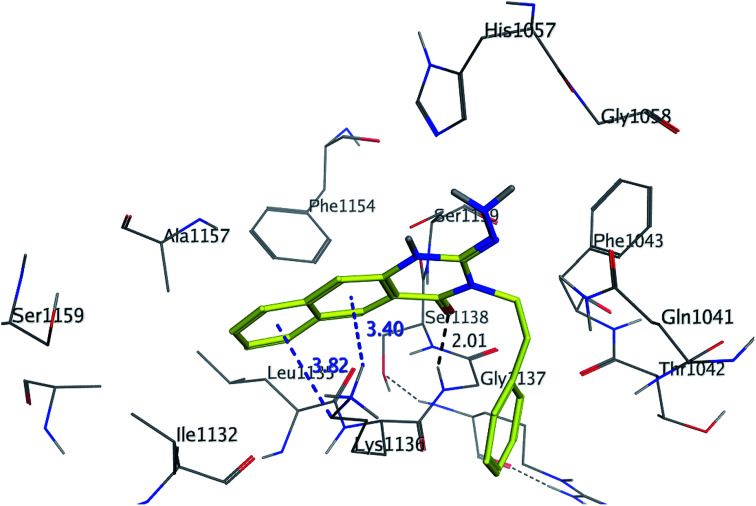
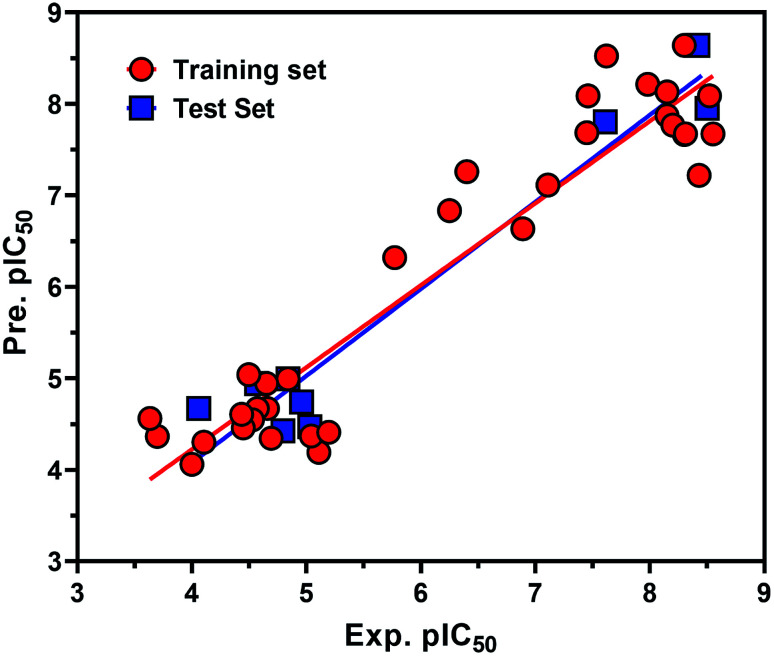
Morbidity and mortality due to hepatitis C virus (HCV) is a globe health concern. Hence, there is a persistent demand to design and optimize current HCV therapy and develop novel agents. HCV NS3/A4 protease plays an essential role in HCV life cycle and replication. Thus, HCV NS3/A4 protease inhibitors are one of the best therapeutic targets for the identification of novel candidate drugs. Recent studies have shown some benzoquinazolines as potent antiviral agents and promising HAV-3C protease inhibitors. In the present study, a series of benzo[]quinazolines (1-13) and their quinazoline analogues (14-17) were evaluated for their HCV-NS3/4A inhibitory activities using assay. Our results revealed that the target compounds inhibited the activity of the NS3/4A enzyme, (IC = 6.41 ± 0.12 to 78.80 ± 1.70 μM) in comparison to telaprevir (IC = 1.72 ± 0.03 μM) as a reference drug. Compounds 1, 2, 3, 9, 10 and 13 showed the highest activity (IC = 11.02 ± 0.25, 6.41 ± 0.12, 9.35 ± 0.19, 9.08 ± 0.20, 16.03 ± 0.34 and 7.21 ± 0.15 μM, respectively). Molecular docking was performed to study the binding modes of the docked-chosen benzo[]quinazolines, hydrogen bonding, and amino acid residues at the catalytic triad of the NS3/4A enzyme of HCV. The QSAR was determined to explore the relationships between the molecular structures of the targets and their biological activities by developing prediction models among the known HCV NS3/A4 inhibitors and then to predict the inhibitory activity of the target molecules synthesized.
丙型肝炎病毒(HCV)所致的发病率和死亡率是一个全球健康问题。因此,设计和优化当前的HCV治疗方法并开发新型药物的需求一直存在。HCV NS3/4A蛋白酶在HCV生命周期和复制中起着至关重要的作用。因此,HCV NS3/4A蛋白酶抑制剂是鉴定新型候选药物的最佳治疗靶点之一。最近的研究表明,一些苯并喹唑啉是有效的抗病毒剂和有前景的HAV-3C蛋白酶抑制剂。在本研究中,使用 试验评估了一系列苯并[]喹唑啉(1-13)及其喹唑啉类似物(14-17)的HCV-NS3/4A抑制活性。我们的结果显示,与作为参考药物的特拉匹韦(IC = 1.72±0.03μM)相比,目标化合物抑制了NS3/4A酶的活性(IC = 6.41±0.12至78.80±1.70μM)。化合物1、2、3、9、10和13表现出最高活性(IC分别为11.02±0.25、6.41±0.12、9.35±0.19、9.08±0.20、16.03±0.34和7.21±0.15μM)。进行了分子对接研究,以研究对接选择的苯并[]喹唑啉的结合模式、氢键以及HCV NS3/4A酶催化三联体处的氨基酸残基。通过在已知的HCV NS3/4A抑制剂之间建立预测模型来确定QSAR,以探索目标分子结构与其生物活性之间的关系,然后预测合成的目标分子的抑制活性。