Niknam Zahra, Golchin Ali, Rezaei-Tavirani Mostafa, Ranjbarvan Parviz, Zali Hakimeh, Omidi Meisam, Mansouri Vahid
Faculty of Paramedical Sciences, Shahid Beheshti University of Medical Sciences, Tehran, Iran.
Proteomics research center, Shahid Beheshti University of Medical Sciences, Tehran, Iran.
Adv Pharm Bull. 2022 Jan;12(1):142-154. doi: 10.34172/apb.2022.015. Epub 2020 Sep 22.
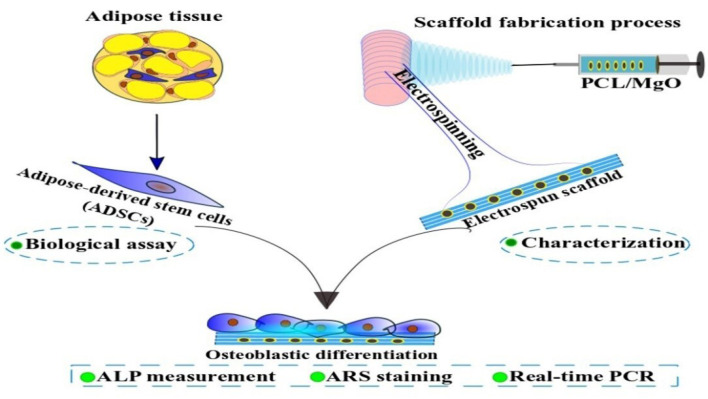
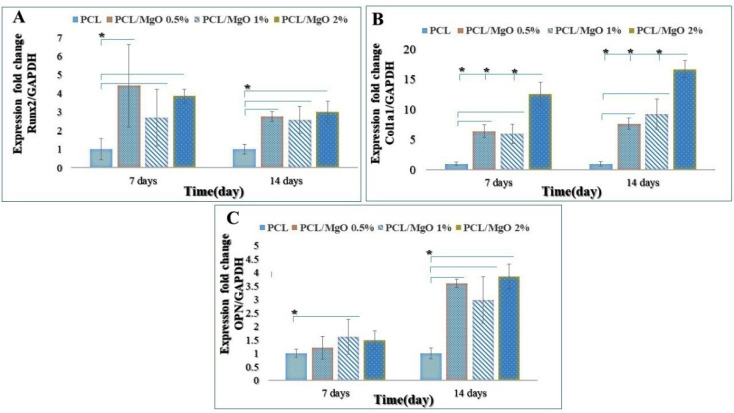
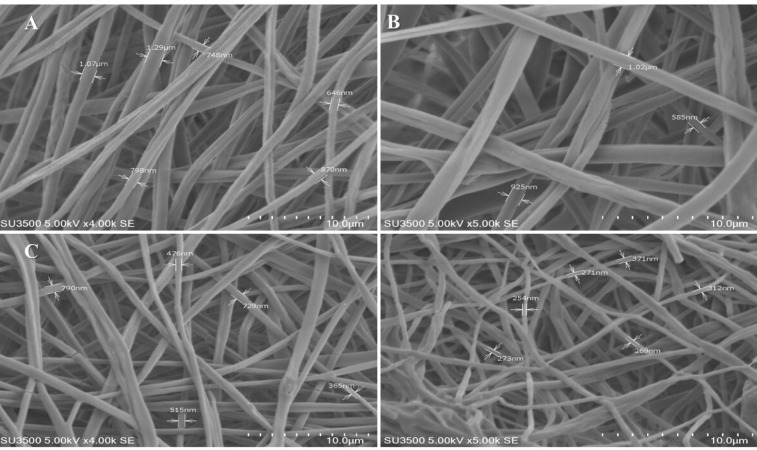
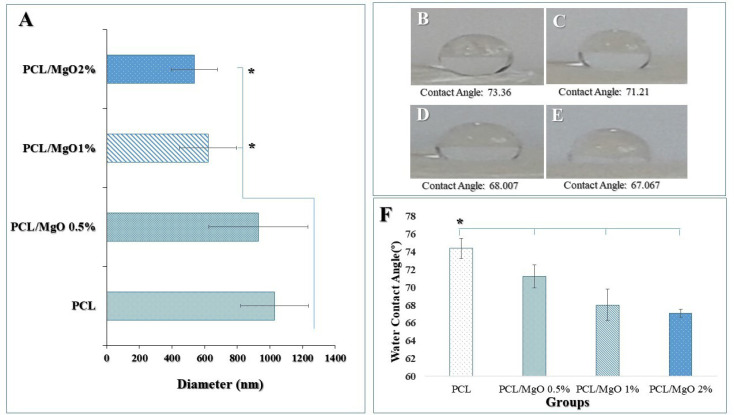
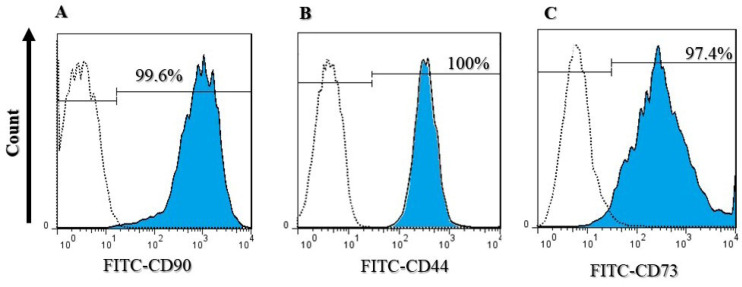
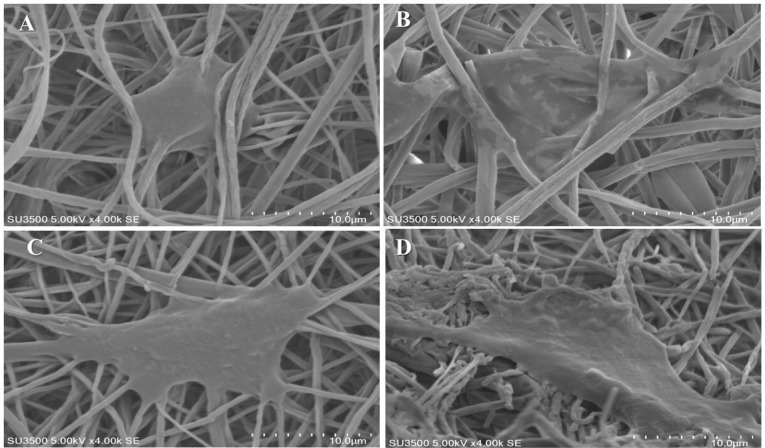
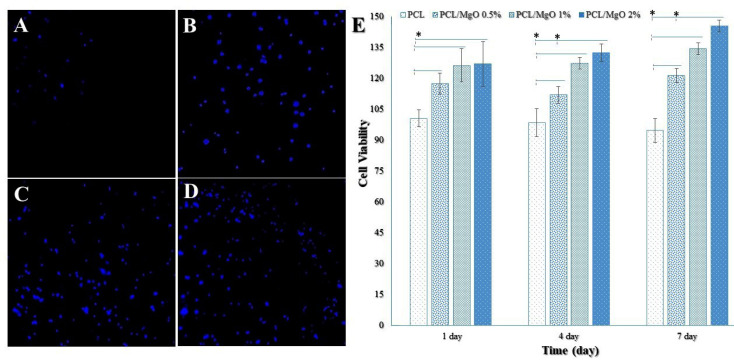
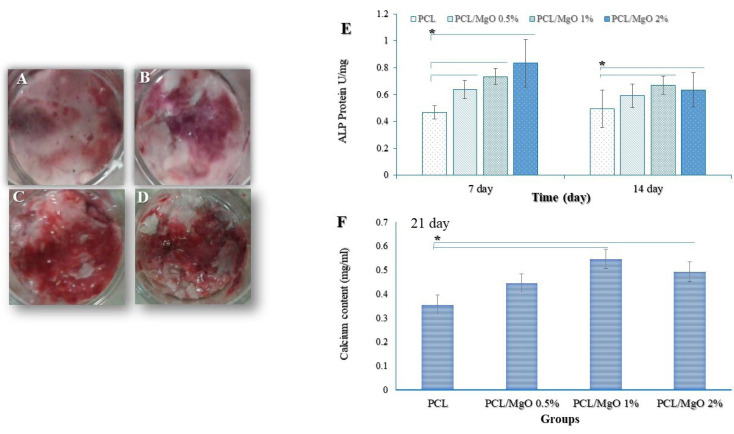
Recently, bone tissue engineering as a new strategy is used to repair and replace bone defects due to limitations in allograft and autograft methods. In this regard, we prepared nanofibrous scaffolds composed of polycaprolactone (PCL) and magnesium oxide (MgO) nanoparticles using the electrospinning technique for possible bone tissue engineering applications. The fabricated composites were characterized via scanning electron microscopy (SEM) imaging of scaffolds and seeded cells, water contact angle, DAPI staining, and MTT assay. Then osteogenic differentiation of adipose-derived mesenchymal stem cells cultured on this composite scaffold was determined by standard osteogenic marker tests, including alkaline phosphatase (ALP) activity, calcium deposition, and expression of osteogenic differentiation genes in the laboratory conditions. The SEM analysis demonstrated that the diameter of nanofibers significantly decreased from 1029.25±209.349 µm to 537.83+0.140 nm, with the increase of MgO concentration to 2% ( < 0.05). Initial adhesion and proliferation of the adipose-derived mesenchymal stem cells on MgO/PCL scaffolds were significantly enhanced with the increasing of MgO concentration ( < 0.05). The 2% MgO/PCL nanofibrous scaffold showed significant increase in ALP activity ( < 0.05) and osteogenic-related gene expressions (Col1a1 and OPN) ( < 0.05) in compared to pure PCL and (0, 0.5 and 1%) MgO/PCL scaffolds. According to the results, it was demonstrated that MgO/PCL composite nanofibers have considerable osteoinductive potential, and taking together adipose-derived mesenchymal stem cells-MgO/PCL composite nanofibers can be a proper bio-implant to usage for bone regenerative medicine applications. Future in vivo studies are needed to determine this composite therapeutic potential.
近年来,由于同种异体移植和自体移植方法存在局限性,骨组织工程作为一种新策略被用于修复和替代骨缺损。在这方面,我们采用静电纺丝技术制备了由聚己内酯(PCL)和氧化镁(MgO)纳米颗粒组成的纳米纤维支架,用于可能的骨组织工程应用。通过对支架和接种细胞的扫描电子显微镜(SEM)成像、水接触角、DAPI染色和MTT测定对制备的复合材料进行了表征。然后,通过标准的成骨标志物测试,包括碱性磷酸酶(ALP)活性、钙沉积以及在实验室条件下成骨分化基因的表达,来确定在这种复合支架上培养的脂肪来源间充质干细胞的成骨分化情况。SEM分析表明,随着MgO浓度增加到2%,纳米纤维直径从1029.25±209.349 µm显著减小至537.83+0.140 nm(P<0.05)。随着MgO浓度的增加,脂肪来源间充质干细胞在MgO/PCL支架上的初始黏附和增殖显著增强(P<0.05)。与纯PCL以及(0、0.5和1%)MgO/PCL支架相比,2% MgO/PCL纳米纤维支架的ALP活性(P<0.05)和成骨相关基因表达(Col1a1和OPN)(P<0.05)显著增加。根据结果表明,MgO/PCL复合纳米纤维具有相当大的骨诱导潜力,综合来看,脂肪来源间充质干细胞-MgO/PCL复合纳米纤维可以作为一种合适的生物植入物用于骨再生医学应用。未来需要进行体内研究以确定这种复合材料的治疗潜力。