Liu Yilong, Zhan Liuhuan, Xu Chang, Jiang Huamin, Zhu Changqing, Sun Linxiao, Sun Chongde, Li Xian
Zhejiang Provincial Key Laboratory of Horticultural Plant Integrative Biology, Zhejiang University Zijingang Campus Hangzhou 310058 China
Hangzhou Lichuan Ecological Agriculture Development Co., Ltd. Hangzhou 311123 China.
RSC Adv. 2020 Aug 10;10(49):29347-29361. doi: 10.1039/d0ra05015f. eCollection 2020 Aug 5.
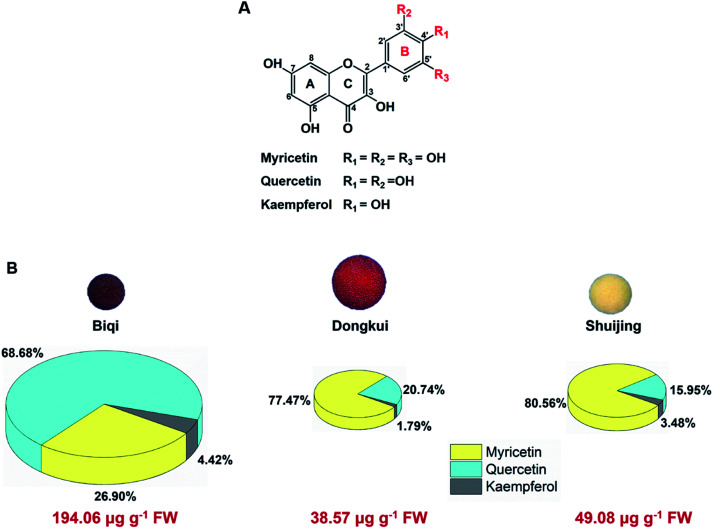
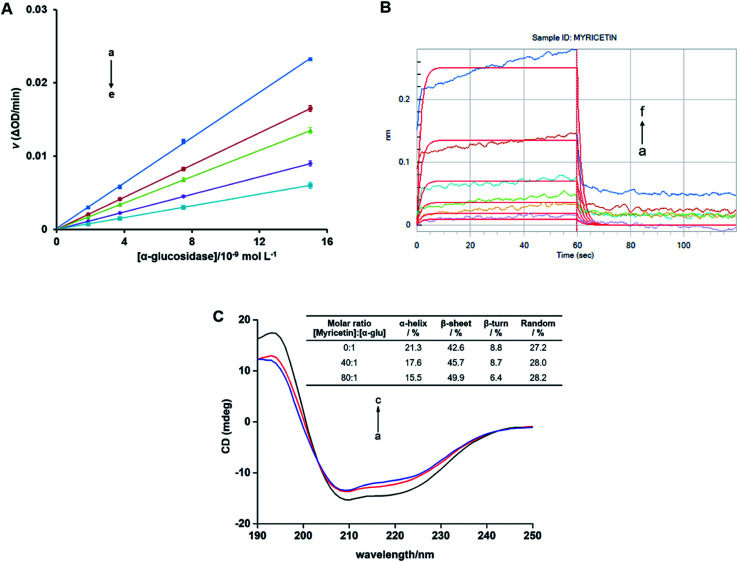
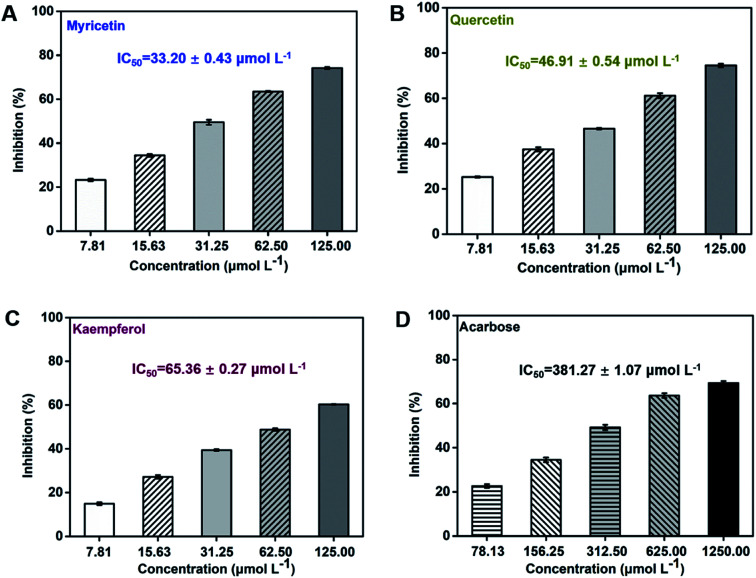
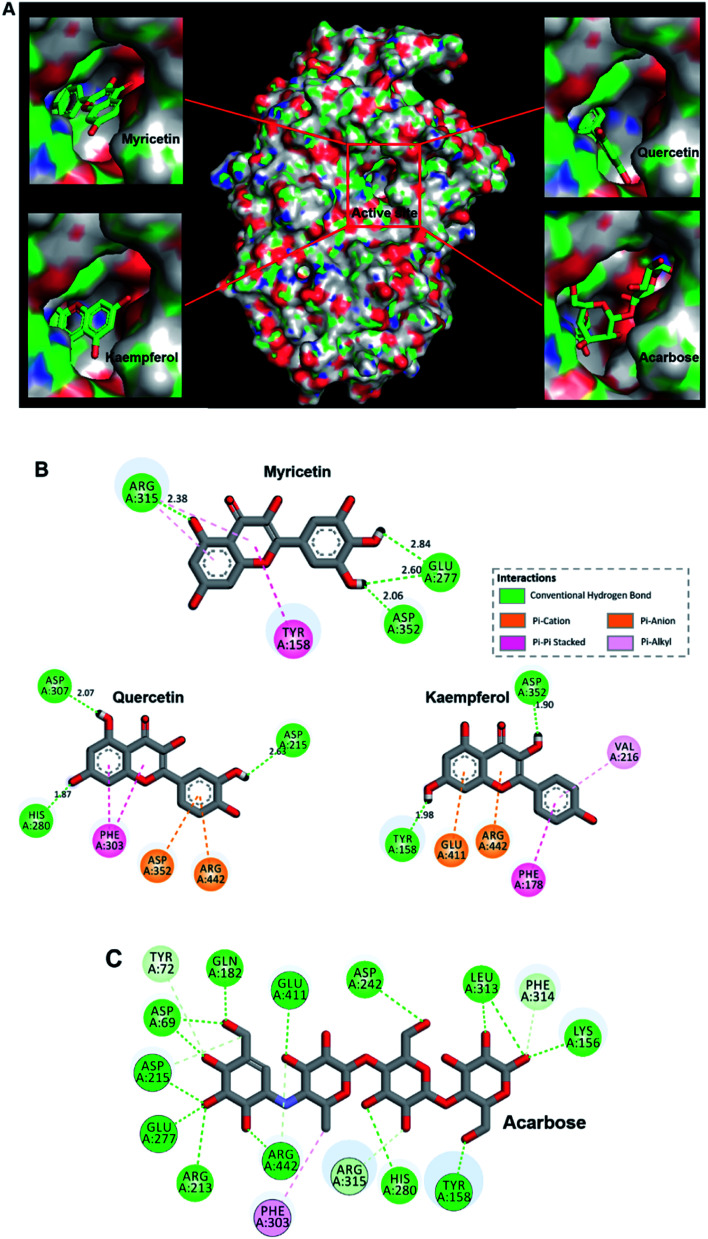
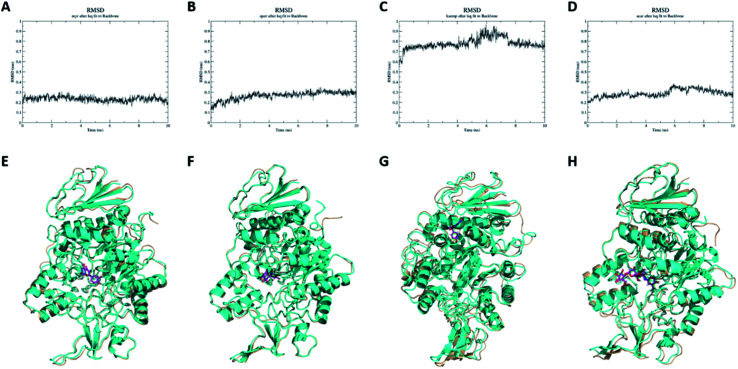
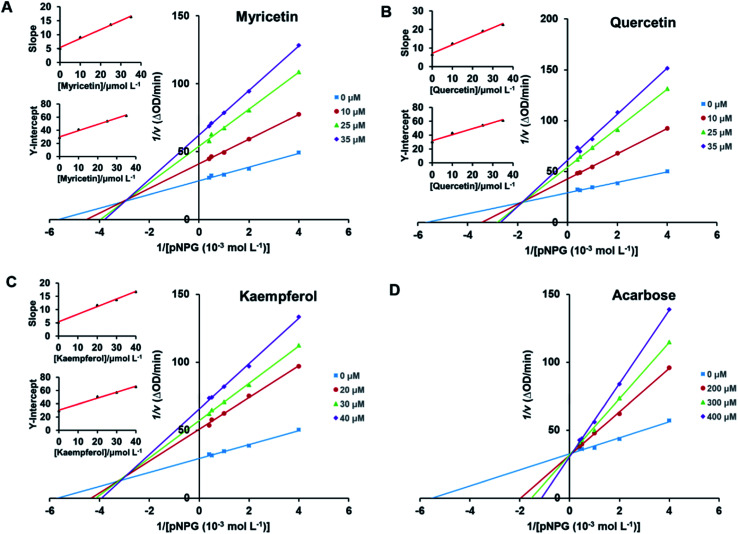
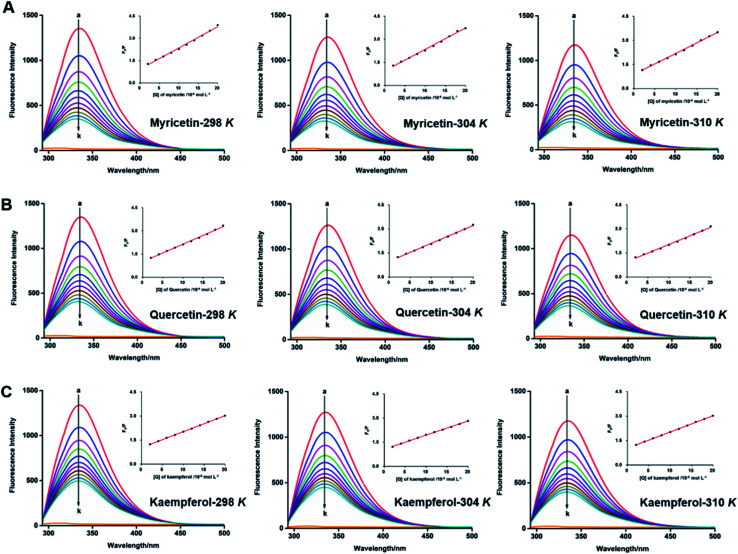
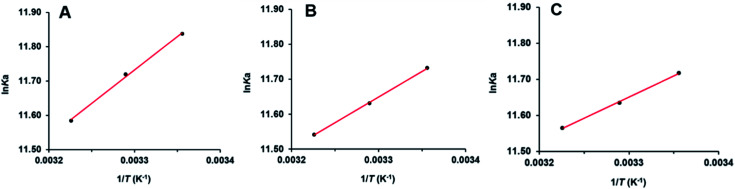
Inhibition of α-glucosidase alleviates postprandial high glycemic levels in diabetic or prediabetic population. In Chinese bayberry fruit, myricetin, quercetin and kaempferol are main flavonols, which differ only in their hydroxylation on the B-ring. Kaempferol (4'-OH) showed high IC (65.36 ± 0.27 μmol L) against α-glucosidase, while quercetin (3',4'-OH) exhibited stronger inhibition (46.91 ± 0.54 μmol L) and myricetin (3',4',5'-OH) possessed the strongest inhibitory activity (33.20 ± 0.43 μmol L). Molecular docking analysis illustrated that these flavonols could insert to the active cavity of α-glucosidase. Adjacent hydroxyl groups at B-ring of myricetin and quercetin positively contributed to form hydrogen bonds that were important to the stability of flavonol-enzyme complex, while kaempferol had no adjacent hydroxyl groups. Such observation was further validated by molecular dynamics simulations, and in good consistency with kinetic analysis and fluorescence spectroscopy analysis. Among three flavonols tested, myricetin possessed the strongest inhibition effects on α-glucosidase with the lowest dissociation constant ( = 15.56 μmol L) of myricetin-α-glucosidase, largest fluorescence quenching constant ( ) of (14.26 ± 0.03) × 10 L mol and highest binding constant ( ) of (1.38 ± 0.03) × 10 L mol at 298 K with the enzyme. Bio-Layer Interferometry (BLI) and circular dichroism (CD) analysis further confirmed that myricetin had high affinity to α-glucosidase and induced conformational changes of enzyme. Therefore, myricetin, quercetin and kaempferol are all excellent dietary α-glucosidase inhibitors and their inhibitory activities are enhanced by increasing number of hydroxyl groups on B-ring.
抑制α-葡萄糖苷酶可缓解糖尿病或糖尿病前期人群的餐后高血糖水平。在中国杨梅果实中,杨梅素、槲皮素和山奈酚是主要的黄酮醇,它们仅在B环上的羟基化情况有所不同。山奈酚(4'-OH)对α-葡萄糖苷酶显示出较高的半数抑制浓度(IC,65.36±0.27μmol/L),而槲皮素(3',4'-OH)表现出更强的抑制作用(46.91±0.54μmol/L),杨梅素(3',4',5'-OH)具有最强的抑制活性(33.20±0.43μmol/L)。分子对接分析表明,这些黄酮醇可以插入α-葡萄糖苷酶的活性腔。杨梅素和槲皮素B环上相邻的羟基对形成氢键有积极作用,而氢键对黄酮醇-酶复合物的稳定性很重要,而山奈酚没有相邻的羟基。分子动力学模拟进一步验证了这一观察结果,并且与动力学分析和荧光光谱分析结果高度一致。在所测试的三种黄酮醇中,杨梅素对α-葡萄糖苷酶的抑制作用最强,其与α-葡萄糖苷酶的解离常数最低(Kd = 15.56μmol/L),荧光猝灭常数(Ksv)最大((14.26±0.03)×10⁴L/mol),在298K时与该酶的结合常数(Ka)最高((1.38±0.03)×10⁴L/mol)。生物层干涉术(BLI)和圆二色性(CD)分析进一步证实,杨梅素对α-葡萄糖苷酶具有高亲和力并诱导酶的构象变化。因此,杨梅素、槲皮素和山奈酚都是优秀的膳食α-葡萄糖苷酶抑制剂,并且它们的抑制活性通过增加B环上的羟基数量而增强。