Department of Genetic Epidemiology in Psychiatry, Central Institute of Mental Health, Medical Faculty Mannheim, Heidelberg University, Mannheim, Germany.
Institute of Psychopharmacology, Central Institute of Mental Health, Medical Faculty Mannheim, University of Heidelberg, Mannheim, Germany.
Transl Psychiatry. 2022 May 6;12(1):190. doi: 10.1038/s41398-022-01959-1.
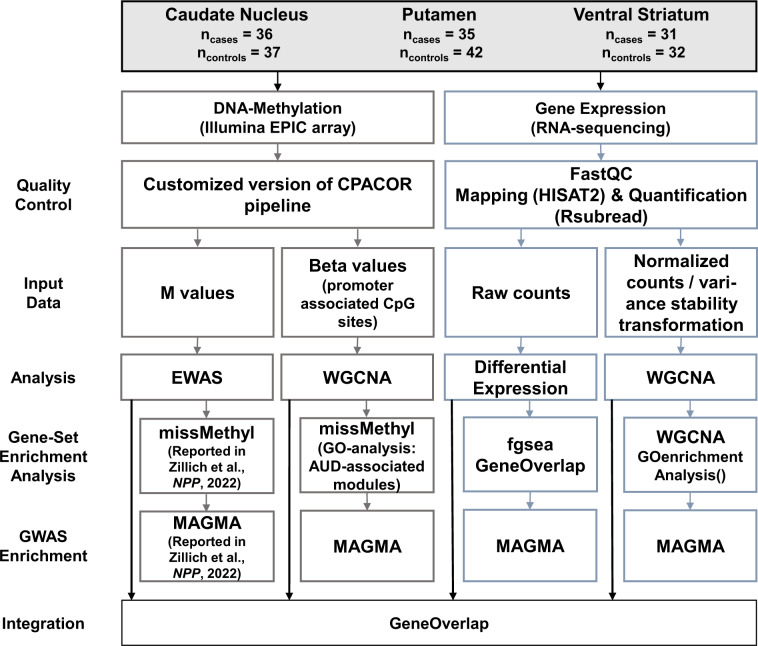
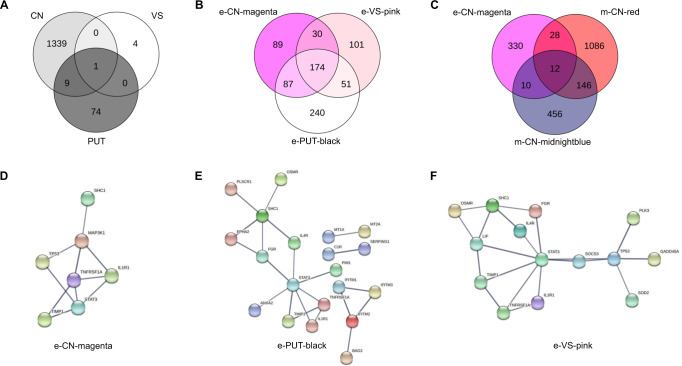
Alcohol Use Disorder (AUD) is a major contributor to global mortality and morbidity. Postmortem human brain tissue enables the investigation of molecular mechanisms of AUD in the neurocircuitry of addiction. We aimed to identify differentially expressed (DE) genes in the ventral and dorsal striatum between individuals with AUD and controls, and to integrate the results with findings from genome- and epigenome-wide association studies (GWAS/EWAS) to identify functionally relevant molecular mechanisms of AUD. DNA-methylation and gene expression (RNA-seq) data was generated from postmortem brain samples of 48 individuals with AUD and 51 controls from the ventral striatum (VS) and the dorsal striatal regions caudate nucleus (CN) and putamen (PUT). We identified DE genes using DESeq2, performed gene-set enrichment analysis (GSEA), and tested enrichment of DE genes in results of GWASs using MAGMA. Weighted correlation network analysis (WGCNA) was performed for DNA-methylation and gene expression data and gene overlap was tested. Differential gene expression was observed in the dorsal (FDR < 0.05), but not the ventral striatum of AUD cases. In the VS, DE genes at FDR < 0.25 were overrepresented in a recent GWAS of problematic alcohol use. The ARHGEF15 gene was upregulated in all three brain regions. GSEA in CN and VS pointed towards cell-structure associated GO-terms and in PUT towards immune pathways. The WGCNA modules most strongly associated with AUD showed strong enrichment for immune response and inflammation pathways. Our integrated analysis of multi-omics data sets provides further evidence for the importance of immune- and inflammation-related processes in AUD.
酒精使用障碍 (AUD) 是全球死亡率和发病率的主要原因。死后人脑组织使我们能够研究成瘾神经回路中 AUD 的分子机制。我们旨在确定 AUD 患者和对照组之间腹侧和背侧纹状体中差异表达 (DE) 的基因,并将结果与全基因组和全外显子组关联研究 (GWAS/EWAS) 的结果整合,以确定 AUD 的功能相关分子机制。从 48 名 AUD 患者和 51 名对照组的死后大脑样本中生成了 DNA 甲基化和基因表达 (RNA-seq) 数据,这些样本来自腹侧纹状体 (VS) 和背侧纹状体区域尾状核 (CN) 和壳核 (PUT)。我们使用 DESeq2 识别 DE 基因,进行基因集富集分析 (GSEA),并使用 MAGMA 测试 GWAS 结果中 DE 基因的富集情况。对 DNA 甲基化和基因表达数据进行加权相关网络分析 (WGCNA),并测试基因重叠情况。在 AUD 病例的背侧 (FDR<0.05) 但不在腹侧纹状体中观察到差异基因表达。在 VS 中,在最近对问题性饮酒的 GWAS 中,FDR<0.25 的 DE 基因过度表达。在所有三个脑区中,ARHGEF15 基因均上调。CN 和 VS 中的 GSEA 指向与细胞结构相关的 GO 术语,而 PUT 则指向免疫途径。与 AUD 最密切相关的 WGCNA 模块强烈富集免疫和炎症途径。我们对多组学数据集的综合分析进一步证明了免疫和炎症相关过程在 AUD 中的重要性。