Foffano Francesca, Scantamburlo Teresa, Cortés Atia
University of York, York, UK.
European Centre for Living Technology, Venice, Italy.
AI Soc. 2023;38(2):479-500. doi: 10.1007/s00146-022-01445-8. Epub 2022 May 5.
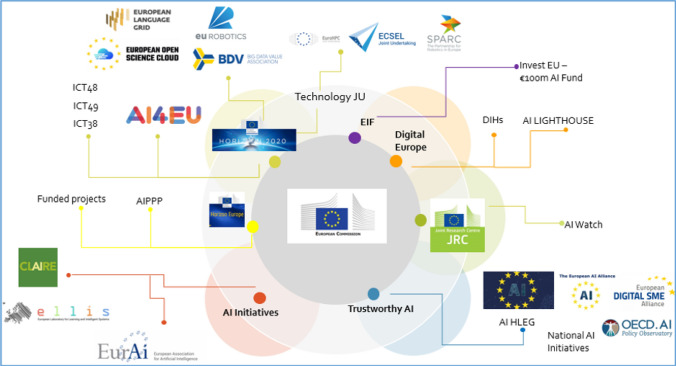
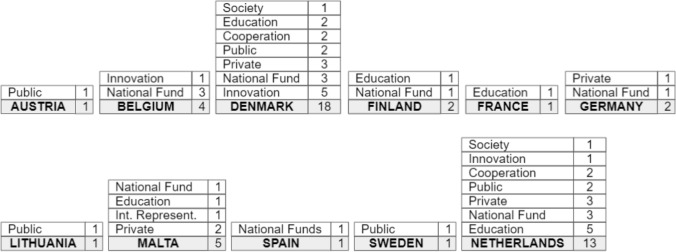
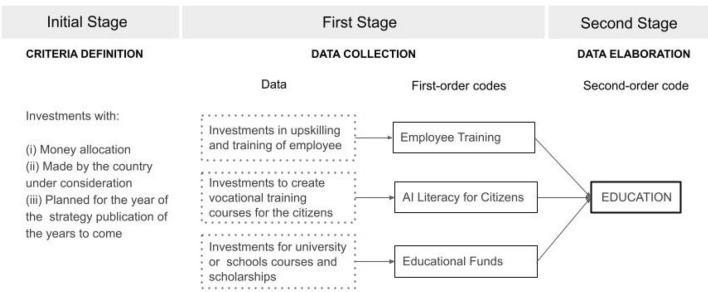
Artificial Intelligence (AI) has become a driving force in modern research, industry and public administration and the European Union (EU) is embracing this technology with a view to creating societal, as well as economic, value. This effort has been shared by EU Member States which were all encouraged to develop their own national AI strategies outlining policies and investment levels. This study focuses on how EU Member States are approaching the promise to develop and use AI for the good of society through the lens of their national AI strategies. In particular, we aim to investigate how European countries are investing in AI and to what extent the stated plans contribute to the good of people and society as a whole. Our contribution consists of three parts: (i) a conceptualization of AI for social good highlighting the role of AI policy, in particular, the one put forward by the European Commission (EC); (ii) a qualitative analysis of 15 European national strategies mapping investment plans and suggesting their relation to the social good (iii) a reflection on the current status of investments in socially good AI and possible steps to move forward. Our study suggests that while European national strategies incorporate money allocations in the sphere of AI for social good (e.g. education), there is a broader variety of underestimated actions (e.g. multidisciplinary approach in STEM curricula and dialogue among stakeholders) that can boost the European commitment to sustainable and responsible AI innovation.
人工智能(AI)已成为现代研究、产业和公共管理的驱动力,欧盟(EU)正在接纳这项技术,以期创造社会价值和经济价值。欧盟成员国也参与了这项工作,所有成员国都被鼓励制定各自的国家人工智能战略,概述政策和投资水平。本研究聚焦于欧盟成员国如何通过其国家人工智能战略的视角,来实现开发和利用人工智能造福社会的承诺。具体而言,我们旨在调查欧洲国家在人工智能方面的投资情况,以及既定计划在多大程度上有助于全体人民和整个社会的福祉。我们的贡献包括三个部分:(i)对造福社会的人工智能进行概念化,突出人工智能政策的作用,特别是欧盟委员会(EC)提出的政策;(ii)对15项欧洲国家战略进行定性分析,绘制投资计划并表明它们与社会福祉的关系;(iii)对造福社会的人工智能投资现状以及未来可能采取的步骤进行思考。我们的研究表明,虽然欧洲国家战略在造福社会的人工智能领域(如教育)纳入了资金分配,但还有更多被低估的行动(如STEM课程中的多学科方法和利益相关者之间的对话),可以增强欧洲对可持续和负责任的人工智能创新的承诺。