Zhang Jianhua, Wang Bo, Li Yiru, Shu Wenhao, Hu Huaying, Yang Lianqiao
Key Laboratory of Advanced Display and System Applications, Ministry of Education, Shanghai University Yanchang Road 149 Shanghai 200072 China
RSC Adv. 2019 Aug 13;9(43):25248-25256. doi: 10.1039/c9ra02140j. eCollection 2019 Aug 8.
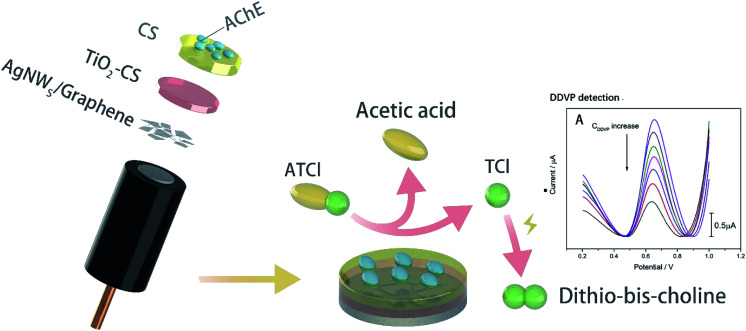
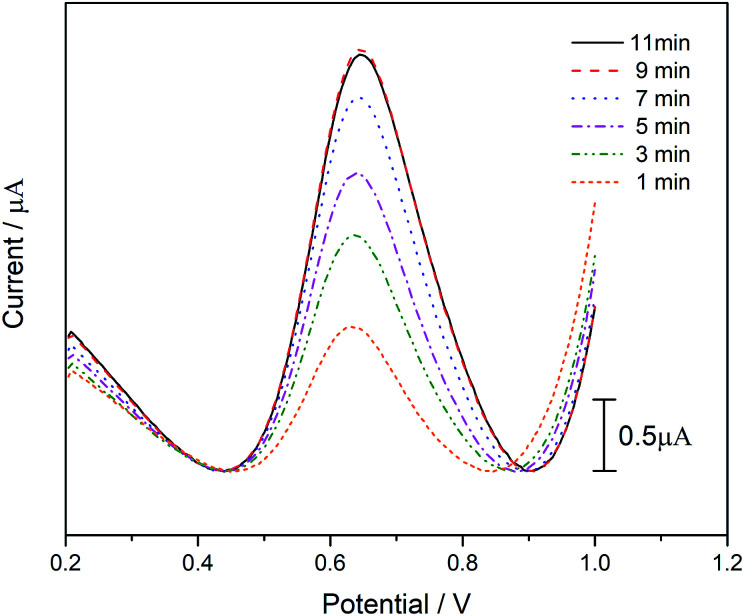
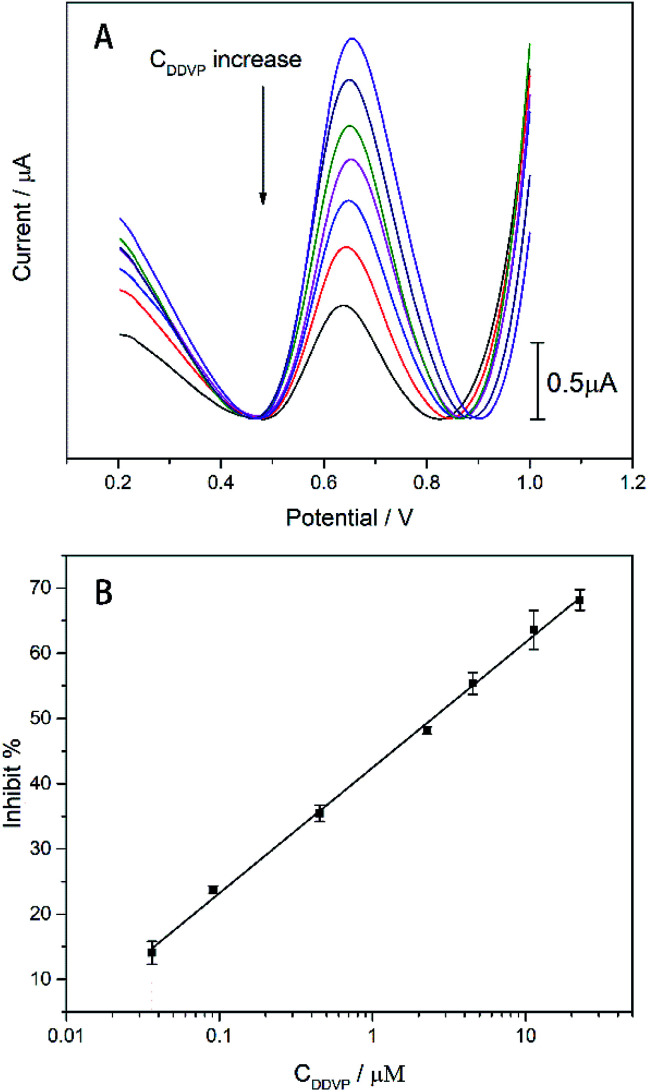
An electrochemical acetylcholinesterase biosensor based on silver nanowire, graphene, TiO sol-gel, chitosan and acetylcholinesterase has been fabricated successfully for the detection of organophosphate pesticides. The outstanding electrical properties of silver nanowires and graphene, and moreover the self-assembly of these two nanomaterials make the biosensor highly sensitive. Simultaneously, the immobilization efficiency of the enzyme is greatly improved by the action of the TiO fixed matrix. Under optimum conditions, the biosensor exhibited excellent performance for the detection of dichlorvos with a linearity in the range of 0.036 μM to 22.63 μM and the detection limit was found to be 7.4 nM. The biosensor was highly reproducible and stable during detection and storage.
一种基于银纳米线、石墨烯、TiO溶胶 - 凝胶、壳聚糖和乙酰胆碱酯酶的电化学乙酰胆碱酯酶生物传感器已成功制备,用于检测有机磷农药。银纳米线和石墨烯出色的电学性质,以及这两种纳米材料的自组装使生物传感器具有高灵敏度。同时,TiO固定基质的作用大大提高了酶的固定效率。在最佳条件下,该生物传感器对敌敌畏的检测表现出优异性能,线性范围为0.036 μM至22.63 μM,检测限为7.4 nM。该生物传感器在检测和储存过程中具有高度的可重复性和稳定性。