Zhao Jia, Han Fanglei, Zhang Wenjing, Yang Yang, You Di, Li Longyun
Department of Anesthesia, China-Japan Union Hospital of Jilin University Changchun 130033 Jilin Province China
RSC Adv. 2019 Oct 16;9(57):33038-33051. doi: 10.1039/c9ra05030b. eCollection 2019 Oct 15.
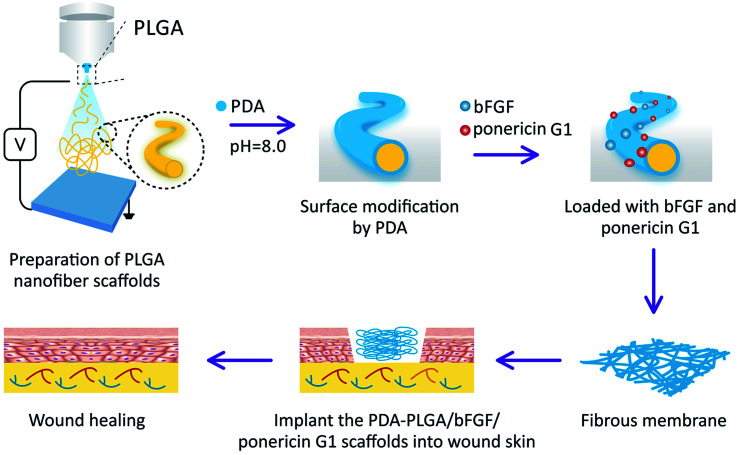
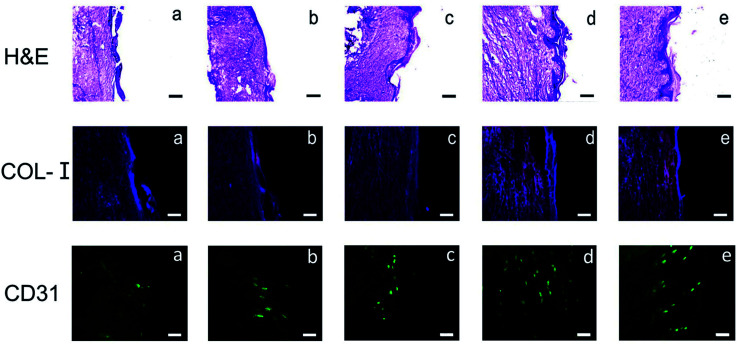
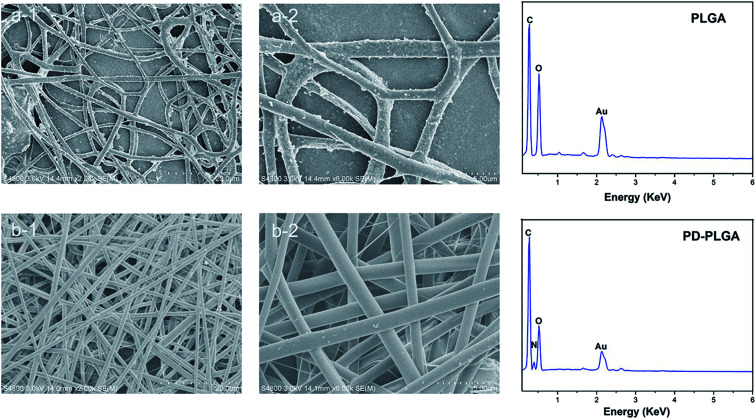
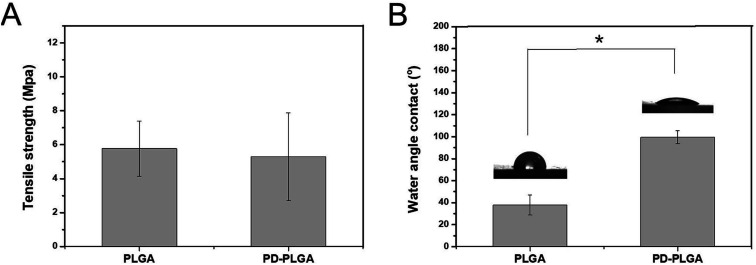
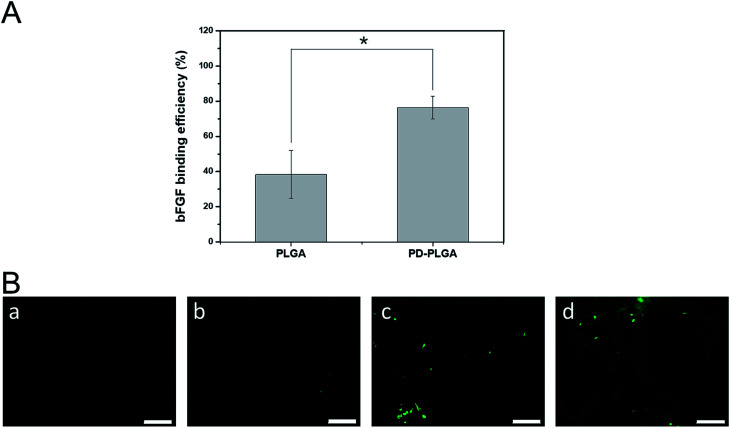
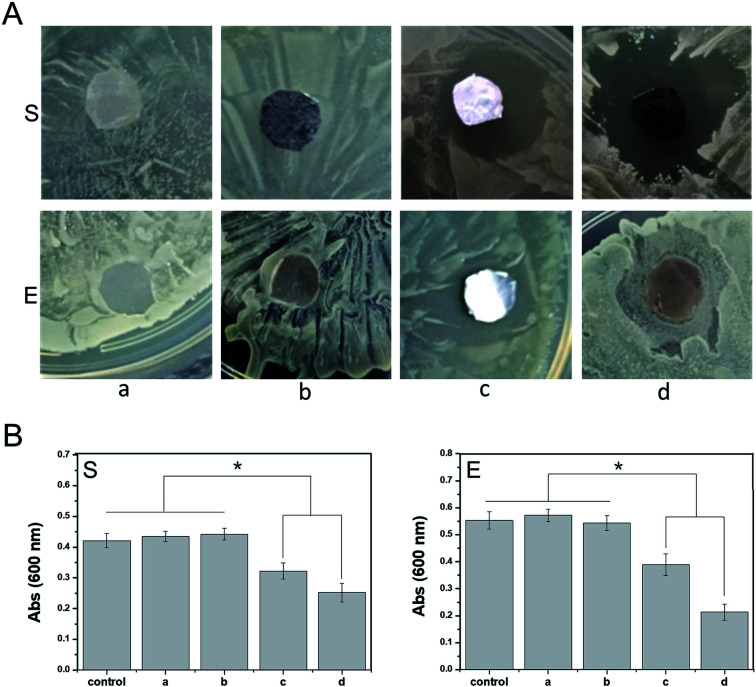
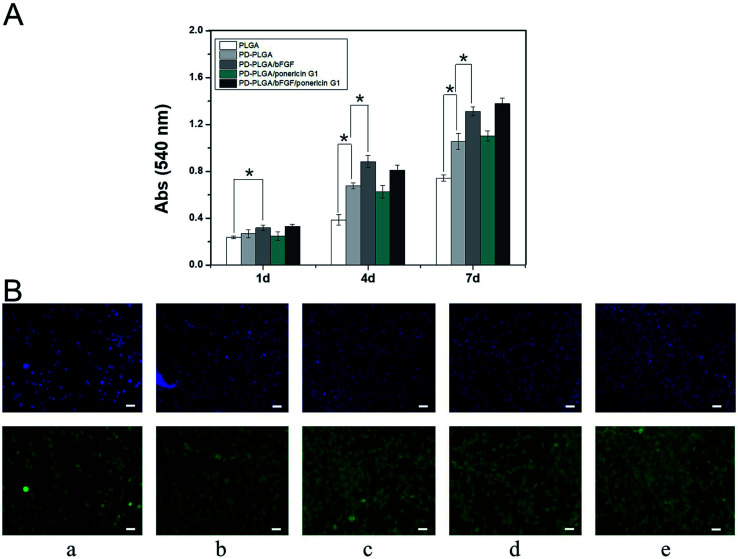
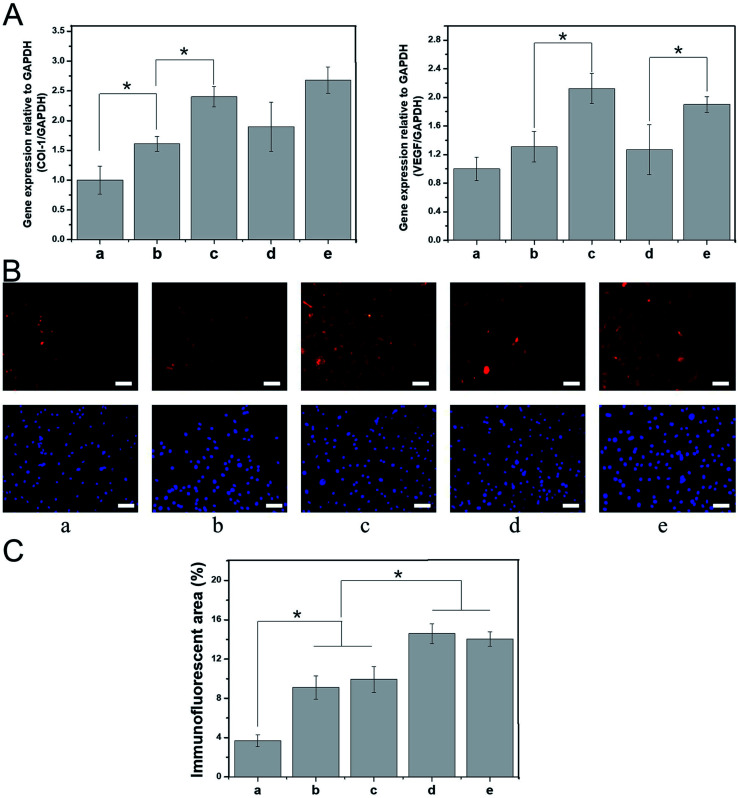
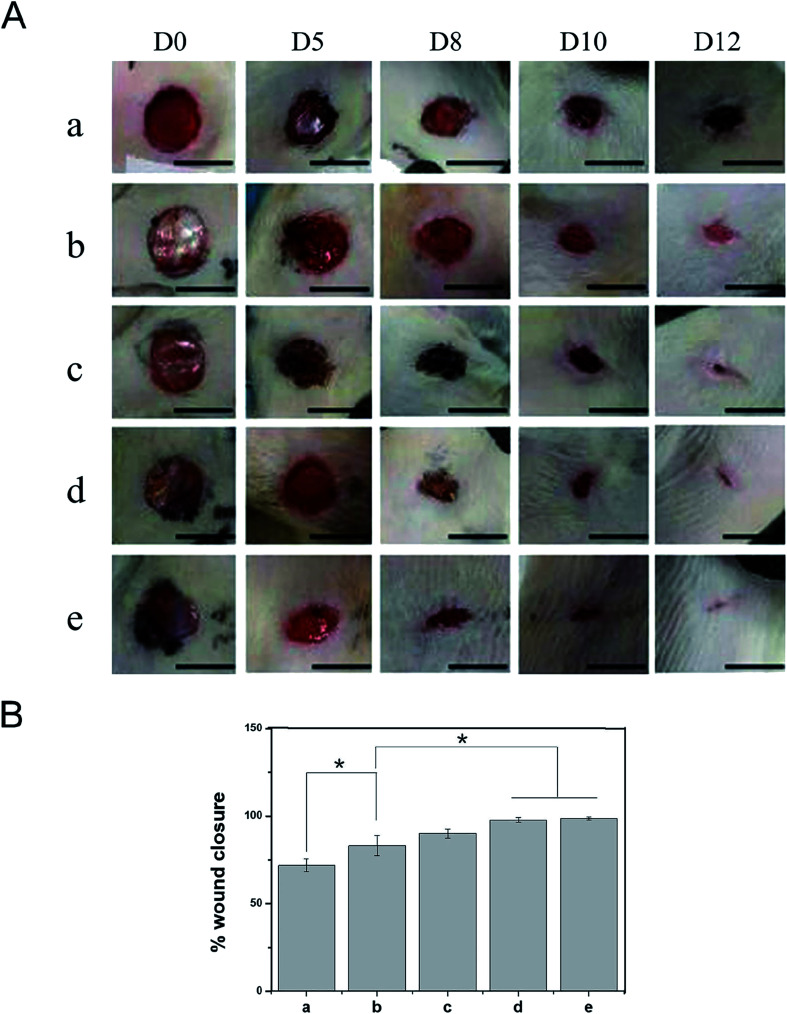
Artificial dressings composed of degradable polymer materials have a wide range of applications in skin repair. The structure and properties, in particular, the antibacterial properties, of the material surface are crucial for biological processes such as cell adhesion, proliferation, and skin regeneration. In this study, we aimed to prepare poly(lactic--glycolic acid) (PLGA) nanofiber scaffolds modified by polydopamine using electrospinning technology in order to produce polydopamine-modified degradable PLGA nanocomposites. The polydopamine-PLGA scaffold was endowed with excellent protein adhesion ability through the cross-linking of two biologically active factors, basic fibroblast growth factor (bFGF) and ponericin G1, significantly improving skin repair ability. The electrospun nanofiber scaffold was shown to have a structure similar to that of the natural cell matrix and created a more favorable microenvironment for cell growth. Surface modification by polydopamine dramatically improved the hydrophilicity of the nanofiber scaffold, increasing its ability to absorb active factors and its biocompatibility. The bFGF and ponericin G1 loaded onto the scaffold surface (PDA-PLGA/bFGF/ponericin G1 nanofiber scaffold) strongly promoted the antibacterial and cell proliferation-promoting properties and greatly enhanced the adhesion and proliferation of cells on the scaffold surface. The nanofiber scaffold also promoted wound healing and tissue collagen production in a rat wound healing model. Together, these findings indicate that the polydopamine-PLGA/bFGF/ponericin G1 nanofiber scaffold exhibits good biocompatibility and antibacterial properties, suggesting that it possesses potential value for skin tissue regeneration applications.
由可降解高分子材料制成的人工敷料在皮肤修复领域有着广泛应用。材料表面的结构和性能,尤其是抗菌性能,对于细胞黏附、增殖和皮肤再生等生物学过程至关重要。在本研究中,我们旨在利用静电纺丝技术制备经聚多巴胺改性的聚(乳酸-乙醇酸)(PLGA)纳米纤维支架,以生产聚多巴胺改性的可降解PLGA纳米复合材料。通过两种生物活性因子碱性成纤维细胞生长因子(bFGF)和杀镰孢菌素G1的交联,聚多巴胺-PLGA支架具有出色的蛋白质黏附能力,显著提高了皮肤修复能力。静电纺丝纳米纤维支架显示出与天然细胞基质相似的结构,为细胞生长创造了更有利的微环境。聚多巴胺对表面进行改性极大地提高了纳米纤维支架的亲水性,增强了其吸收活性因子的能力及其生物相容性。负载在支架表面的bFGF和杀镰孢菌素G1(PDA-PLGA/bFGF/杀镰孢菌素G1纳米纤维支架)强烈促进了抗菌和促进细胞增殖的性能,并大大增强了细胞在支架表面的黏附和增殖。纳米纤维支架在大鼠伤口愈合模型中还促进了伤口愈合和组织胶原蛋白的生成。总之,这些发现表明聚多巴胺-PLGA/bFGF/杀镰孢菌素G1纳米纤维支架具有良好的生物相容性和抗菌性能,表明其在皮肤组织再生应用中具有潜在价值。