Fernández Pozo Rubén, Wilby Mark Richard, Vinagre Díaz Juan José, Rodríguez González Ana Belén
Department of Mathematics Applied to Information and Communication Technologies, Universidad Politécnica de Madrid, Avda. Complutense, 30, 28040 Madrid, Spain.
Cities. 2022 Aug;127:103723. doi: 10.1016/j.cities.2022.103723. Epub 2022 May 2.
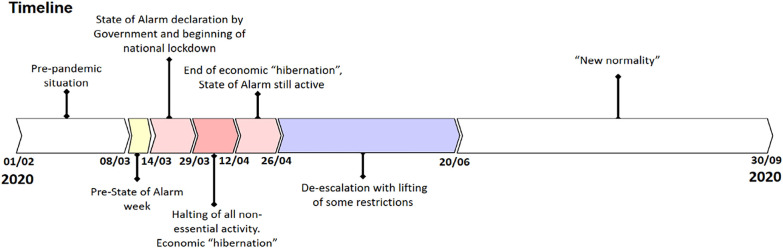
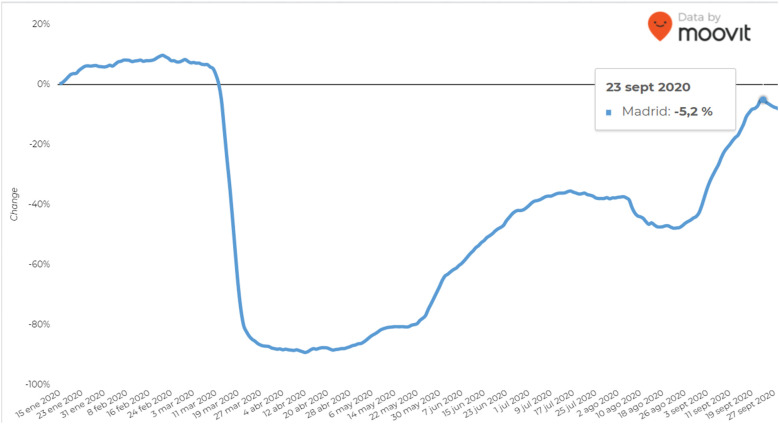
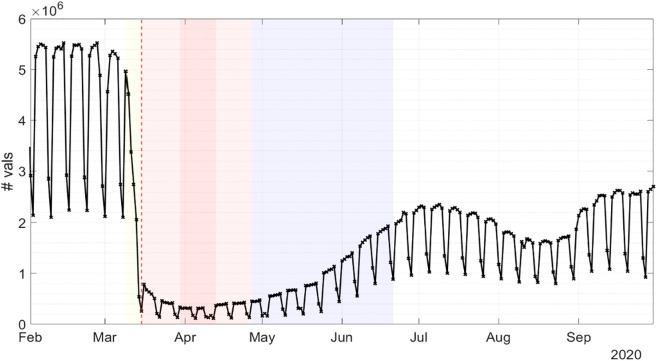
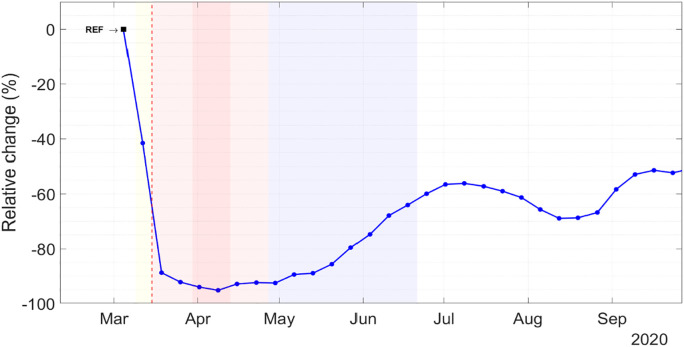
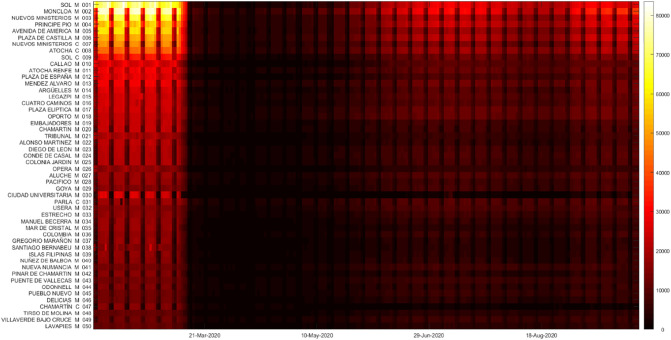
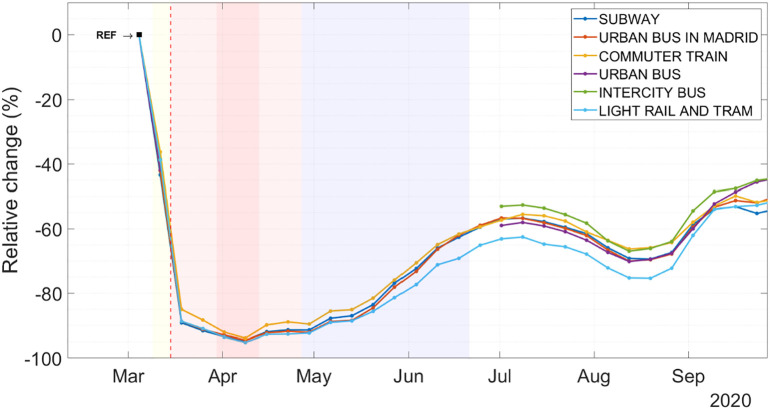
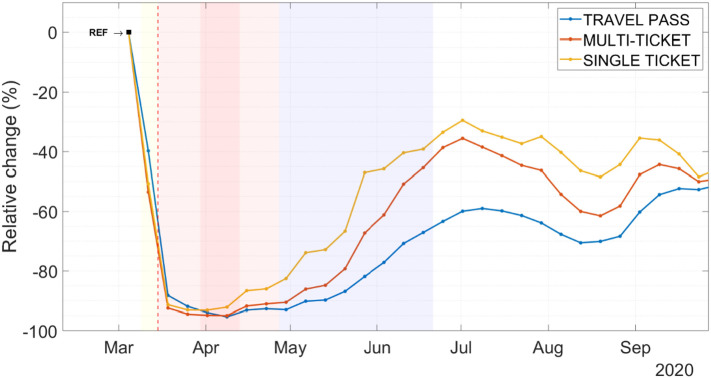
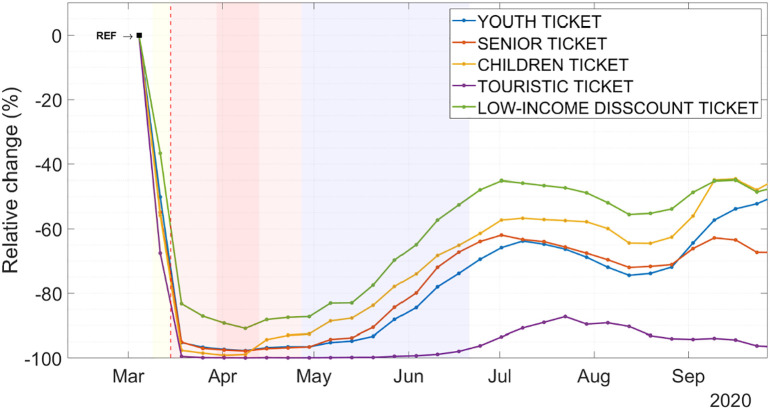
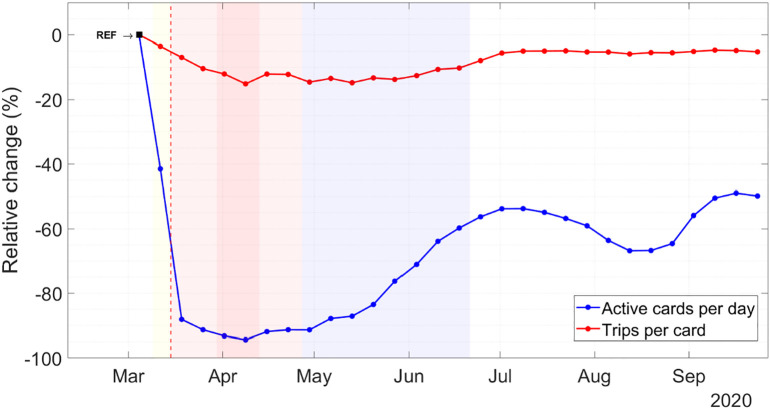
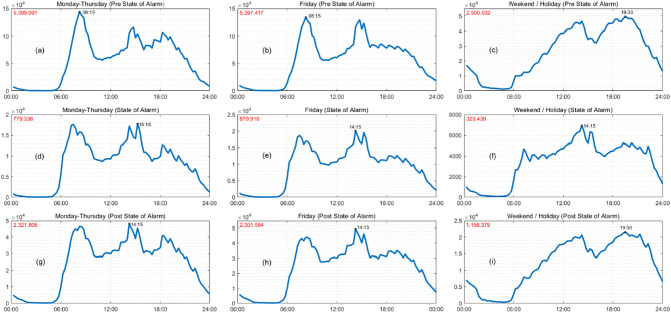
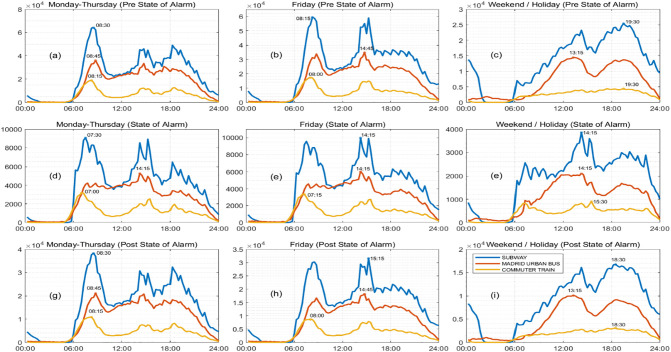
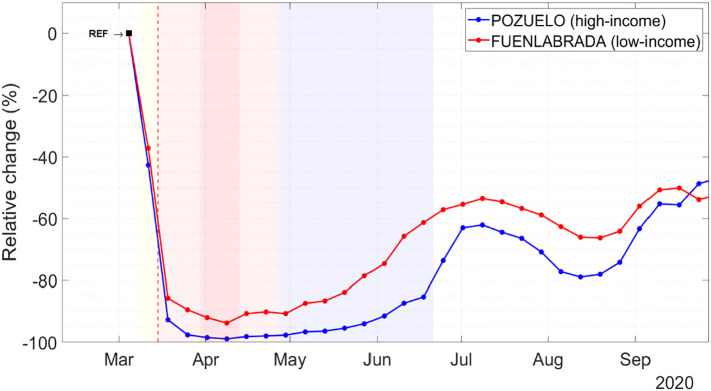
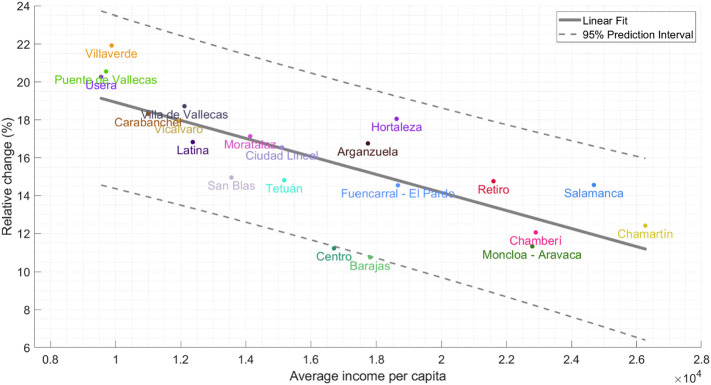
COVID-19 has become a major global issue with large social-economic and health impacts, which led to important changes in people's behavior. One of these changes affected the way people use public transport. In this work we present a data-driven analysis of the impact of COVID-19 on public transport demand in the Community of Madrid, Spain, using data from ticket validations between February and September 2020. This period of time covers all stages of pandemic in Spain, including de-escalation phases. We find that ridership has dramatically decreased by 95% at the pandemic peak, recovering very slowly and reaching only half its pre-pandemic levels at the end of September. We analyze results for different transport modes, ticket types, and groups of users. Our work corroborates that low-income groups are the most reliant on public transportation, thus observing significantly lower decreases in their ridership during pandemic. This paper also shows different average daily patterns of public transit demand during each phase of the pandemic in Madrid. All these findings provide relevant information for transit agencies to design responses to an emergence situation like this pandemic, contributing to extend the global knowledge about COVID-19 impact on transport comparing results with other cities worldwide.
新冠疫情已成为一个重大的全球性问题,对社会经济和健康产生了巨大影响,导致人们的行为发生了重大变化。其中一个变化影响了人们使用公共交通的方式。在这项工作中,我们利用2020年2月至9月的车票验证数据,对新冠疫情对西班牙马德里自治区公共交通需求的影响进行了数据驱动分析。这段时间涵盖了西班牙疫情的所有阶段,包括解封阶段。我们发现,在疫情高峰期,乘客数量急剧下降了95%,恢复非常缓慢,到9月底仅达到疫情前水平的一半。我们分析了不同交通方式、车票类型和用户群体的结果。我们的研究证实,低收入群体最依赖公共交通,因此在疫情期间其乘客数量的下降幅度明显较小。本文还展示了马德里疫情各阶段公共交通需求的不同日均模式。所有这些发现为交通机构应对此类疫情等突发情况提供了相关信息,通过与全球其他城市的结果进行比较,有助于扩展关于新冠疫情对交通影响的全球知识。