State Key Laboratory of Molecular Vaccinology and Molecular Diagnostics, School of Public Health, Xiamen University, Xiamen City, People's Republic of China.
Department of Acute Infectious Diseases Control and Prevention, Jiangsu Provincial Centre for Disease Control and Prevention, Nanjing, People's Republic of China.
PLoS Negl Trop Dis. 2022 May 9;16(5):e0010432. doi: 10.1371/journal.pntd.0010432. eCollection 2022 May.
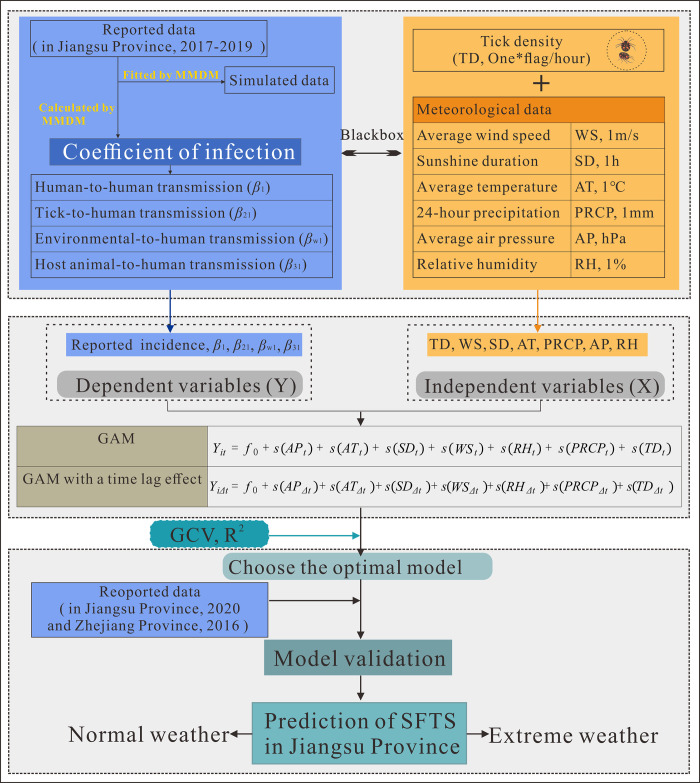
This study aimed to explore whether the transmission routes of severe fever with thrombocytopenia syndrome (SFTS) will be affected by tick density and meteorological factors, and to explore the factors that affect the transmission of SFTS. We used the transmission dynamics model to calculate the transmission rate coefficients of different transmission routes of SFTS, and used the generalized additive model to uncover how meteorological factors and tick density affect the spread of SFTS.
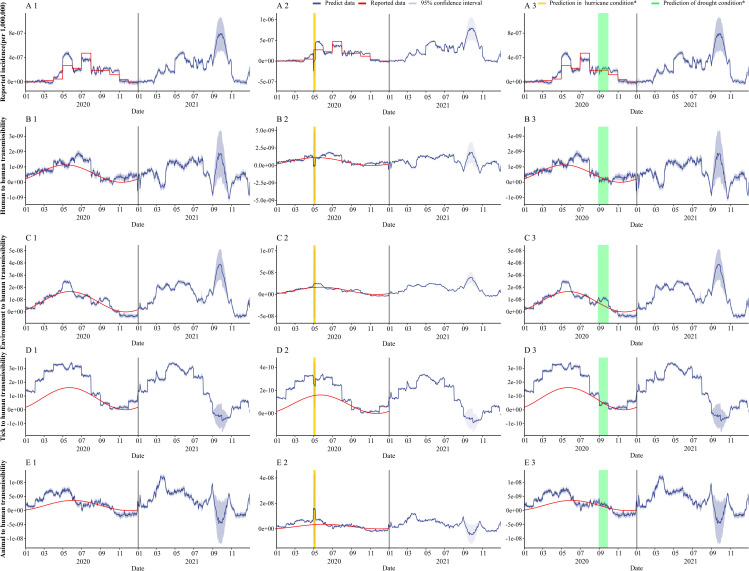
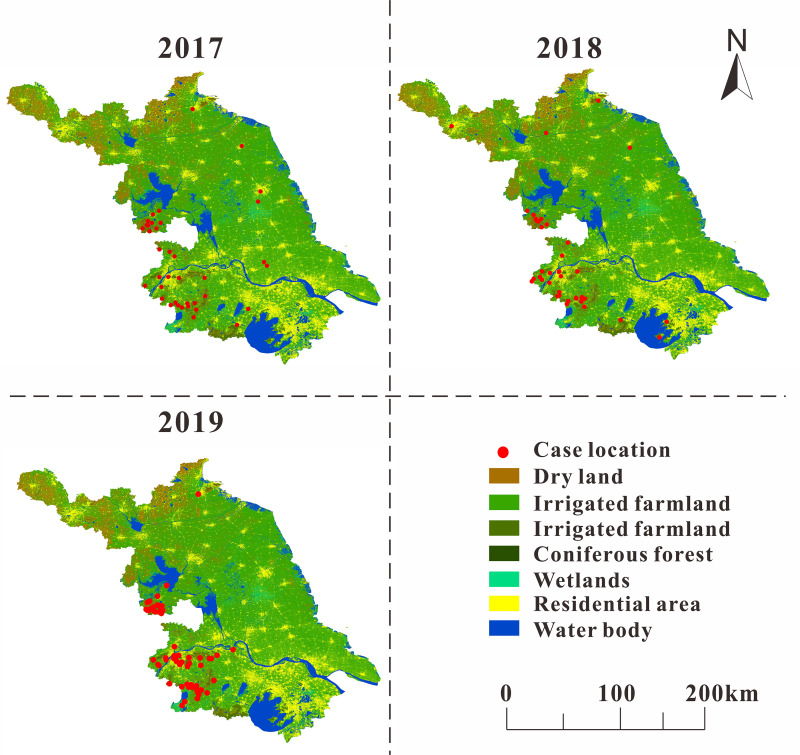
In this study, the time-varying infection rate coefficients of different transmission routes of SFTS in Jiangsu Province from 2017 to 2020 were calculated based on the previous multi-population multi-route dynamic model (MMDM) of SFTS. The changes in transmission routes were summarized by collecting questionnaires from 537 SFTS cases in 2018-2020 in Jiangsu Province. The incidence rate of SFTS and the infection rate coefficients of different transmission routes were dependent variables, and month, meteorological factors and tick density were independent variables to establish a generalized additive model (GAM). The optimal GAM was selected using the generalized cross-validation score (GCV), and the model was validated by the 2016 data of Zhejiang Province and 2020 data of Jiangsu Province. The validated GAMs were used to predict the incidence and infection rate coefficients of SFTS in Jiangsu province in 2021, and also to predict the effect of extreme weather on SFTS.
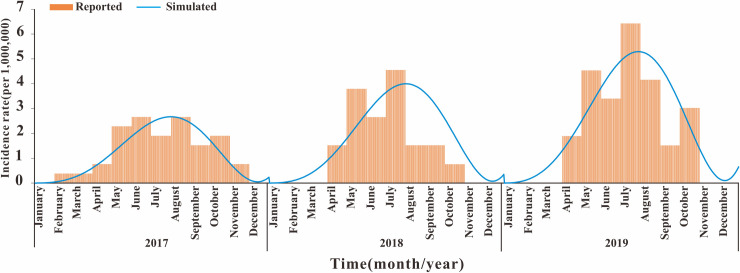
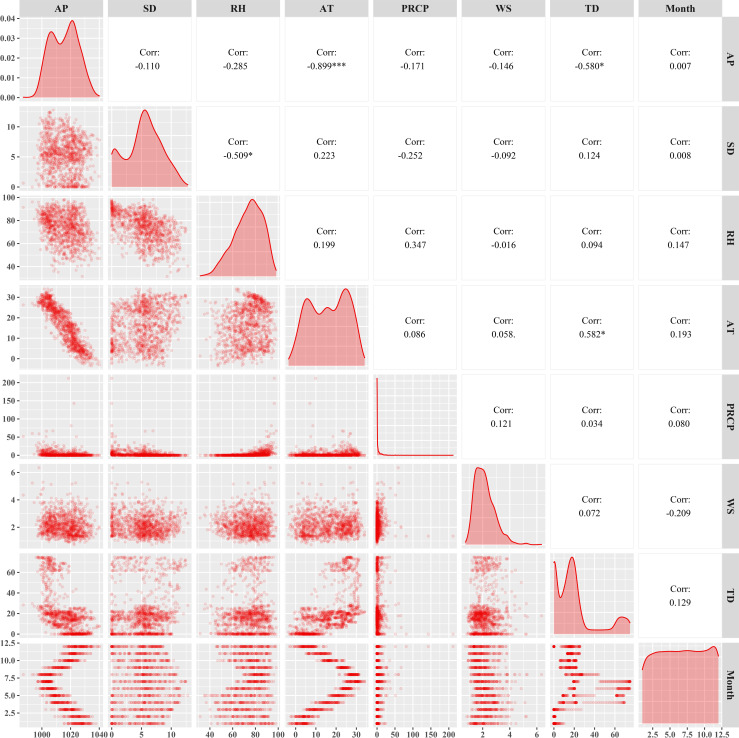
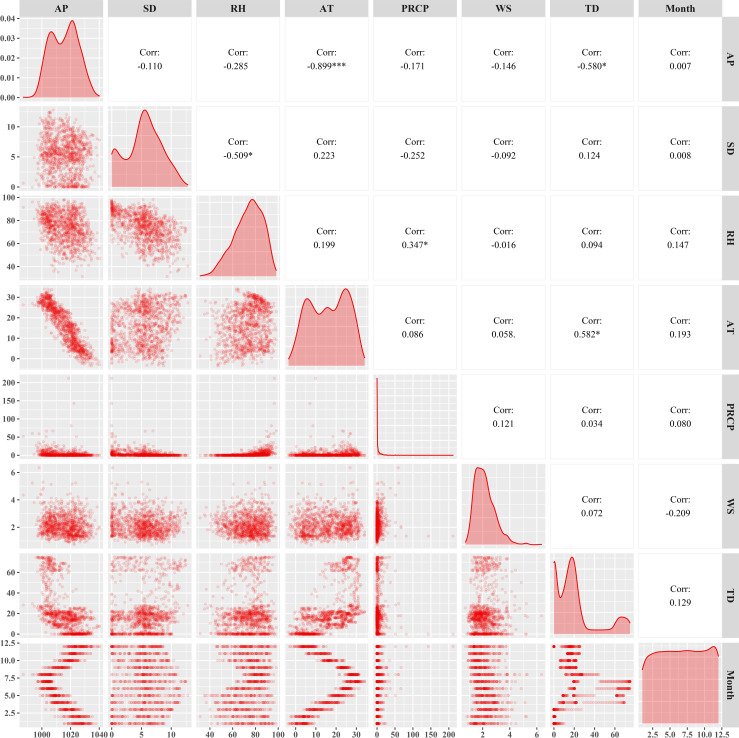
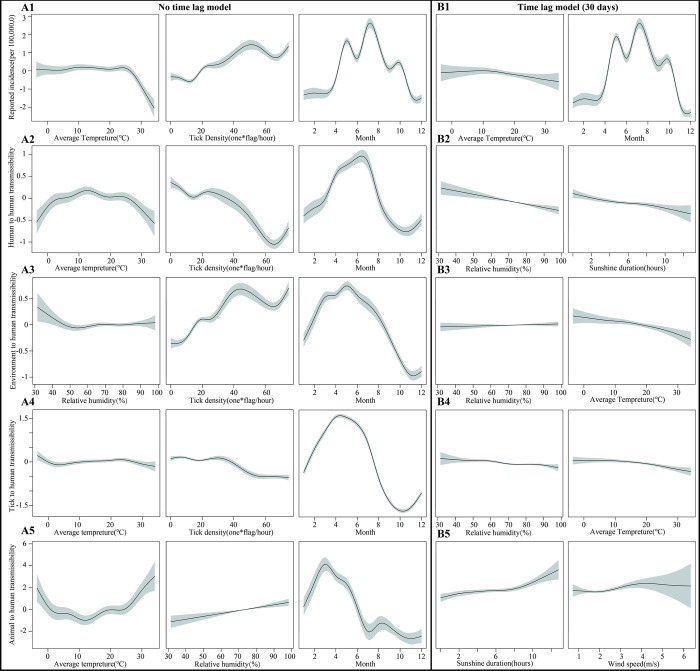
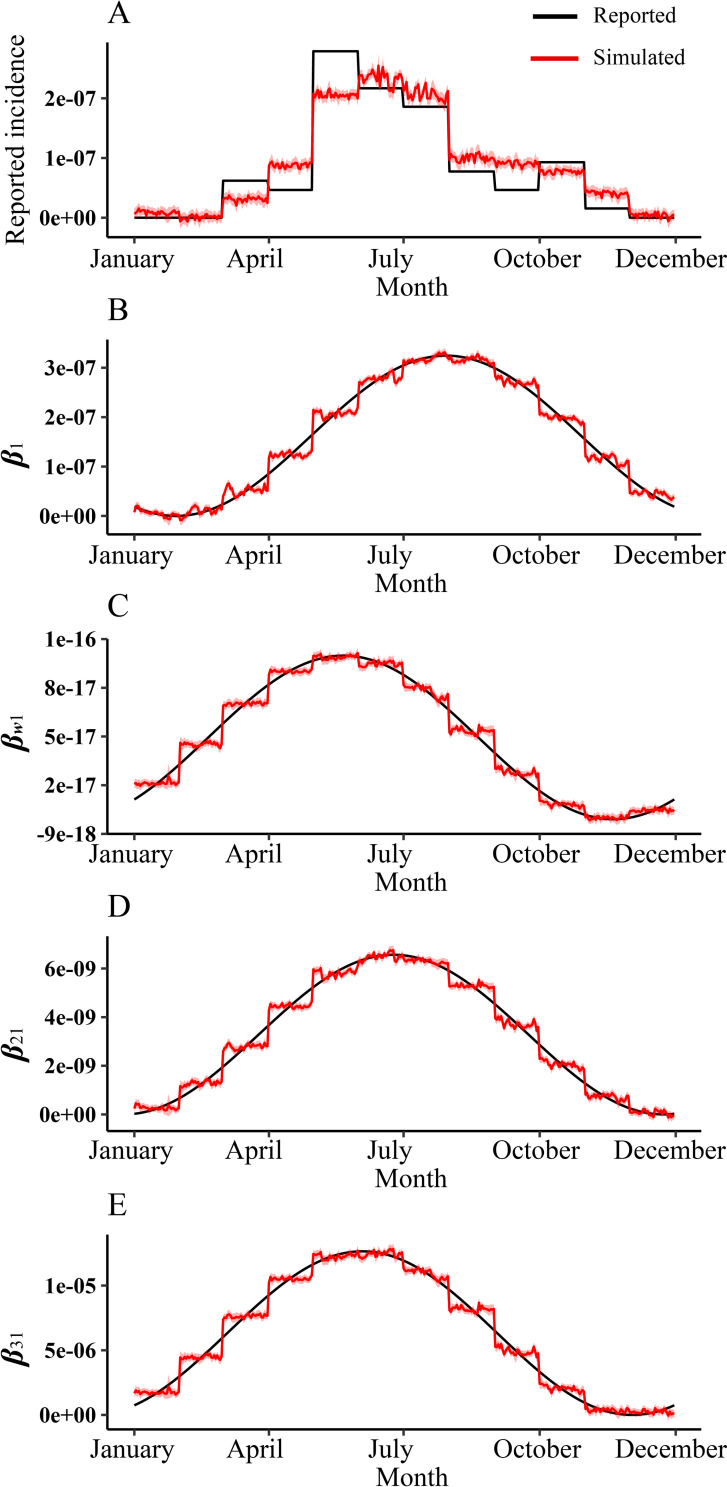
The number and proportion of infections by different transmission routes for each year and found that tick-to-human and human-to-human infections decreased yearly, but infections through animal and environmental transmission were gradually increasing. MMDM fitted well with the three-year SFTS incidence data (P<0.05). The best intervention to reduce the incidence of SFTS is to reduce the effective exposure of the population to the surroundings. Based on correlation tests, tick density was positively correlated with air temperature, wind speed, and sunshine duration. The best GAM was a model with tick transmissibility to humans as the dependent variable, without considering lagged effects (GCV = 5.9247E-22, R2 = 96%). Reported incidence increased when sunshine duration was higher than 11 h per day and decreased when temperatures were too high (>28°C). Sunshine duration and temperature had the greatest effect on transmission from host animals to humans. The effect of extreme weather conditions on SFTS was short-term, but there was no effect on SFTS after high temperature and sunshine hours.
Different factors affect the infection rate coefficients of different transmission routes. Sunshine duration, relative humidity, temperature and tick density are important factors affecting the occurrence of SFTS. Hurricanes reduce the incidence of SFTS in the short term, but have little effect in the long term. The most effective intervention to reduce the incidence of SFTS is to reduce population exposure to high-risk environments.
本研究旨在探讨发热伴血小板减少综合征(SFTS)的传播途径是否会受到蜱密度和气象因素的影响,并探讨影响 SFTS 传播的因素。我们使用传播动力学模型计算了 SFTS 不同传播途径的传播率系数,并使用广义加性模型揭示了气象因素和蜱密度如何影响 SFTS 的传播。
本研究基于 SFTS 的先前多人群多途径动态模型(MMDM),计算了 2017 年至 2020 年江苏省 SFTS 不同传播途径的时变感染率系数。通过收集 2018 年至 2020 年江苏省 537 例 SFTS 病例的问卷调查,总结了传播途径的变化。SFTS 的发病率和不同传播途径的感染率系数为因变量,月份、气象因素和蜱密度为自变量,建立广义加性模型(GAM)。使用广义交叉验证得分(GCV)选择最佳 GAM,并使用 2016 年浙江省和 2020 年江苏省的数据验证模型。使用验证后的 GAMs 预测 2021 年江苏省 SFTS 的发病率和感染率系数,并预测极端天气对 SFTS 的影响。
不同年份不同传播途径的感染人数和比例逐年减少,而动物和环境传播感染逐渐增加。MMDM 很好地拟合了三年的 SFTS 发病率数据(P<0.05)。减少 SFTS 发病率的最佳干预措施是减少人群对周围环境的有效暴露。基于相关测试,蜱密度与空气温度、风速和日照时间呈正相关。最佳 GAM 是一个以人类作为蜱虫传播媒介的依赖变量模型,没有考虑滞后效应(GCV = 5.9247E-22,R2 = 96%)。当日照时间每天超过 11 小时时,报告的发病率增加,当温度过高(>28°C)时,发病率下降。日照时间和温度对宿主动物向人类传播的影响最大。极端天气条件对 SFTS 的影响是短期的,但高温和日照时间过后对 SFTS 没有影响。
不同因素影响不同传播途径的感染率系数。日照时间、相对湿度、温度和蜱密度是影响 SFTS 发生的重要因素。飓风会在短期内降低 SFTS 的发病率,但长期影响不大。减少 SFTS 发病率的最有效干预措施是减少人群对高危环境的暴露。