Columbia University, The Hastings Center, USA.
University of Virginia, USA.
Stud Hist Philos Sci. 2022 Jun;93:183-191. doi: 10.1016/j.shpsa.2022.04.004. Epub 2022 May 6.
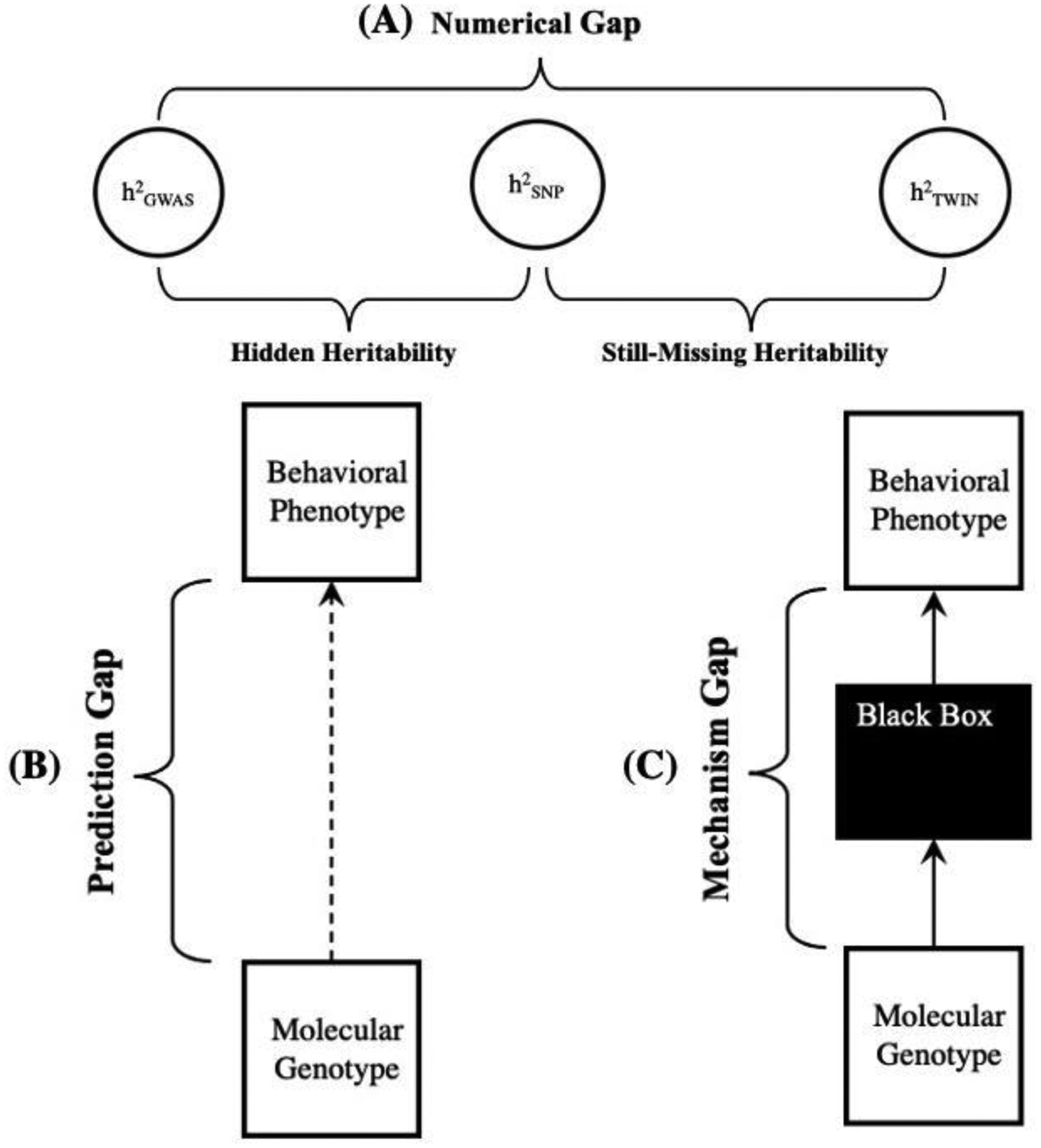
The so-called 'missing heritability problem' is often characterized by behavior geneticists as a numerical discrepancy between alternative kinds of heritability. For example, while 'traditional heritability' derived from twin and family studies indicates that approximately ∼50% of variation in intelligence is attributable to genetics, 'SNP heritability' derived from genome-wide association studies indicates that only ∼10% of variation in intelligence is attributable to genetics. This 40% gap in variance accounted for by alternative kinds of heritability is frequently referred to as what's "missing." Philosophers have picked up on this reading, suggesting that "dissolving" the missing heritability problem is merely a matter of closing the numerical gap between traditional and molecular kinds of heritability. We argue that this framing of the problem undervalues the severity of the many challenges to scientific understanding of the "heritability" of human behavior. On our view, resolving the numerical discrepancies between alternative kinds of heritability will do little to advance scientific explanation and understanding of behavior genetics. Thus, we propose a new conceptual framework of the missing heritability problem that comprises three independent methodological and explanatory challenges: the numerical gap, the prediction gap, and the mechanism gap.
所谓的“遗传缺失问题”通常被行为遗传学家描述为不同类型遗传率之间的数值差异。例如,虽然来自双胞胎和家庭研究的“传统遗传率”表明,智力的大约 50%可归因于遗传,但来自全基因组关联研究的“SNP 遗传率”表明,智力的只有大约 10%可归因于遗传。这种由不同类型遗传率解释的方差差异约为 40%,通常被称为“缺失”的部分。哲学家们注意到了这种解读,认为“解决”遗传缺失问题仅仅是缩小传统和分子遗传率之间的数值差距的问题。我们认为,这种对问题的表述低估了科学理解人类行为“遗传性”所面临的许多挑战的严重性。在我们看来,解决不同类型遗传率之间的数值差异对推进行为遗传学的科学解释和理解几乎没有帮助。因此,我们提出了一个新的遗传缺失问题的概念框架,其中包括三个独立的方法学和解释性挑战:数值差距、预测差距和机制差距。