, Perth, Australia.
Hollywood Medical Centre, Suite 41, 85 Monash Avenue, Nedlands, Western Australia, Australia.
BMC Musculoskelet Disord. 2022 May 9;23(1):433. doi: 10.1186/s12891-022-05376-9.
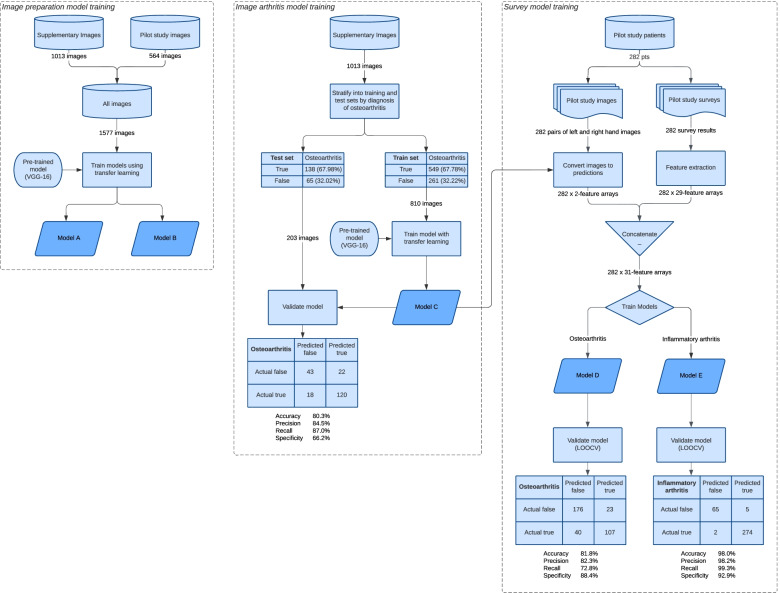
Arthritis is a common condition, and the prompt and accurate assessment of hand arthritis in primary care is an area of unmet clinical need. We have previously developed and tested a screening tool combining machine-learning algorithms, to help primary care physicians assess patients presenting with arthritis affecting the hands. The aim of this study was to assess the validity of the screening tool among a number of different Rheumatologists.
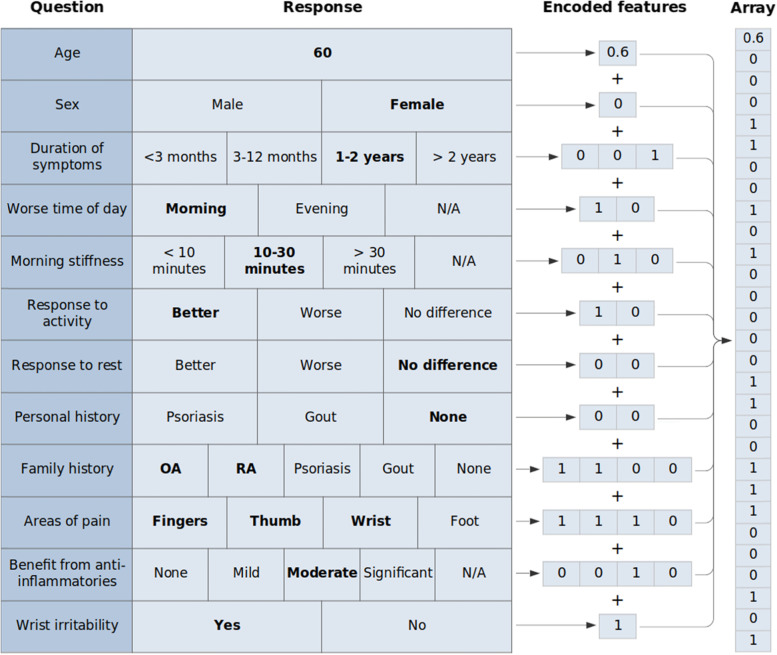
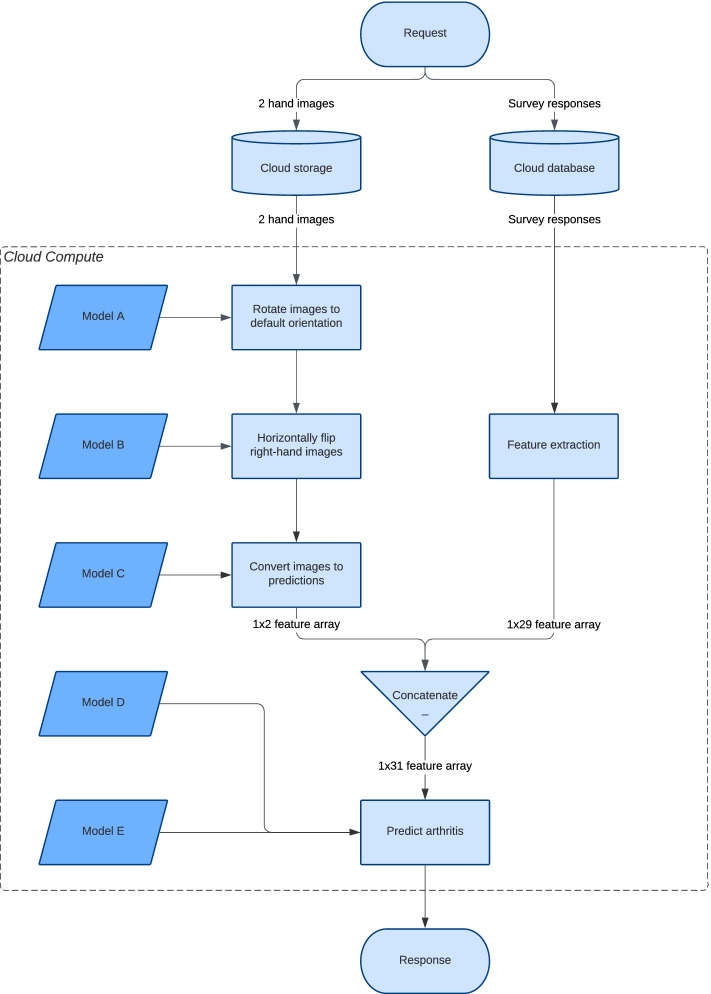
Two hundred and forty-eight consecutive new patients presenting to 7 private Rheumatology practices across Australia were enrolled. Using a smartphone application, each patient had photographs taken of their hands, completed a brief 9-part questionnaire, and had a single examination result (wrist irritability) recorded. The Rheumatologist diagnosis was entered following a 45-minute consultation. Multiple machine learning models were applied to both the photographic and survey/examination results, to generate a screening outcome for the primary diagnoses of osteoarthritis, rheumatoid and psoriatic arthritis.
The combined algorithms in the application performed well in identifying and discriminating between different forms of hand arthritis. The algorithms were able to predict rheumatoid arthritis with accuracy, precision, recall and specificity of 85.1, 80.0, 88.1 and 82.7% respectively. The corresponding results for psoriatic arthritis were 95.2, 76.9, 90.9 and 95.8%, and for osteoarthritis were 77.4, 78.3, 80.6 and 73.7%. The results were maintained when each contributor was excluded from the analysis. The median time to capture all data across the group was 2 minutes and 59 seconds.
This multicentre study confirms the results of the pilot study, and indicates that the performance of the screening tool is maintained across a group of different Rheumatologists. The smartphone application can provide a screening result from a combination of machine-learning algorithms applied to hand images and patient symptom responses. This could be used to assist primary care physicians in the assessment of patients presenting with hand arthritis, and has the potential to improve the clinical assessment and management of such patients.
关节炎是一种常见病症,在初级保健中快速准确地评估手部关节炎是未满足的临床需求领域。我们之前开发并测试了一种结合机器学习算法的筛查工具,以帮助初级保健医生评估手部关节炎患者。本研究的目的是在许多不同的风湿病医生中评估该筛查工具的有效性。
连续招募了 248 名在澳大利亚 7 家私人风湿病诊所就诊的新患者。每位患者使用智能手机应用程序拍摄手部照片,完成简短的 9 部分问卷,并记录一项检查结果(腕部易激惹)。在 45 分钟的咨询后,输入风湿病医生的诊断结果。将多个机器学习模型应用于摄影和调查/检查结果,以生成手部关节炎的主要诊断(骨关节炎、类风湿关节炎和银屑病关节炎)的筛查结果。
应用程序中的组合算法在识别和区分不同形式的手部关节炎方面表现良好。该算法能够准确、精确、召回和特异性地预测类风湿关节炎,准确率、精确度、召回率和特异性分别为 85.1%、80.0%、88.1%和 82.7%。银屑病关节炎的相应结果为 95.2%、76.9%、90.9%和 95.8%,骨关节炎为 77.4%、78.3%、80.6%和 73.7%。当每个贡献者被排除在分析之外时,结果仍然保持不变。整个组捕获所有数据的中位数时间为 2 分钟 59 秒。
这项多中心研究证实了试点研究的结果,并表明该筛查工具的性能在一组不同的风湿病医生中保持不变。智能手机应用程序可以从应用于手部图像和患者症状反应的机器学习算法组合中提供筛查结果。这可用于帮助初级保健医生评估手部关节炎患者,并有可能改善此类患者的临床评估和管理。