School of Public Health, Fudan University, Key Laboratory of Public Health Safety, Ministry of Education, Shanghai, China.
Shanghai Institute of Infectious Disease and Biosecurity, Fudan University, Shanghai, China.
Nat Med. 2022 Jul;28(7):1468-1475. doi: 10.1038/s41591-022-01855-7. Epub 2022 May 10.
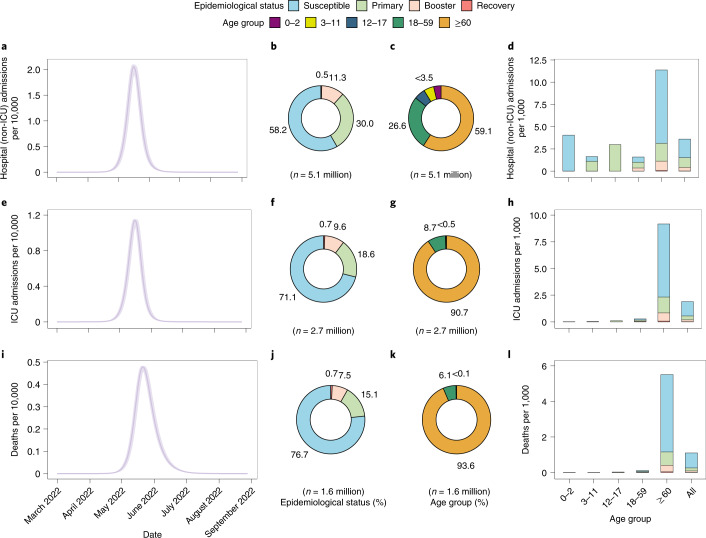
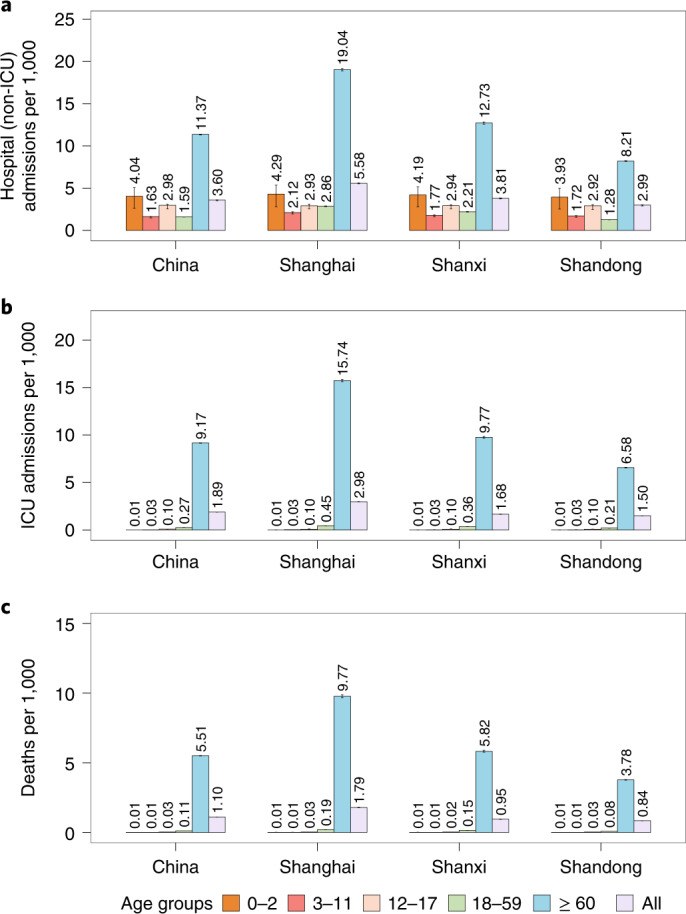
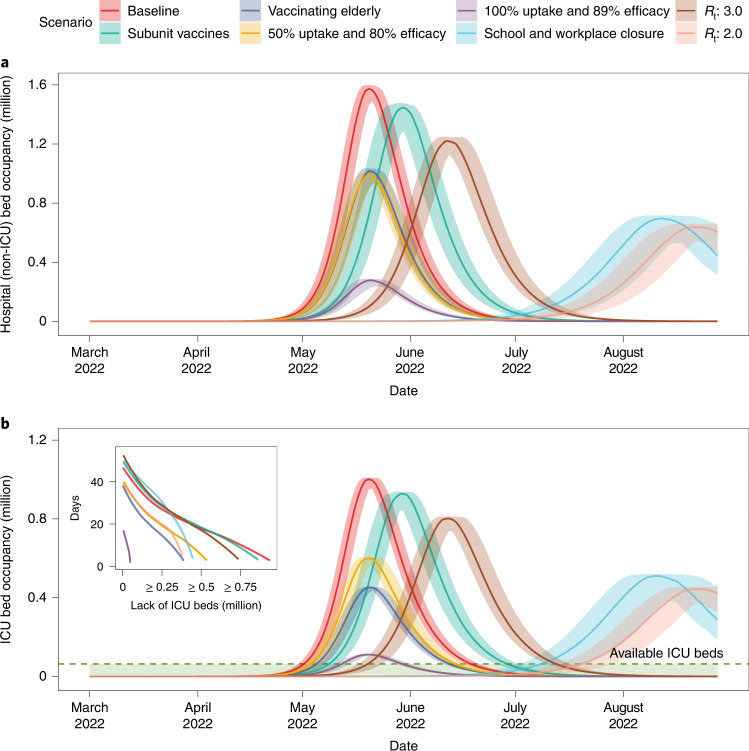
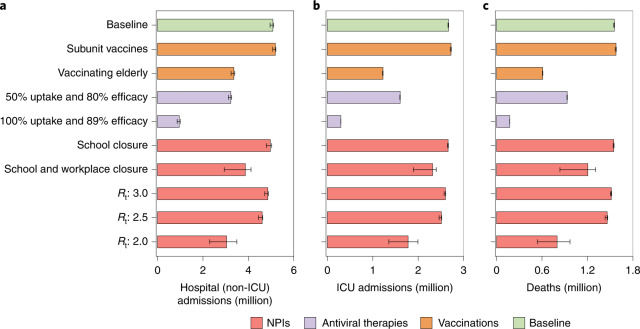
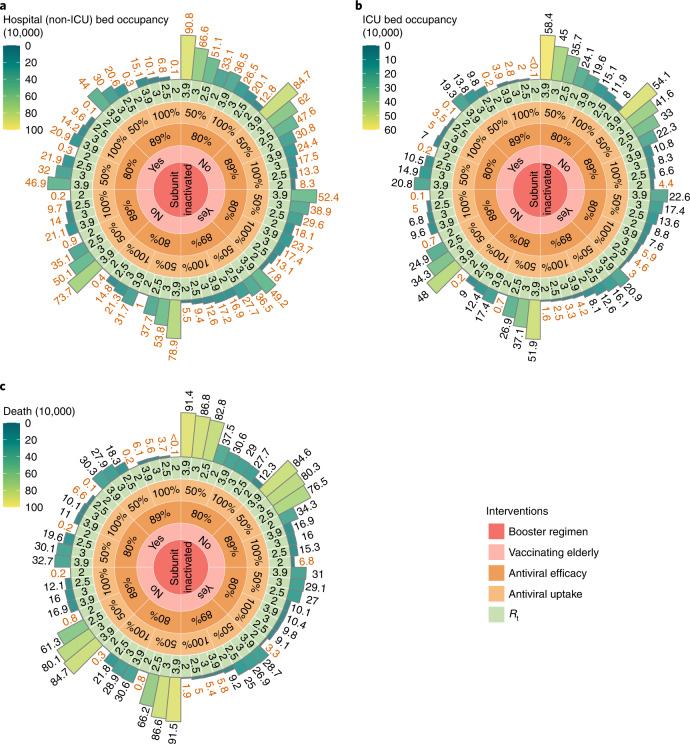
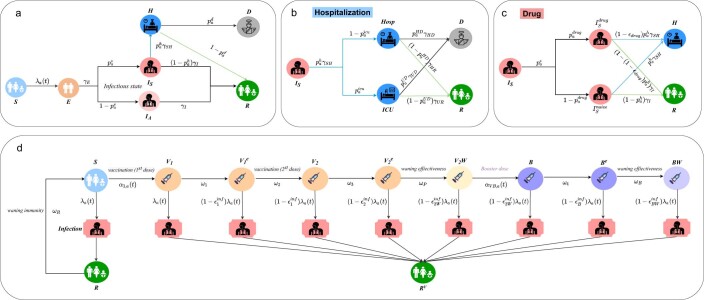
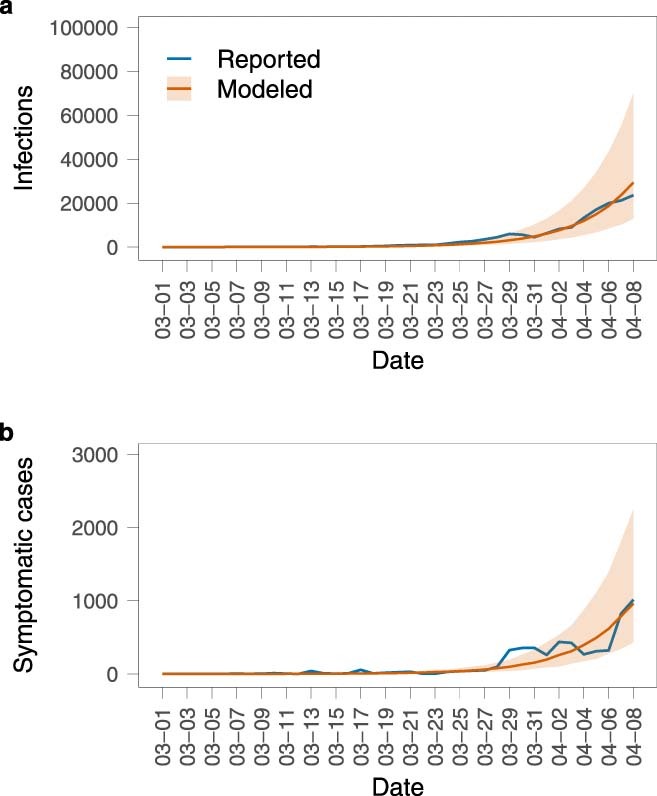
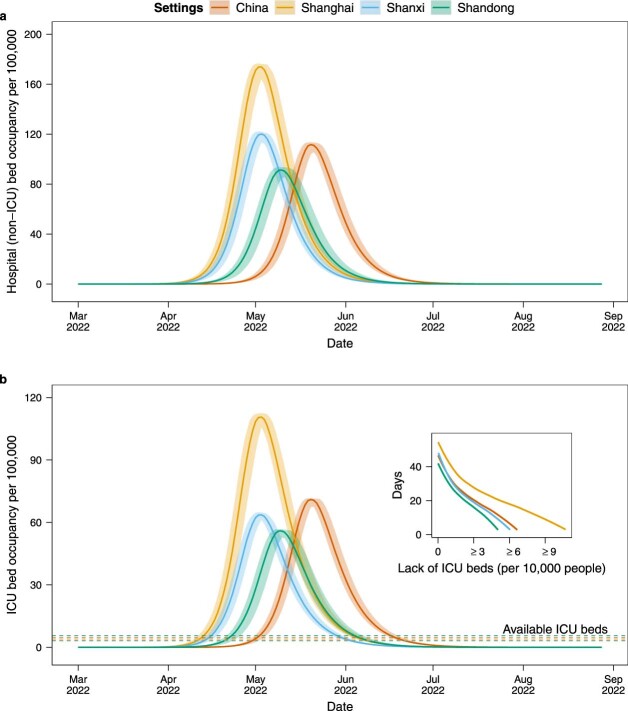
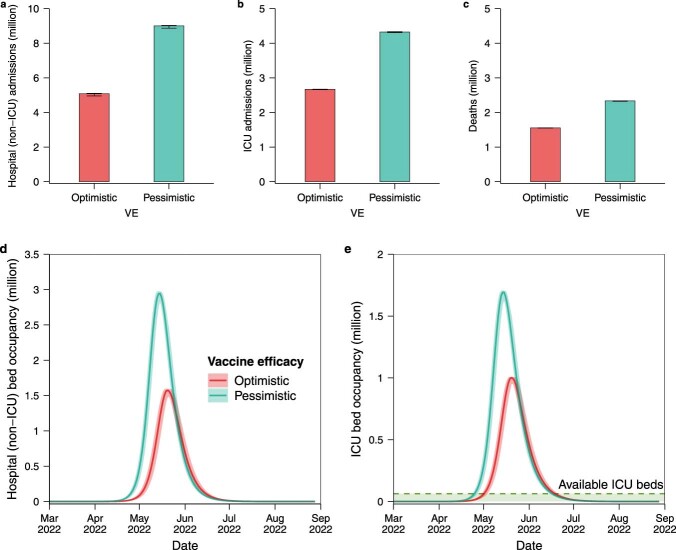
Having adopted a dynamic zero-COVID strategy to respond to SARS-CoV-2 variants with higher transmissibility since August 2021, China is now considering whether, and for how long, this policy can remain in place. The debate has thus shifted towards the identification of mitigation strategies for minimizing disruption to the healthcare system in the case of a nationwide epidemic. To this aim, we developed an age-structured stochastic compartmental susceptible-latent-infectious-removed-susceptible model of SARS-CoV-2 transmission calibrated on the initial growth phase for the 2022 Omicron outbreak in Shanghai, to project COVID-19 burden (that is, number of cases, patients requiring hospitalization and intensive care, and deaths) under hypothetical mitigation scenarios. The model also considers age-specific vaccine coverage data, vaccine efficacy against different clinical endpoints, waning of immunity, different antiviral therapies and nonpharmaceutical interventions. We find that the level of immunity induced by the March 2022 vaccination campaign would be insufficient to prevent an Omicron wave that would result in exceeding critical care capacity with a projected intensive care unit peak demand of 15.6 times the existing capacity and causing approximately 1.55 million deaths. However, we also estimate that protecting vulnerable individuals by ensuring accessibility to vaccines and antiviral therapies, and maintaining implementation of nonpharmaceutical interventions could be sufficient to prevent overwhelming the healthcare system, suggesting that these factors should be points of emphasis in future mitigation policies.
自 2021 年 8 月以来,中国采取了积极的动态“零新冠”策略来应对具有更高传播性的 SARS-CoV-2 变体,目前正在考虑是否以及在多长时间内可以继续实施该策略。因此,辩论的焦点已经转向确定缓解策略,以最大程度地减少在全国性流行情况下对医疗系统的干扰。为此,我们开发了一个年龄结构的随机房室传染病模型,对 2022 年上海奥密克戎疫情的初始增长阶段进行了校准,以预测假设缓解情景下 COVID-19 的负担(即病例数、需要住院和重症监护的患者以及死亡人数)。该模型还考虑了特定年龄的疫苗接种覆盖率数据、针对不同临床终点的疫苗效力、免疫力下降、不同的抗病毒疗法和非药物干预措施。我们发现,2022 年 3 月疫苗接种运动所诱导的免疫水平不足以预防奥密克戎波,预计重症监护病房的需求峰值将达到现有容量的 15.6 倍,导致约 155 万人死亡。然而,我们还估计,通过确保脆弱人群能够获得疫苗和抗病毒疗法,并维持非药物干预措施的实施,就可以防止医疗系统不堪重负,这表明这些因素应该是未来缓解政策的重点。