Tang Liangchen, Wei Wu, Wang Xuehong, Qian Jun, Li Jianyou, He Axiang, Yang Lili, Jiang Xuesheng, Li Xiongfeng, Wei Jie
Key Laboratory for Ultrafine Materials of Ministry of Education, East China University of Science and Technology 130 Meilong Road, Shanghai 200237 China
College of Materials Science & Engineering, Nanjing Tech University Nanjing 210009 China
RSC Adv. 2018 Mar 19;8(20):10794-10805. doi: 10.1039/c7ra13452e. eCollection 2018 Mar 16.
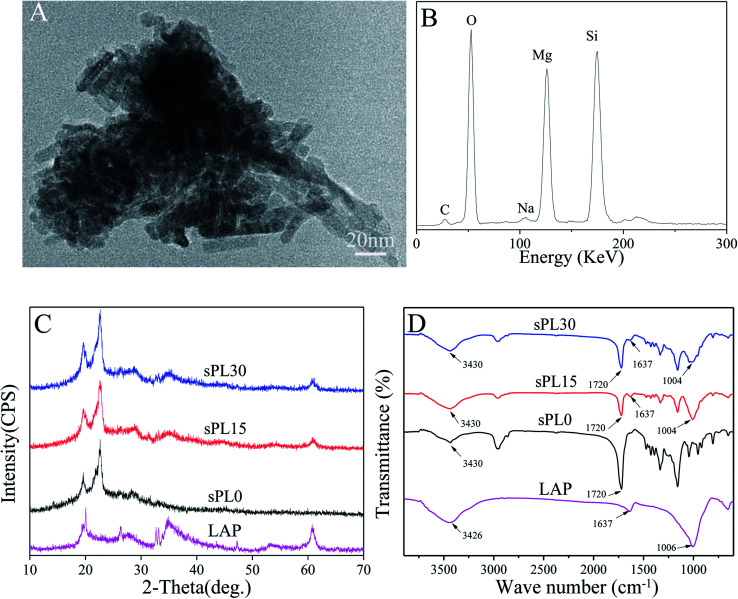
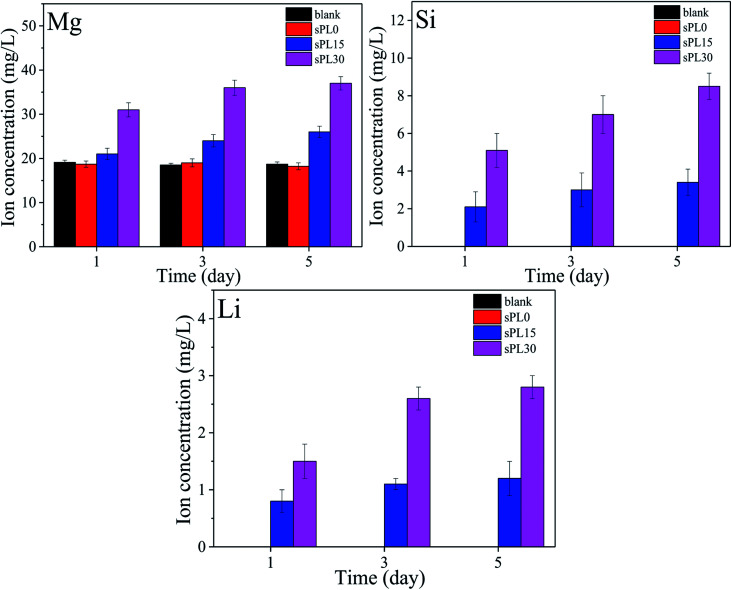
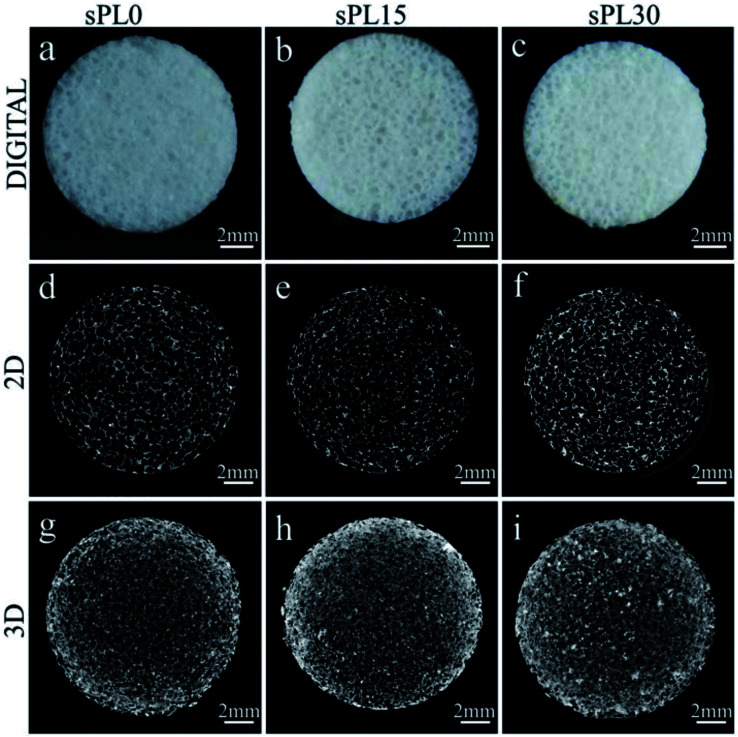
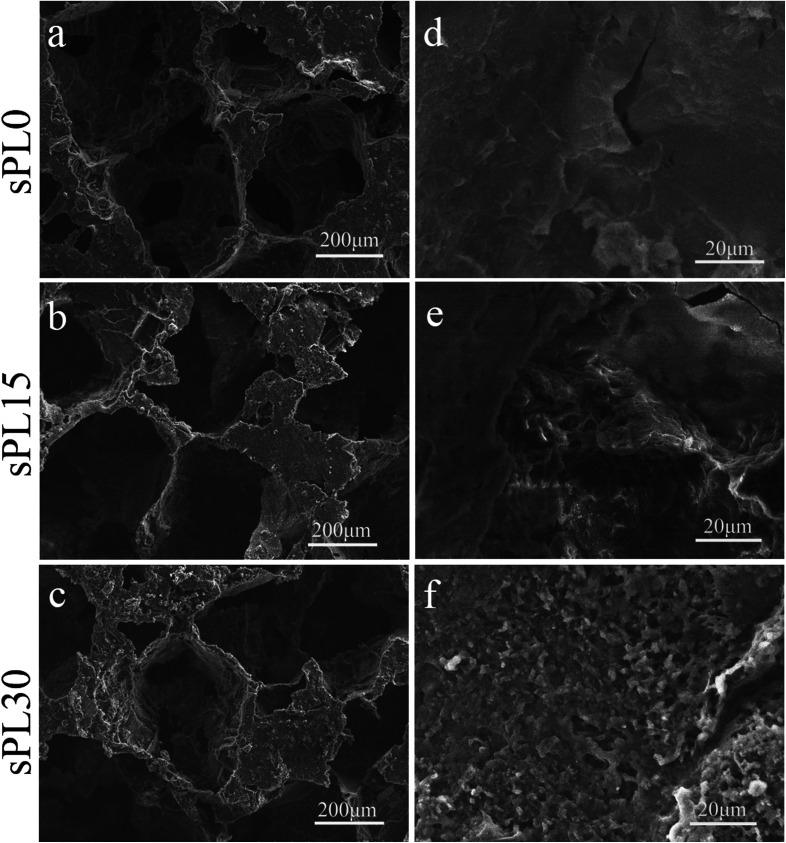
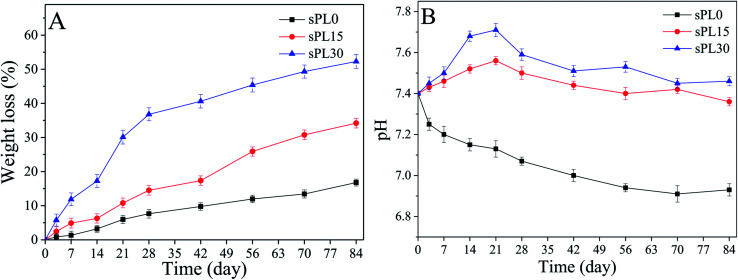
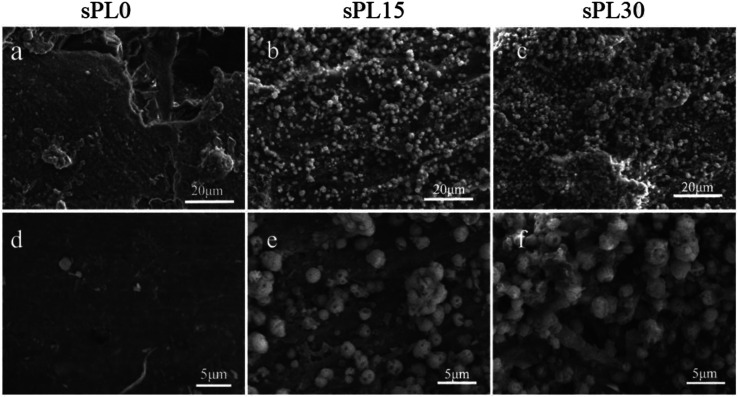
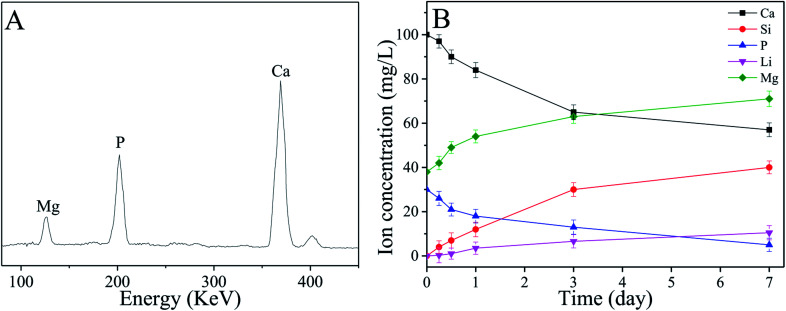
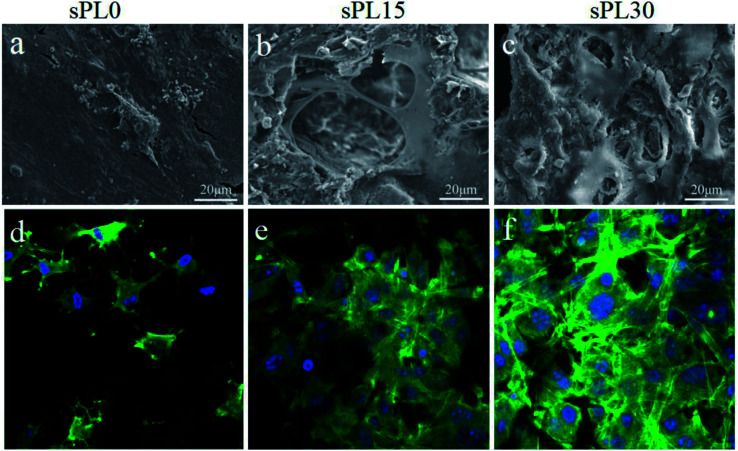
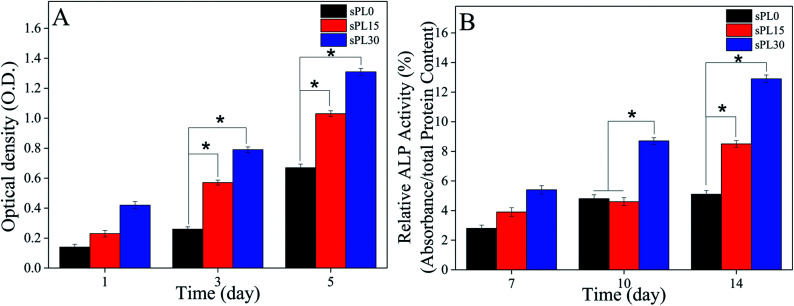
Novel bio-nanocomposite scaffolds for bone tissue engineering were prepared by incorporation of LAPONITE® (LAP) nanorods into poly(butylene succinate) (PBSu). The results showed that the scaffolds had well interconnected macroporous structures with macropore size in the range of 200-400 μm and porosity of around 70%. In addition, the water absorption, degradability and apatite mineralization ability of the scaffolds were clearly enhanced with the increase of LAP content. Moreover, the degradation of LAP produced alkaline products, which neutralized the acidic degradable products of PBSu, and formed a weak alkaline microenvironment similar to a biological environment. Furthermore, the adhesion, proliferation and differentiation of MC3T3-E1 cells onto the scaffolds were significantly promoted with the increase of LAP content, in which the scaffold with 30 wt% LAP (sPL30) exhibited the best stimulation effect on the cells responses. The results suggested that the promotion of cells responses could be ascribed to the improvements of surface characteristics (including roughness, hydrophilicity, ions release and apatite formation, ) of the scaffolds. The sPL30 scaffold with excellent biocompatibility, bioactivity and degradability had great potential for applications in bone tissue engineering.
通过将锂皂石(LAPONITE®,LAP)纳米棒掺入聚丁二酸丁二醇酯(PBSu)中,制备了用于骨组织工程的新型生物纳米复合支架。结果表明,该支架具有相互连通良好的大孔结构,大孔尺寸在200 - 400μm范围内,孔隙率约为70%。此外,随着LAP含量的增加,支架的吸水率、降解性和磷灰石矿化能力明显增强。而且,LAP的降解产生碱性产物,中和了PBSu的酸性降解产物,并形成了类似于生物环境的弱碱性微环境。此外,随着LAP含量的增加,MC3T3 - E1细胞在支架上的黏附、增殖和分化显著促进,其中含30 wt% LAP的支架(sPL30)对细胞反应表现出最佳刺激效果。结果表明,细胞反应的促进可归因于支架表面特性(包括粗糙度、亲水性、离子释放和磷灰石形成)的改善。具有优异生物相容性、生物活性和降解性的sPL30支架在骨组织工程应用中具有巨大潜力。