Orafa Zahra, Bakhshi Hadi, Arab-Ahmadi Samira, Irani Shiva
Department of Biology, Science and Research Branch, Islamic Azad University, Tehran, Iran.
Department of Life Science and Bioprocesses, Fraunhofer Institute for Applied Polymer Research, Geiselbergstraße 68, 14476, Potsdam, Germany.
Sci Rep. 2022 Apr 21;12(1):6583. doi: 10.1038/s41598-022-10595-0.
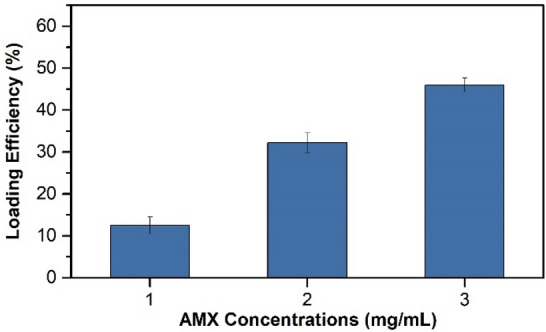
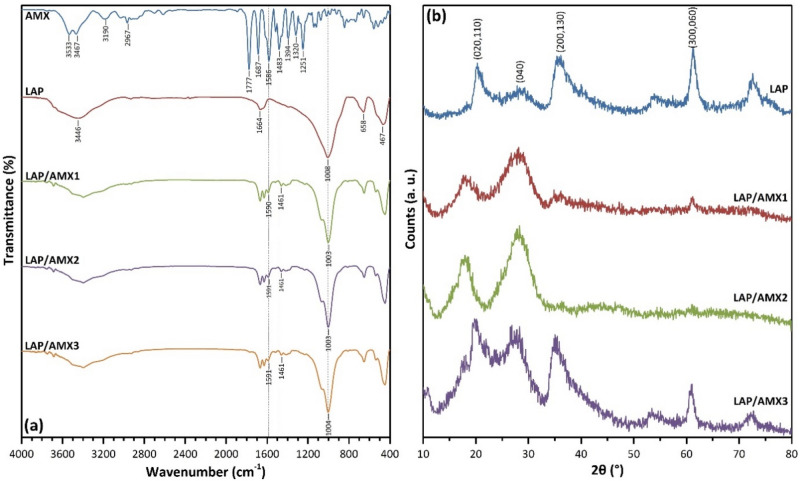
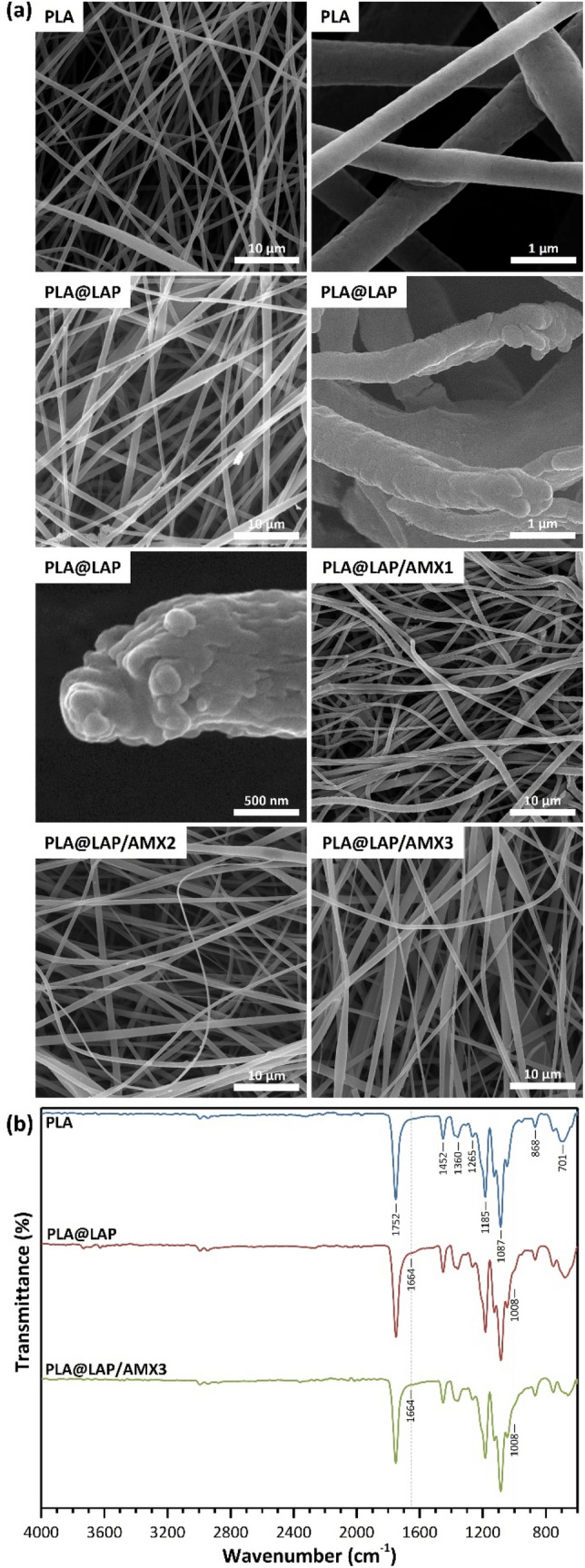
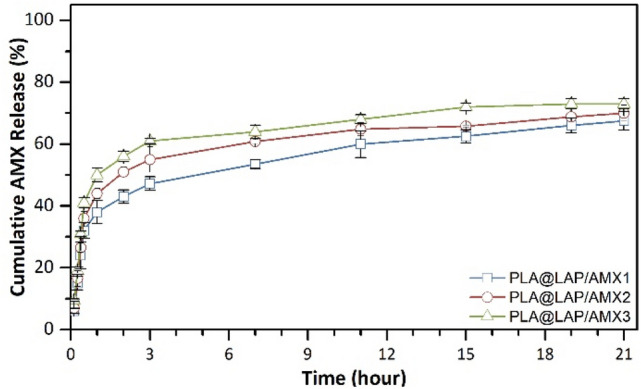
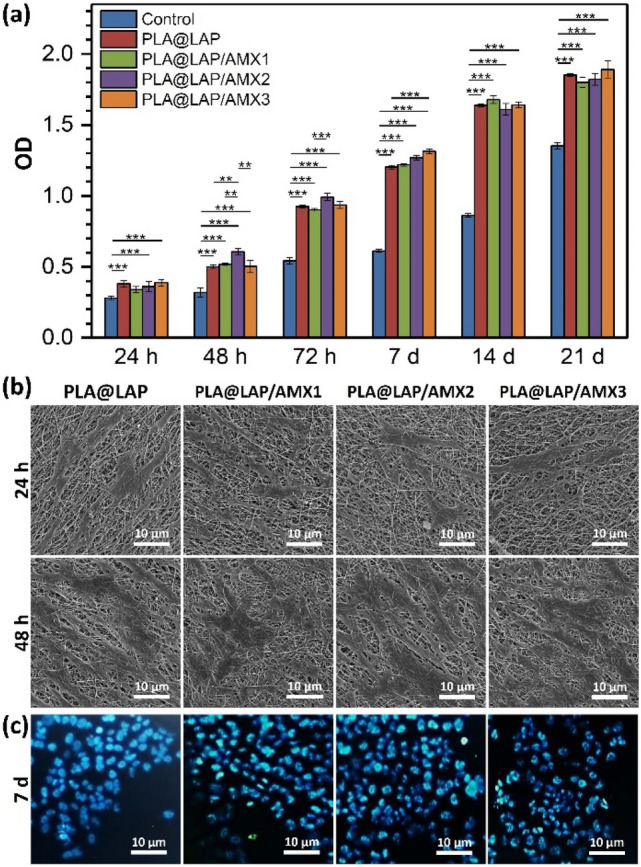
In this study, Amoxicillin (AMX) was loaded on laponite (LAP) nanoplates and then immobilized on the surface of electrospun polylactic acid (PLA) nanofibers to fabricate scaffolds with osteoinductive and antibacterial activities. The highest loading efficiency (49%) was obtained when the concentrations of AMX and LAP were 3 mg/mL and 1 mg/mL, respectively. FTIR and XRD spectroscopies and zeta potentiometry confirmed the successful encapsulating of AMX within LAP nanoplates. The immobilization of AMX-loaded LAPs on the surface of PLA nanofibers was verified by SEM and FTIR spectroscopy. In vitro release study showed a two-phase AMX release profile for the scaffolds; an initial burst release within the first 48 h and a later sustained release up to 21 days. In vitro antibacterial tests against Staphylococcus aureus and Escherichia coli presented the ability of scaffolds to inhibit the growth of both bacteria. The biocompatibility assays revealed the attachment and viability of human bone marrow mesenchymal stem cells (hBMSCs) cultured on the surface of scaffolds (p ≤ 0.05). The increased ALKALINE PHOSPHATASE (ALP) activity (p ≤ 0.001), calcium deposition, and expression of ALP and OSTEONECTIN genes indicated the osteoinductivity of functionalized scaffolds for hBMSCs. These LAP/AMX-functionalized scaffolds might be desirable candida for the treatment of bone defects.
在本研究中,将阿莫西林(AMX)负载于锂皂石(LAP)纳米片上,然后固定在电纺聚乳酸(PLA)纳米纤维表面,以制备具有骨诱导和抗菌活性的支架。当AMX和LAP的浓度分别为3 mg/mL和1 mg/mL时,获得了最高负载效率(49%)。傅里叶变换红外光谱(FTIR)、X射线衍射(XRD)光谱和zeta电位测定法证实AMX成功包封于LAP纳米片内。通过扫描电子显微镜(SEM)和FTIR光谱验证了负载AMX的LAP固定在PLA纳米纤维表面。体外释放研究表明,支架的AMX释放呈两相模式;最初在48小时内出现突释,随后持续释放长达21天。针对金黄色葡萄球菌和大肠杆菌的体外抗菌试验表明,支架具有抑制这两种细菌生长的能力。生物相容性分析显示,在支架表面培养的人骨髓间充质干细胞(hBMSC)具有附着和活性(p≤0.05)。碱性磷酸酶(ALP)活性增加(p≤0.001)、钙沉积以及ALP和骨粘连蛋白基因的表达表明,功能化支架对hBMSC具有骨诱导性。这些LAP/AMX功能化支架可能是治疗骨缺损的理想候选材料。