• 文献检索
  • 文档翻译
  • 深度研究
  • 学术资讯
  • Suppr Zotero 插件Zotero 插件
  • 邀请有礼
  • 套餐&价格
  • 历史记录
应用&插件
Suppr Zotero 插件Zotero 插件浏览器插件Mac 客户端Windows 客户端微信小程序
定价
高级版会员购买积分包购买API积分包
服务
文献检索文档翻译深度研究API 文档MCP 服务
关于我们
关于 Suppr公司介绍联系我们用户协议隐私条款
关注我们

Suppr 超能文献

核心技术专利:CN118964589B侵权必究
粤ICP备2023148730 号-1Suppr @ 2026

文献检索

告别复杂PubMed语法,用中文像聊天一样搜索,搜遍4000万医学文献。AI智能推荐,让科研检索更轻松。

立即免费搜索

文件翻译

保留排版,准确专业,支持PDF/Word/PPT等文件格式,支持 12+语言互译。

免费翻译文档

深度研究

AI帮你快速写综述,25分钟生成高质量综述,智能提取关键信息,辅助科研写作。

立即免费体验

药物性肝损伤模型的开发与应用。

The development and application of models for drug induced liver injury.

作者信息

Li Xiao, Chen Yaojie, Song Xinrui, Zhang Yuan, Li Huanhuan, Zhao Yong

机构信息

Beijing Beike Deyuan Bio-Pharm Technology Co. Ltd. 7 Fengxian road Beijing 100094 China

Beijing Key Laboratory of Cloud Computing Key Technology and Application, Beijing Computing Center, Beijing Academy of Science and Technology 7 Fengxian road Beijing 100094 China

出版信息

RSC Adv. 2018 Feb 20;8(15):8101-8111. doi: 10.1039/c7ra12957b. eCollection 2018 Feb 19.

DOI:10.1039/c7ra12957b
PMID:35542036
原文链接:https://pmc.ncbi.nlm.nih.gov/articles/PMC9078522/
Abstract

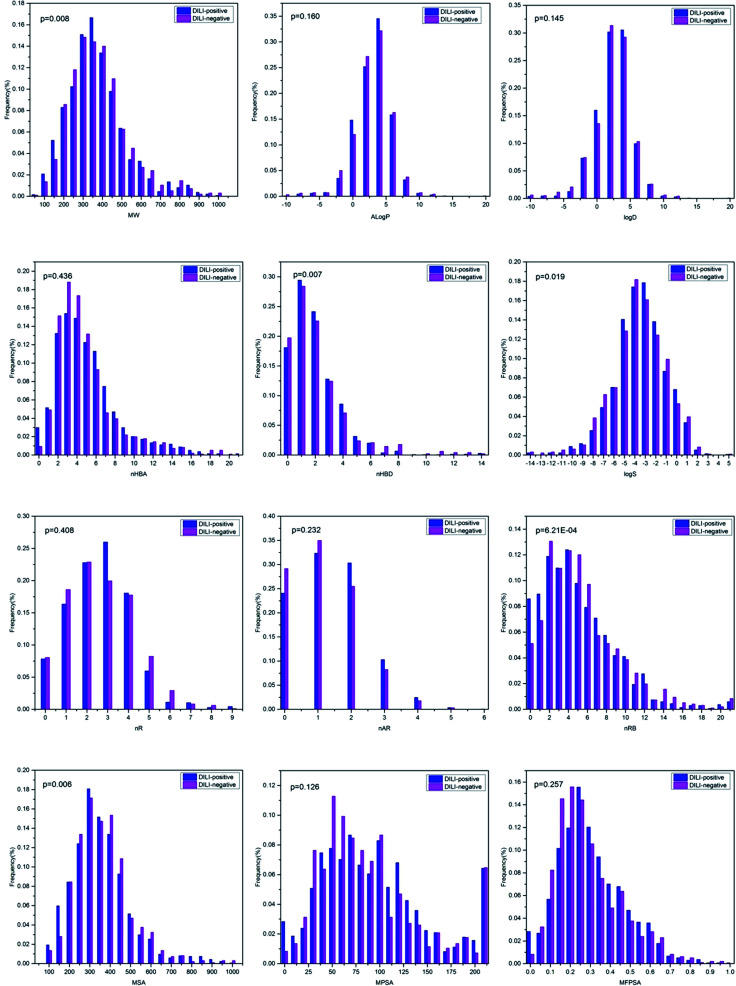
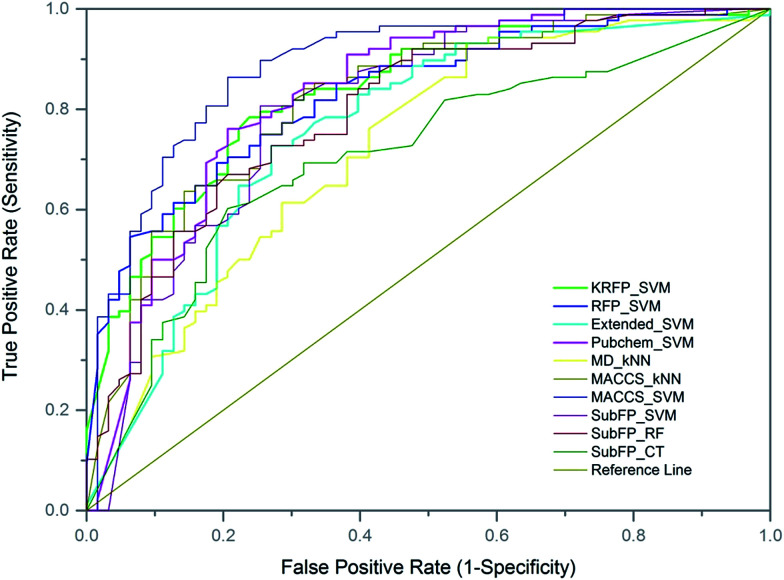
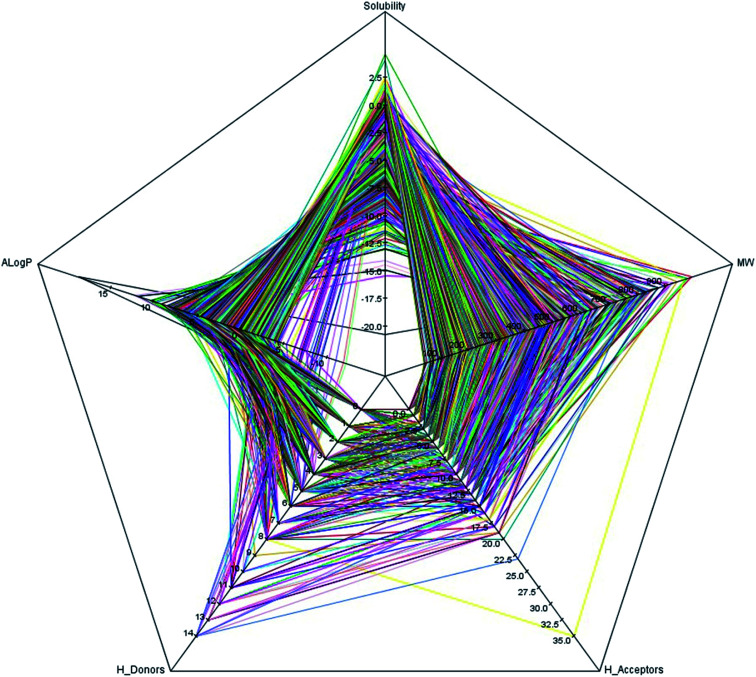
Drug-induced liver injury (DILI), caused by drugs, herbal agents or nutritional supplements, is a major issue for patients and the pharmaceutical industry. It has been a leading cause of clinical trials failure and withdrawal of FDA approval. In this research, we focused on estimation of chemical DILI potential on humans based on structurally diverse organic chemicals. We developed a series of binary classification models using five different machine learning methods and eight different feature reduction methods. The model, developed with the support vector machine (SVM) and the MACCS fingerprint, performed best both on the test set and external validation. It achieved a prediction accuracy of 80.39% on the test set and 82.78% on external validation. We made this model available at http://opensource.vslead.com/. The user can freely predict the DILI potential of molecules. Furthermore, we analyzed the difference of distributions of 12 key physical-chemical properties between DILI-positive and DILI-negative compounds and 20 privileged substructures responsible for DILI were identified from the Klekota-Roth fingerprint. Moreover, since traditional Chinese medicine (TCM)-induced liver injury is also one of the major concerns among the toxic effects, we evaluated the DILI potential of TCM ingredients using the MACCS_SVM model developed in this study. We hope the model and privileged substructures could be useful complementary tools for chemical DILI evaluation.

摘要

药物性肝损伤(DILI)由药物、草药制剂或营养补充剂引起,是患者和制药行业面临的一个重大问题。它一直是临床试验失败和美国食品药品监督管理局(FDA)批准撤回的主要原因。在本研究中,我们专注于基于结构多样的有机化学品评估对人类的化学性DILI潜力。我们使用五种不同的机器学习方法和八种不同的特征约简方法开发了一系列二元分类模型。使用支持向量机(SVM)和MACCS指纹开发的模型在测试集和外部验证中表现最佳。它在测试集上的预测准确率为80.39%,在外部验证中的准确率为82.78%。我们将此模型发布在http://opensource.vslead.com/ 上。用户可以自由预测分子的DILI潜力。此外,我们分析了DILI阳性和DILI阴性化合物之间12种关键物理化学性质的分布差异,并从Klekota-Roth指纹中识别出20个导致DILI的特权子结构。此外,由于中药引起的肝损伤也是毒性作用中的主要关注点之一,我们使用本研究中开发的MACCS_SVM模型评估了中药成分的DILI潜力。我们希望该模型和特权子结构能够成为化学性DILI评估的有用补充工具。
https://cdn.ncbi.nlm.nih.gov/pmc/blobs/515c/9078522/74cd1ee076e9/c7ra12957b-f5.jpg
https://cdn.ncbi.nlm.nih.gov/pmc/blobs/515c/9078522/3bb363859b4c/c7ra12957b-f1.jpg
https://cdn.ncbi.nlm.nih.gov/pmc/blobs/515c/9078522/0ef1063e3b73/c7ra12957b-f2.jpg
https://cdn.ncbi.nlm.nih.gov/pmc/blobs/515c/9078522/f39dc7803a21/c7ra12957b-f3.jpg
https://cdn.ncbi.nlm.nih.gov/pmc/blobs/515c/9078522/e7da7f9c1c20/c7ra12957b-f4.jpg
https://cdn.ncbi.nlm.nih.gov/pmc/blobs/515c/9078522/74cd1ee076e9/c7ra12957b-f5.jpg
https://cdn.ncbi.nlm.nih.gov/pmc/blobs/515c/9078522/3bb363859b4c/c7ra12957b-f1.jpg
https://cdn.ncbi.nlm.nih.gov/pmc/blobs/515c/9078522/0ef1063e3b73/c7ra12957b-f2.jpg
https://cdn.ncbi.nlm.nih.gov/pmc/blobs/515c/9078522/f39dc7803a21/c7ra12957b-f3.jpg
https://cdn.ncbi.nlm.nih.gov/pmc/blobs/515c/9078522/e7da7f9c1c20/c7ra12957b-f4.jpg
https://cdn.ncbi.nlm.nih.gov/pmc/blobs/515c/9078522/74cd1ee076e9/c7ra12957b-f5.jpg

相似文献

1
The development and application of models for drug induced liver injury.药物性肝损伤模型的开发与应用。
RSC Adv. 2018 Feb 20;8(15):8101-8111. doi: 10.1039/c7ra12957b. eCollection 2018 Feb 19.
2
Ensemble Models Based on QuBiLS-MAS Features and Shallow Learning for the Prediction of Drug-Induced Liver Toxicity: Improving Deep Learning and Traditional Approaches.基于 QuBiLS-MAS 特征和浅层学习的药物性肝毒性预测的集成模型:改进深度学习和传统方法。
Chem Res Toxicol. 2020 Jul 20;33(7):1855-1873. doi: 10.1021/acs.chemrestox.0c00030. Epub 2020 May 14.
3
Development of Prediction Models for Drug-Induced Cholestasis, Cirrhosis, Hepatitis, and Steatosis Based on Drug and Drug Metabolite Structures.基于药物和药物代谢物结构的药物性胆汁淤积、肝硬化、肝炎和脂肪变性预测模型的开发。
Front Pharmacol. 2020 Feb 14;11:67. doi: 10.3389/fphar.2020.00067. eCollection 2020.
4
Prediction models for drug-induced hepatotoxicity by using weighted molecular fingerprints.使用加权分子指纹预测药物性肝毒性的模型
BMC Bioinformatics. 2017 May 31;18(Suppl 7):227. doi: 10.1186/s12859-017-1638-4.
5
In silico Prediction of Drug Induced Liver Toxicity Using Substructure Pattern Recognition Method.使用子结构模式识别方法对药物性肝毒性进行计算机模拟预测。
Mol Inform. 2016 Apr;35(3-4):136-44. doi: 10.1002/minf.201500055. Epub 2016 Feb 3.
6
Prediction of Drug-Induced Liver Injury: From Molecular Physicochemical Properties and Scaffold Architectures to Machine Learning Approaches.药物性肝损伤的预测:从分子理化性质和支架结构到机器学习方法。
Chem Biol Drug Des. 2024 Aug;104(2):e14607. doi: 10.1111/cbdd.14607.
7
Comparing Machine Learning Algorithms for Predicting Drug-Induced Liver Injury (DILI).比较用于预测药物性肝损伤(DILI)的机器学习算法。
Mol Pharm. 2020 Jul 6;17(7):2628-2637. doi: 10.1021/acs.molpharmaceut.0c00326. Epub 2020 Jun 8.
8
AI/ML Models to Predict the Severity of Drug-Induced Liver Injury for Small Molecules.人工智能/机器学习模型预测小分子药物性肝损伤的严重程度。
Chem Res Toxicol. 2023 Jul 17;36(7):1129-1139. doi: 10.1021/acs.chemrestox.3c00098. Epub 2023 Jun 9.
9
Identification of intrinsic hepatotoxic compounds in Polygonum multiflorum Thunb. using machine-learning methods.基于机器学习方法鉴定何首乌中的内源性肝毒性化合物。
J Ethnopharmacol. 2022 Nov 15;298:115620. doi: 10.1016/j.jep.2022.115620. Epub 2022 Aug 10.
10
Predicting drug-induced liver injury in human with Naïve Bayes classifier approach.用朴素贝叶斯分类器方法预测人类药物性肝损伤。
J Comput Aided Mol Des. 2016 Oct;30(10):889-898. doi: 10.1007/s10822-016-9972-6. Epub 2016 Sep 17.

引用本文的文献

1
A scoping review of artificial intelligence applications in clinical trial risk assessment.人工智能在临床试验风险评估中的应用范围综述。
NPJ Digit Med. 2025 Jul 30;8(1):486. doi: 10.1038/s41746-025-01886-7.
2
Refining Drug-Induced Cholestasis Prediction: An Explainable Consensus Model Integrating Chemical and Biological Fingerprints.优化药物性胆汁淤积预测:一种整合化学和生物指纹图谱的可解释性共识模型
J Chem Inf Model. 2025 Jun 9;65(11):5301-5316. doi: 10.1021/acs.jcim.4c02363. Epub 2025 May 27.
3
Mechanisms of drug induced liver injury.

本文引用的文献

1
prediction of hERG potassium channel blockage by chemical category approaches.通过化学类别方法预测人乙醚 - 去极化激活钾离子通道(hERG)阻滞
Toxicol Res (Camb). 2016 Jan 14;5(2):570-582. doi: 10.1039/c5tx00294j. eCollection 2016 Mar 1.
2
Insights into the Molecular Basis of the Acute Contact Toxicity of Diverse Organic Chemicals in the Honey Bee.洞悉多种有机化合物对蜜蜂急性接触毒性的分子基础。
J Chem Inf Model. 2017 Dec 26;57(12):2948-2957. doi: 10.1021/acs.jcim.7b00476. Epub 2017 Dec 11.
3
Modeling of the hERG K+ Channel Blockage Using Online Chemical Database and Modeling Environment (OCHEM).
药物性肝损伤的机制
Cell Mol Life Sci. 2025 May 26;82(1):213. doi: 10.1007/s00018-025-05744-3.
4
InterDILI: interpretable prediction of drug-induced liver injury through permutation feature importance and attention mechanism.InterDILI:通过排列特征重要性和注意力机制对药物性肝损伤进行可解释预测。
J Cheminform. 2024 Jan 3;16(1):1. doi: 10.1186/s13321-023-00796-8.
5
Roadmap to DILI research in Europe. A proposal from COST action ProEuroDILINet.欧洲药物性肝损伤研究路线图。来自欧洲科学与技术合作组织(COST)行动ProEuroDILINet的一项提议。
Pharmacol Res. 2024 Feb;200:107046. doi: 10.1016/j.phrs.2023.107046. Epub 2023 Dec 28.
6
Review of machine learning and deep learning models for toxicity prediction.机器学习和深度学习模型在毒性预测中的应用综述。
Exp Biol Med (Maywood). 2023 Nov;248(21):1952-1973. doi: 10.1177/15353702231209421. Epub 2023 Dec 6.
7
In silico modeling-based new alternative methods to predict drug and herb-induced liver injury: A review.基于计算机模拟的预测药物和草药肝损伤新替代方法的研究进展。
Food Chem Toxicol. 2023 Sep;179:113948. doi: 10.1016/j.fct.2023.113948. Epub 2023 Jul 17.
8
Machine Learning Toxicity Prediction: Latest Advances by Toxicity End Point.机器学习毒性预测:按毒性终点划分的最新进展
ACS Omega. 2022 Dec 13;7(51):47536-47546. doi: 10.1021/acsomega.2c05693. eCollection 2022 Dec 27.
9
Multiple machine learning methods aided virtual screening of Na 1.5 inhibitors.多种机器学习方法辅助钠离子通道 1.5 抑制剂的虚拟筛选。
J Cell Mol Med. 2023 Jan;27(2):266-276. doi: 10.1111/jcmm.17652. Epub 2022 Dec 27.
10
Small Molecular Drug Screening Based on Clinical Therapeutic Effect.基于临床疗效的小分子药物筛选。
Molecules. 2022 Jul 27;27(15):4807. doi: 10.3390/molecules27154807.
使用在线化学数据库和建模环境 (OCHEM) 对 hERG K+ 通道阻滞进行建模。
Mol Inform. 2017 Dec;36(12). doi: 10.1002/minf.201700074. Epub 2017 Aug 30.
4
A review of drug-induced liver injury databases.药物性肝损伤数据库综述。
Arch Toxicol. 2017 Sep;91(9):3039-3049. doi: 10.1007/s00204-017-2024-8. Epub 2017 Jul 17.
5
Predicting drug-induced liver injury: The importance of data curation.预测药物性肝损伤:数据整理的重要性。
Toxicology. 2017 Aug 15;389:139-145. doi: 10.1016/j.tox.2017.06.003. Epub 2017 Jun 23.
6
Prediction models for drug-induced hepatotoxicity by using weighted molecular fingerprints.使用加权分子指纹预测药物性肝毒性的模型
BMC Bioinformatics. 2017 May 31;18(Suppl 7):227. doi: 10.1186/s12859-017-1638-4.
7
Evaluation of Different Methods for Identification of Structural Alerts Using Chemical Ames Mutagenicity Data Set as a Benchmark.以化学Ames诱变性数据集为基准评估识别结构警示的不同方法。
Chem Res Toxicol. 2017 Jun 19;30(6):1355-1364. doi: 10.1021/acs.chemrestox.7b00083. Epub 2017 May 23.
8
In Silico Identification of Proteins Associated with Drug-induced Liver Injury Based on the Prediction of Drug-target Interactions.基于药物-靶点相互作用预测的药物性肝损伤相关蛋白质的计算机模拟鉴定
Mol Inform. 2017 Jul;36(7). doi: 10.1002/minf.201600142. Epub 2017 Feb 1.
9
In silico Prediction of Drug Induced Liver Toxicity Using Substructure Pattern Recognition Method.使用子结构模式识别方法对药物性肝毒性进行计算机模拟预测。
Mol Inform. 2016 Apr;35(3-4):136-44. doi: 10.1002/minf.201500055. Epub 2016 Feb 3.
10
In Silico Estimation of Chemical Carcinogenicity with Binary and Ternary Classification Methods.采用二元和三元分类方法对化学致癌性进行计算机模拟评估。
Mol Inform. 2015 Apr;34(4):228-35. doi: 10.1002/minf.201400127. Epub 2015 Mar 27.