Department of Anthropology, University of Michigan, Ann Arbor, Michigan, United States of America.
Museum of Anthropological Archaeology, University of Michigan, Ann Arbor, Michigan, United States of America.
PLoS One. 2022 May 11;17(5):e0265775. doi: 10.1371/journal.pone.0265775. eCollection 2022.
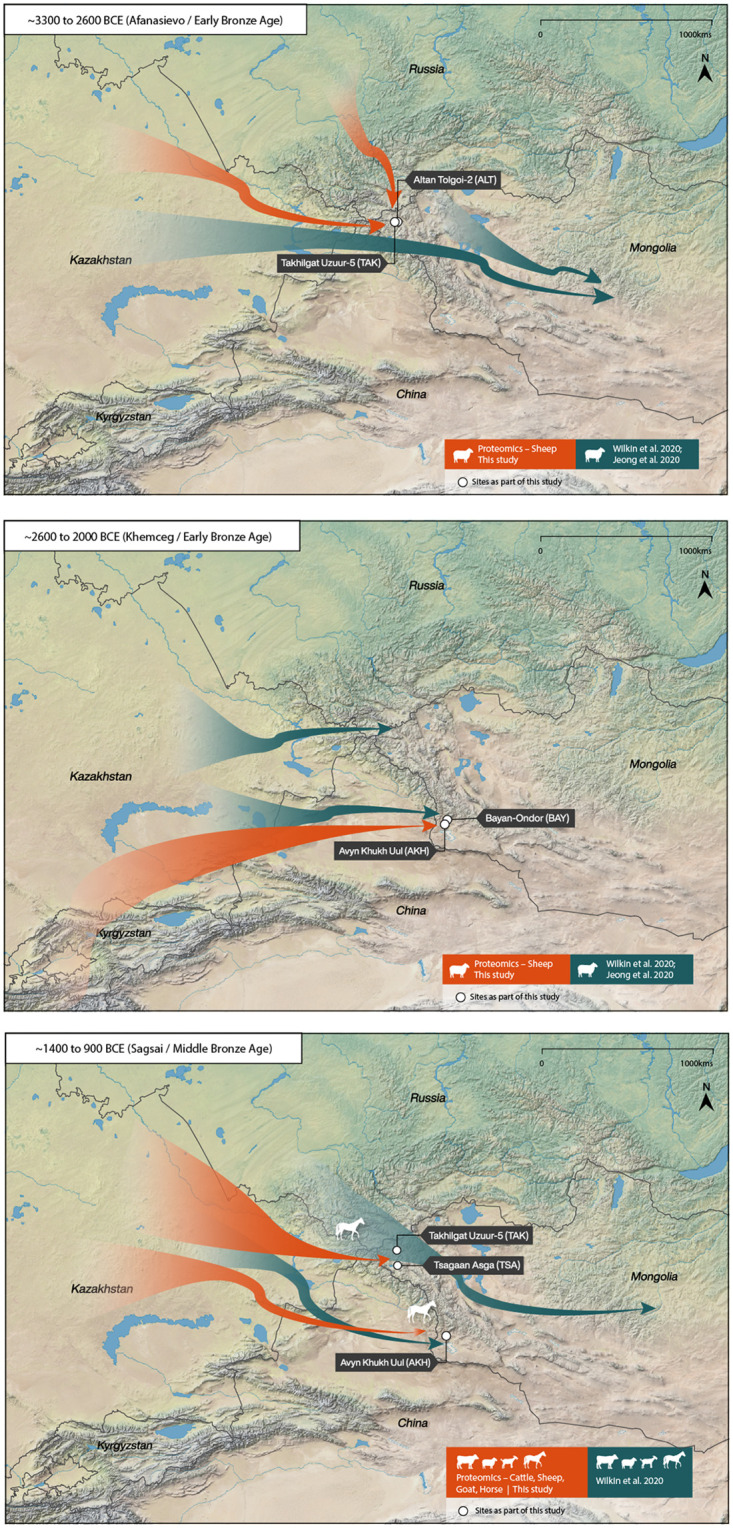
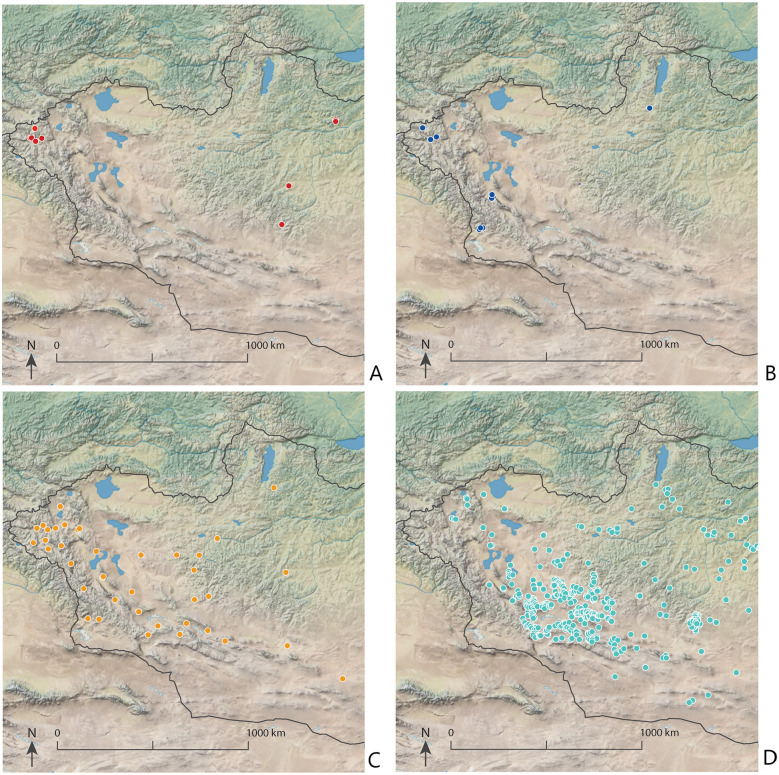
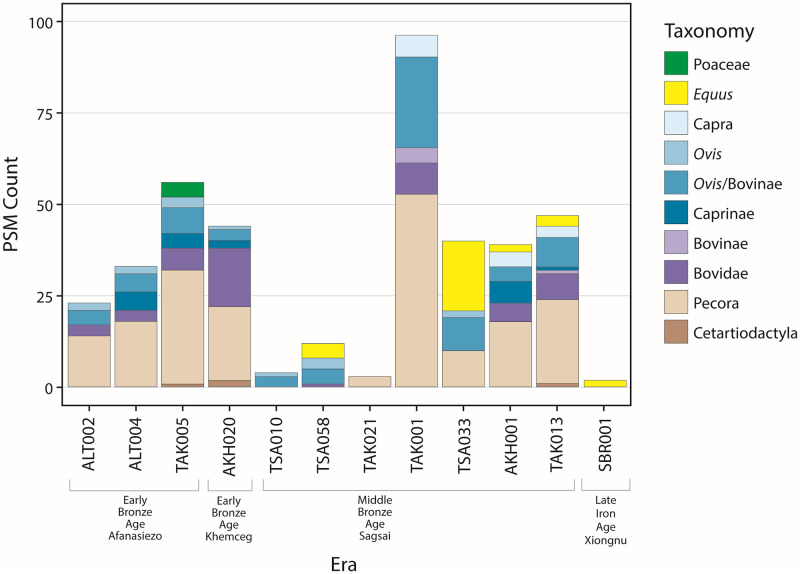
The initial movement of herders and livestock into the eastern steppe is of great interest, as this region has long been home to pastoralist groups. Due to a paucity of faunal remains, however, it has been difficult to discern the timing of the adoption of domesticated ruminants and horses into the region, though recent research on ancient dairying has started to shed new light on this history. Here we present proteomic evidence for shifts in dairy consumption in the Altai Mountains, drawing on evidence from sites dating from the Early Bronze to the Late Iron Age. We compare these finds with evidence for the rise of social complexity in western Mongolia, as reflected in material remains signaling population growth, the establishment of structured cemeteries, and the erection of large monuments. Our results suggest that the subsistence basis for the development of complex societies began at the dawn of the Bronze Age, with the adoption of ruminant livestock. Investments in pastoralism intensified over time, enabling a food production system that sustained growing populations. While pronounced social changes and monumental constructions occurred in tandem with the first evidence for horse dairying, ~1350 cal BCE, these shifts were fueled by a long-term economic dependence on ruminant livestock. Therefore, the spread into the Mongolian Altai of herds, and then horses, resulted in immediate dietary changes, with subsequent social and demographic transformations occurring later.
牧民和牲畜最初向东部草原的迁徙非常有趣,因为该地区长期以来一直是牧民群体的家园。然而,由于动物遗骸的缺乏,很难确定该地区采用家养反刍动物和马的时间,但最近对古代奶制品的研究开始为这段历史提供新的线索。在这里,我们根据从青铜时代早期到铁器时代晚期的遗址证据,提供了阿尔泰山地区奶制品消费变化的蛋白质组学证据。我们将这些发现与蒙古西部社会复杂性兴起的证据进行了比较,这些证据反映在人口增长、有组织的墓地建立和大型纪念碑的物质遗存上。我们的研究结果表明,复杂社会发展的生存基础始于青铜时代早期,采用了反刍牲畜。随着时间的推移,对畜牧业的投资不断增加,为不断增长的人口提供了一种粮食生产系统。虽然在首次出现马奶的同时发生了明显的社会变化和纪念性建筑,约公元前 1350 年,但这些转变是由对反刍牲畜的长期经济依赖所推动的。因此,羊群,然后是马群,涌入蒙古阿尔泰山,导致了饮食的立即改变,随后的社会和人口转型发生在稍后的时间。