School of Biological Sciences, Queen's University of Belfast, Belfast BT9 5DL, U.K.
Department of Biotechnology and Medical Engineering, National Institute of Technology Rourkela, Rourkela 769008, India.
ACS Appl Bio Mater. 2022 Jun 20;5(6):2712-2725. doi: 10.1021/acsabm.2c00180. Epub 2022 May 11.
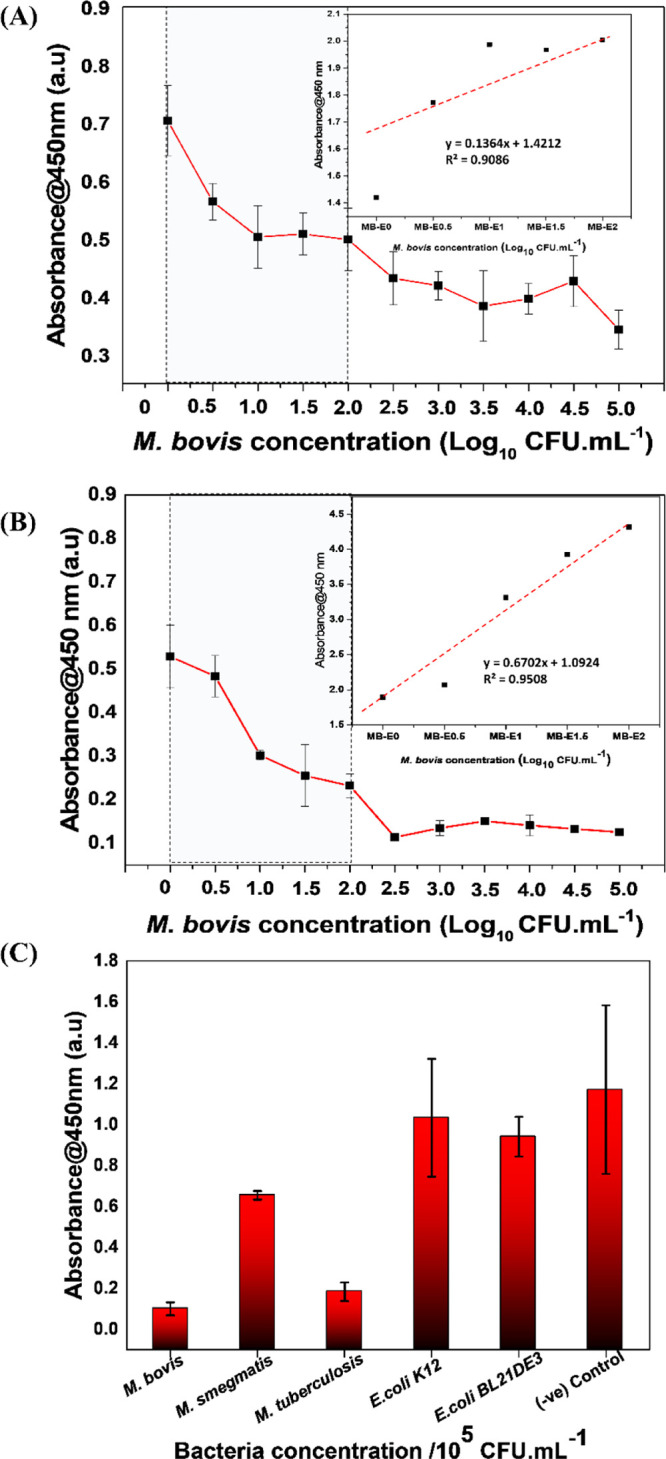
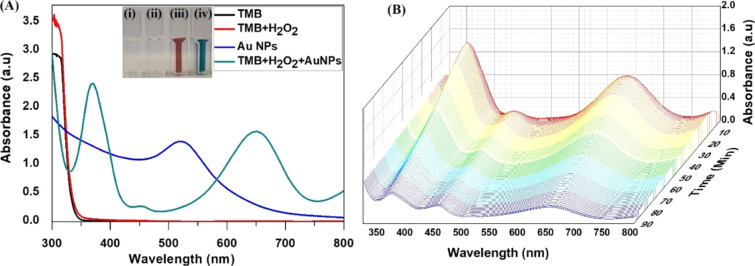
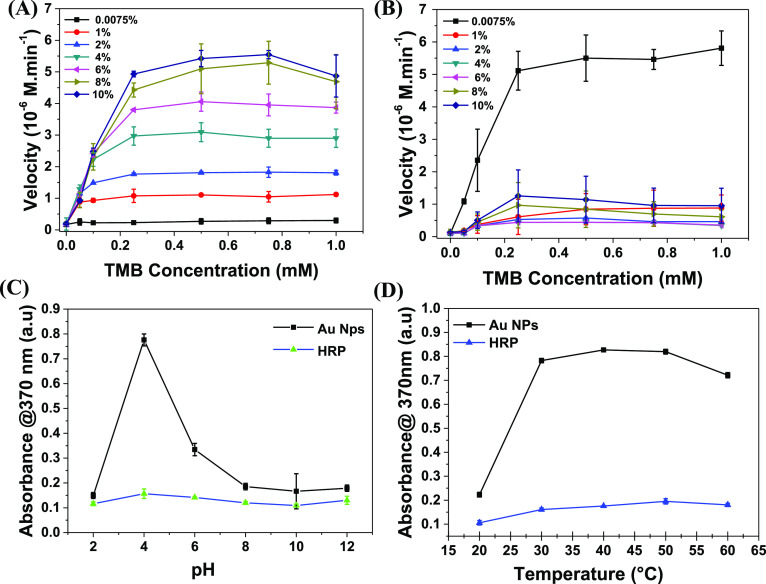
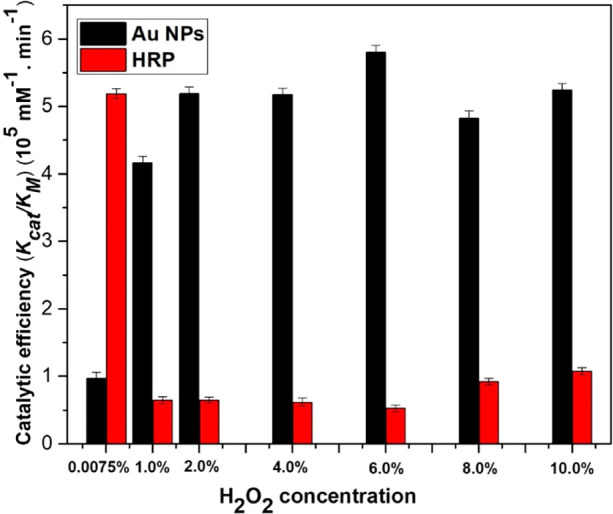
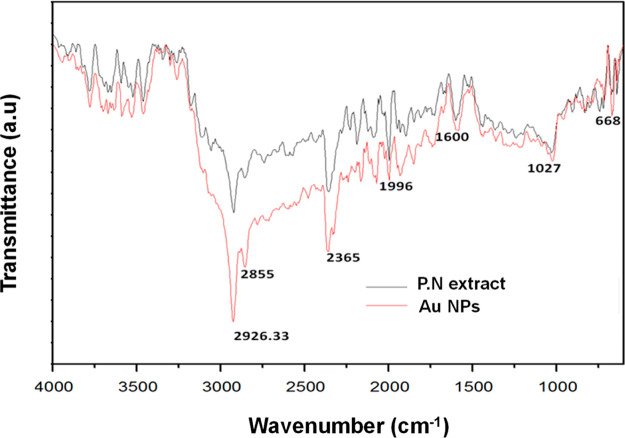
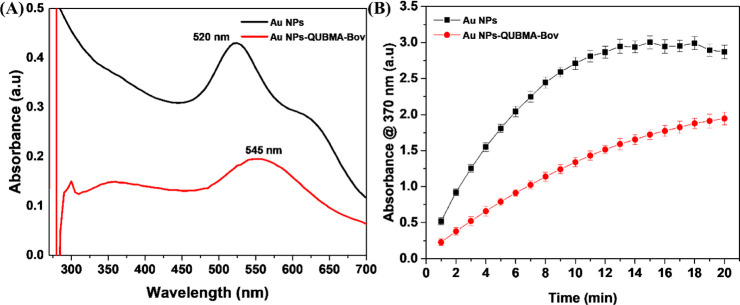
In the present study, a facile, eco-friendly, and controlled synthesis of gold nanoparticles (Au NPs) using fruit extract is reported. The biogenically synthesized Au NPs possess ultra-active intrinsic peroxidase-like activity for the oxidation of 3,3',5,5'-tetramethylbenzidine (TMB) in the presence of HO. Chemical analysis of the fruit extract demonstrated the presence of various bioactive molecules such as amino acids (l-alanine and aspartic acids), organic acids (benzoic acid and citric acid), sugars (arabinose and glucose), phenolic acid, and bioflavonoids (niacin and myo-inositol), which likely attributed to the formation of stable biogenic Au NPs with excellent peroxidase-mimicking activity. In comparison with the natural horseradish peroxidase (HRP) enzyme, the biogenic Au NPs displayed a 9.64 times higher activity with regard to the reaction velocity at 6% (v/v) HO, presenting a higher affinity toward the TMB substrate. The Michaelis-Menten constant () values for the biogenic Au NPs and HRP were found to be 6.9 × 10 and 7.9 × 10 mM, respectively, at the same concentration of 100 pM. To investigate its applicability for biosensing, a monoclonal antibody specific for (QUBMA-Bov) was directly conjugated to the surface of the biogenic Au NPs. The obtained results indicate that the biogenic Au NPs-QUBMA-Bov conjugates are capable of detecting based on a colorimetric immunosensing method within a lower range of 10 to 10 cfu mL with limits of detection of ∼53 and ∼71 cfu mL in an artificial buffer solution and in a soft cheese spiked sample, respectively. This strategy demonstrates decent specificity in comparison with those of other bacterial and mycobacterial species. Considering these findings together, this study indicates the potential for the development of a cost-effective biosensing platform with high sensitivity and specificity for the detection of using antibody-conjugated Au nanozymes.
在本研究中,报告了一种使用水果提取物制备金纳米粒子(Au NPs)的简便、环保和可控的方法。生物合成的 Au NPs 具有超活性的内在过氧化物酶样活性,可在 HO 存在下氧化 3,3',5,5'-四甲基联苯胺(TMB)。水果提取物的化学分析表明,存在各种生物活性分子,如氨基酸(l-丙氨酸和天冬氨酸)、有机酸(苯甲酸和柠檬酸)、糖(阿拉伯糖和葡萄糖)、酚酸和生物类黄酮(烟酸和肌醇),这可能归因于形成具有优异过氧化物酶模拟活性的稳定生物 Au NPs。与天然辣根过氧化物酶(HRP)相比,生物合成的 Au NPs 在 6%(v/v)HO 存在下的反应速度具有 9.64 倍的更高活性,对 TMB 底物具有更高的亲和力。生物合成的 Au NPs 和 HRP 的米氏常数()值在 100 pM 相同浓度下分别为 6.9×10 和 7.9×10 mM。为了研究其在生物传感中的适用性,直接将针对 (QUBMA-Bov)的单克隆抗体共轭到生物合成的 Au NPs 表面。得到的结果表明,生物合成的 Au NPs-QUBMA-Bov 缀合物能够基于比色免疫传感方法在 10 至 10 cfu mL 的较低范围内检测 ,在人工缓冲溶液和软干酪中检测的检出限分别约为 53 和 71 cfu mL 。与其他细菌和分枝杆菌种相比,该策略表现出相当的特异性。综合考虑这些发现,本研究表明,使用抗体偶联的 Au 纳米酶,开发具有高灵敏度和特异性的低成本生物传感平台用于检测 的潜力。