Gendron Aleksei, Allen Kylie D
Department of Biochemistry, Virginia Polytechnic Institute and State University, Blacksburg, VA, United States.
Front Microbiol. 2022 Apr 25;13:867342. doi: 10.3389/fmicb.2022.867342. eCollection 2022.
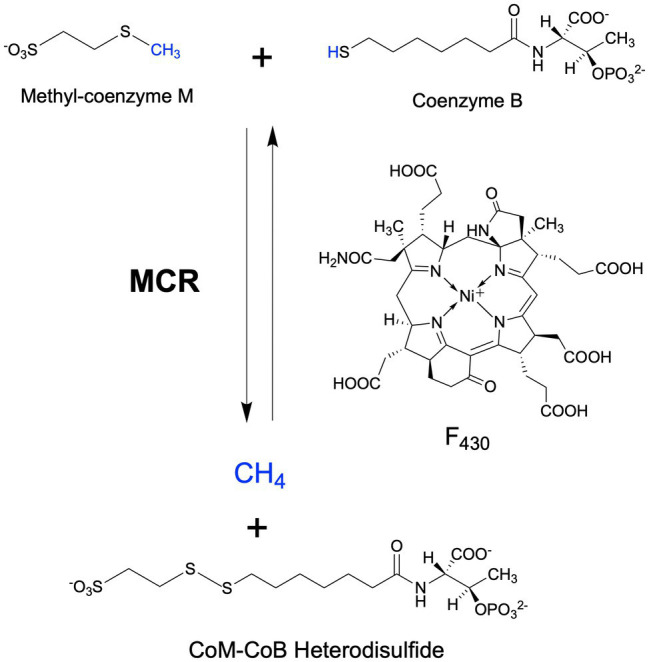
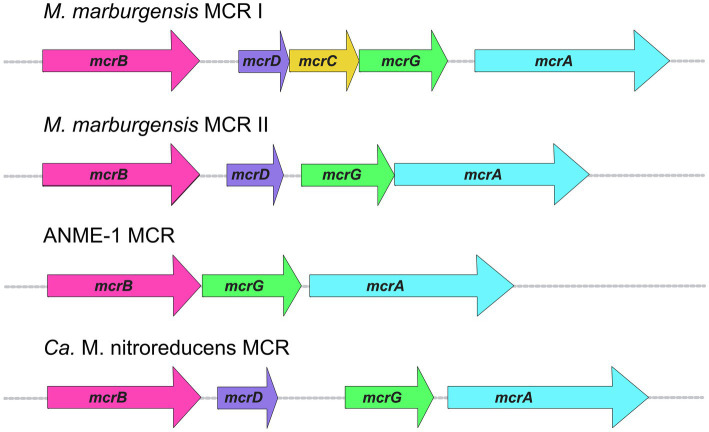
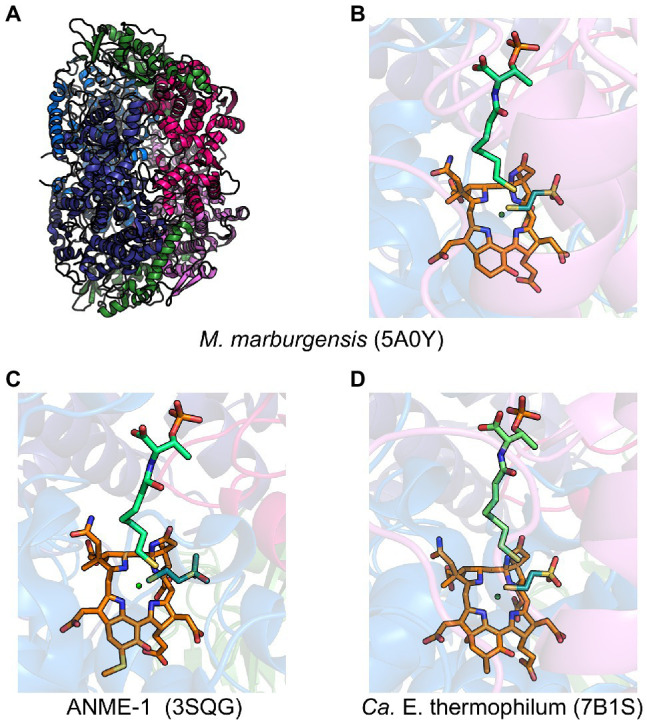
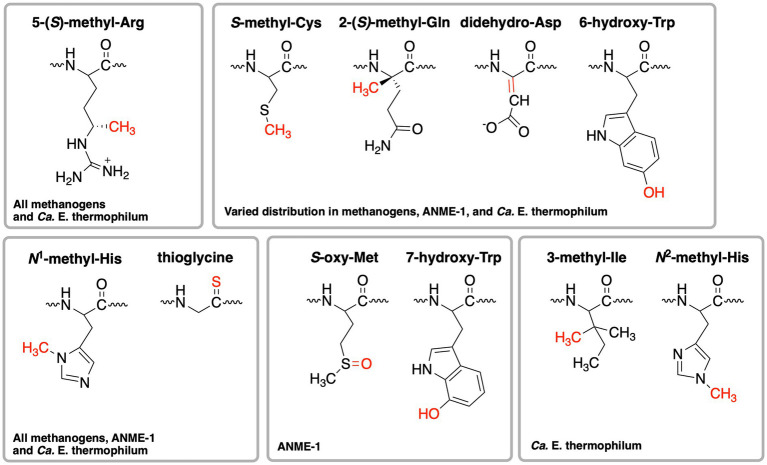
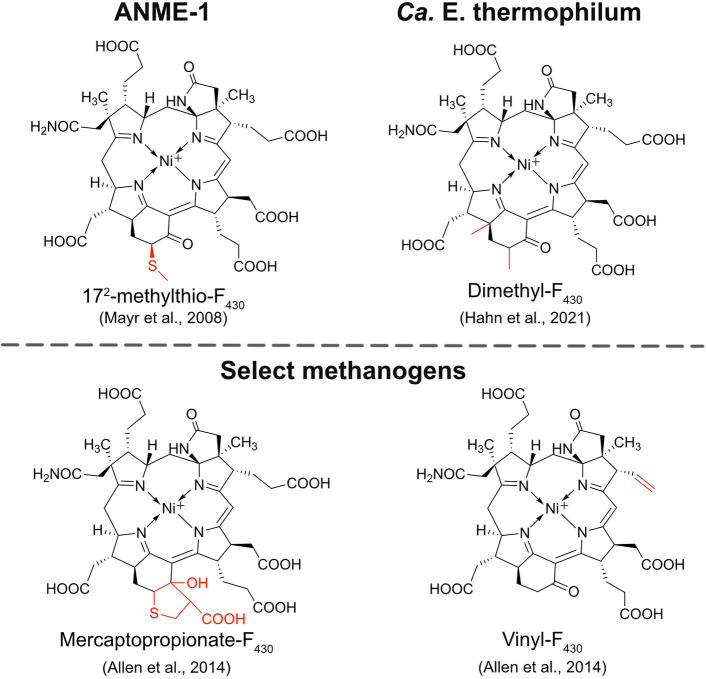
Methyl-coenzyme M reductase (MCR) is an archaeal enzyme that catalyzes the final step of methanogenesis and the first step in the anaerobic oxidation of methane, the energy metabolisms of methanogens and anaerobic methanotrophs (ANME), respectively. Variants of MCR, known as alkyl-coenzyme M reductases, are involved in the anaerobic oxidation of short-chain alkanes including ethane, propane, and butane as well as the catabolism of long-chain alkanes from oil reservoirs. MCR is a dimer of heterotrimers (encoded by ) and requires the nickel-containing tetrapyrrole prosthetic group known as coenzyme F. MCR houses a series of unusual post-translational modifications within its active site whose identities vary depending on the organism and whose functions remain unclear. Methanogenic MCRs are encoded in a highly conserved gene cluster, which encodes two accessory proteins, McrD and McrC, that are believed to be involved in the assembly and activation of MCR, respectively. The requirement of a unique and complex coenzyme, various unusual post-translational modifications, and many remaining questions surrounding assembly and activation of MCR largely limit experiments to native enzymes with recombinant methods only recently appearing. Production of MCRs in a heterologous host is an important step toward developing optimized biocatalytic systems for methane production as well as for bioconversion of methane and other alkanes into value-added compounds. This review will first summarize MCR catalysis and structure, followed by a discussion of advances and challenges related to the production of diverse MCRs in a heterologous host.
甲基辅酶M还原酶(MCR)是一种古细菌酶,分别催化产甲烷作用的最后一步以及甲烷厌氧氧化的第一步,这也是产甲烷菌和厌氧甲烷氧化菌(ANME)的能量代谢过程。MCR的变体,即烷基辅酶M还原酶,参与包括乙烷、丙烷和丁烷在内的短链烷烃的厌氧氧化以及油藏中长链烷烃的分解代谢。MCR是一种异源三聚体二聚体(由 编码),需要一种名为辅酶F的含镍四吡咯辅基。MCR在其活性位点内有一系列不寻常的翻译后修饰,其种类因生物体而异,功能尚不清楚。产甲烷MCRs由一个高度保守的 基因簇编码,该基因簇编码两种辅助蛋白,McrD和McrC,据信它们分别参与MCR的组装和激活。由于需要一种独特而复杂的辅酶、各种不寻常的翻译后修饰以及围绕MCR组装和激活的许多遗留问题,很大程度上限制了实验只能使用天然酶,而重组方法直到最近才出现。在异源宿主中生产MCRs是开发用于甲烷生产以及将甲烷和其他烷烃生物转化为增值化合物的优化生物催化系统的重要一步。本综述将首先总结MCR的催化作用和结构,然后讨论在异源宿主中生产多种MCRs的进展和挑战。