Bordeleau Emily, Mazinani Sina Atrin, Nguyen David, Betancourt Frank, Yan Hongbin
Department of Chemistry and Centre for Biotechnology, Brock University 1812 Sir Isaac Brock Way St. Catharines Ontario Canada L2S 3A1
RSC Adv. 2018 Sep 19;8(57):32434-32439. doi: 10.1039/c8ra06352d. eCollection 2018 Sep 18.
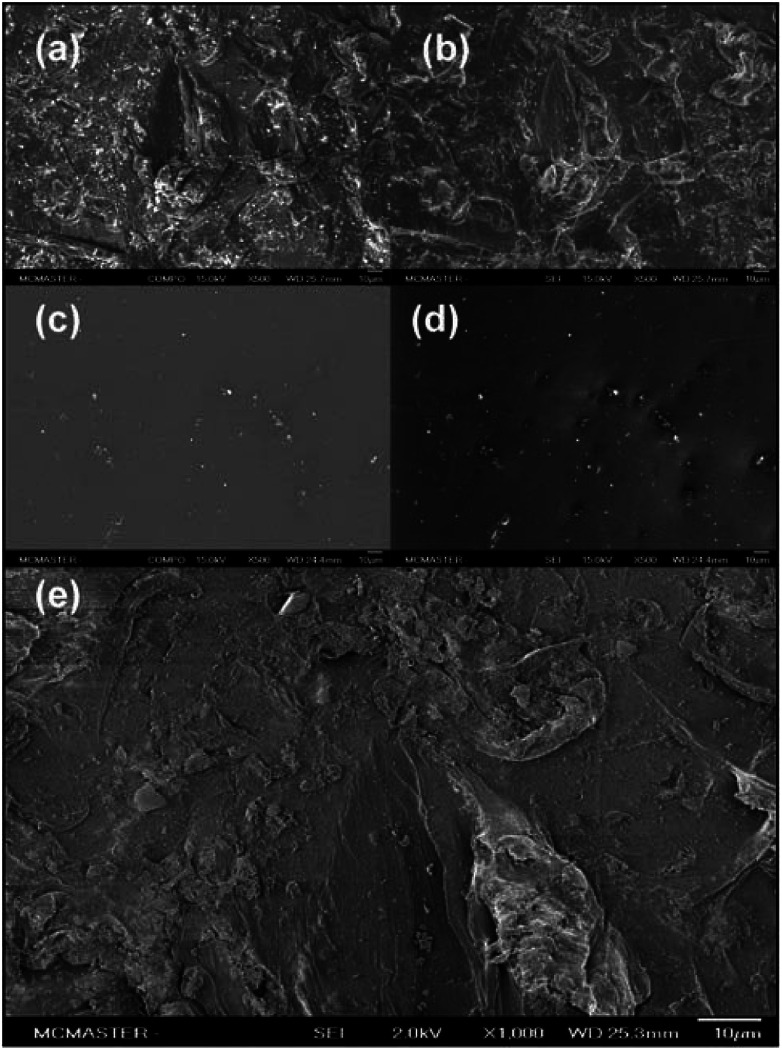
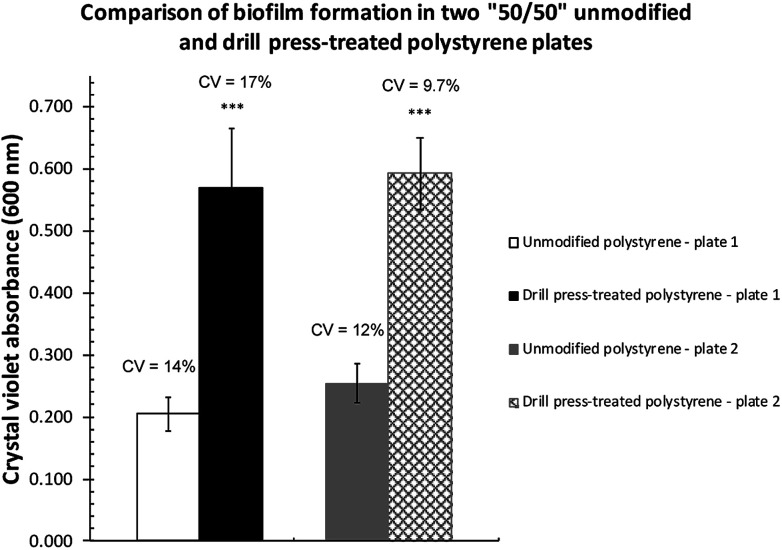
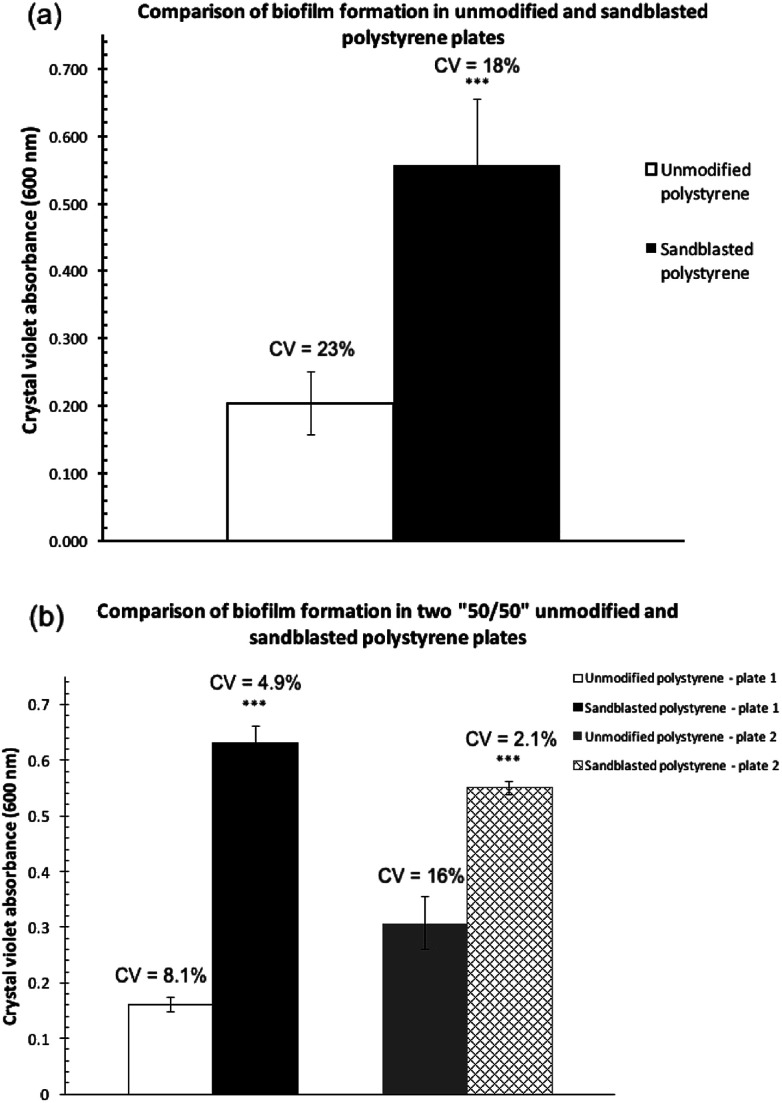
Microtiter plate-based bacterial biofilm assay is frequently used to study bacterial biofilm development and growth. While this assay is simple and relatively high-throughput, it frequently shows difficulty in establishing robust biofilm attachment in the wells. We report that the consistency of bacterial biofilm assays carried out in microtiter plates subjected to abrasive treatment, by sandblasting or drill press grinding, is significantly improved in a Pf0-1 model. Scanning electron microscopy imaging suggests that the treated surfaces could provide points of attachment to facilitate the recruitment of bacteria in the initial phase of biofilm colony establishment. The sandblast treated polypropylene, but not polystyrene, plates were found suitable in studying the impact of flavonoid quercetin on the biofilm formation in FB17. Further investigation revealed that due to the hydrophobicity of the polystyrene surfaces, a greater amount of quercetin was adsorbed on the plate surface, effectively lowering the concentration of the flavonoid in solution.
基于微量滴定板的细菌生物膜检测常用于研究细菌生物膜的形成和生长。虽然这种检测方法简单且通量相对较高,但在孔中建立稳固的生物膜附着常常存在困难。我们报告称,在Pf0-1模型中,经过喷砂或钻床研磨等研磨处理的微量滴定板所进行的细菌生物膜检测的一致性得到了显著提高。扫描电子显微镜成像表明,经过处理的表面可以提供附着点,以促进生物膜菌落形成初始阶段细菌的募集。发现经过喷砂处理的聚丙烯板(而非聚苯乙烯板)适用于研究类黄酮槲皮素对FB17生物膜形成的影响。进一步研究表明,由于聚苯乙烯表面的疏水性,大量槲皮素吸附在板表面,有效降低了溶液中类黄酮的浓度。