Future Industries Institute, University of South Australia, Adelaide, SA 5095, Australia.
Translational Oncology Laboratory, Centre for Cancer Biology, SA Pathology and University of South Australia, Adelaide, SA 5000, Australia.
Int J Mol Sci. 2022 Apr 24;23(9):4707. doi: 10.3390/ijms23094707.
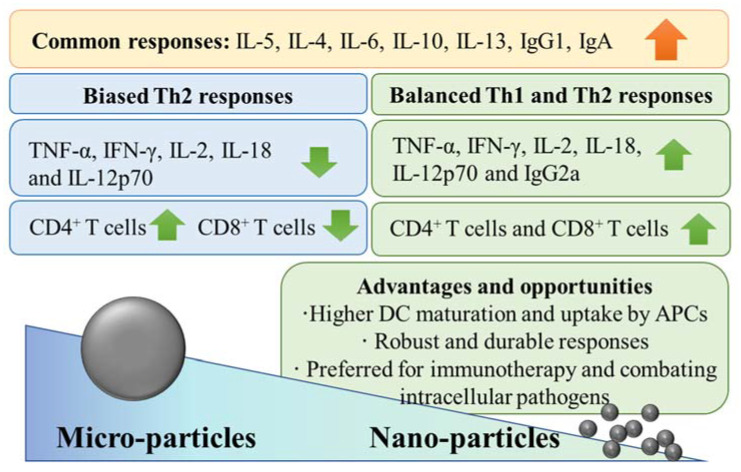
Aluminium (Al) compounds are used as adjuvants in human and veterinary prophylactic vaccines due to their improved tolerability compared to other adjuvants. These Al-based adjuvants form microparticles (MPs) of heterogeneous sizes ranging from ~0.5 to 10 µm and generally induce type 2 (Th2)-biased immune responses. However, recent literature indicates that moving from micron dimension particles toward the nanoscale can modify the adjuvanticity of Al towards type 1 (Th1) responses, which can potentially be exploited for the development of vaccines for which Th1 immunity is crucial. Specifically, in the context of cancer treatments, Al nanoparticles (Al-NPs) can induce a more balanced (Th1/Th2), robust, and durable immune response associated with an increased number of cytotoxic T cells compared to Al-MPs, which are more favourable for stimulating an oncolytic response. In this review, we compare the adjuvant properties of Al-NPs to those of Al-MPs in the context of infectious disease vaccines and cancer immunotherapy and provide perspectives for future research.
铝(Al)化合物因其与其他佐剂相比具有更好的耐受性而被用作人类和兽医预防性疫苗的佐剂。这些基于 Al 的佐剂形成大小从~0.5 到 10 µm 不等的异质 MPs,并通常诱导 2 型(Th2)偏向的免疫反应。然而,最近的文献表明,从微米尺寸的颗粒向纳米尺度移动可以改变 Al 的佐剂特性,使其向 1 型(Th1)反应转变,这可能被用于开发对 Th1 免疫至关重要的疫苗。具体来说,在癌症治疗方面,与 Al-MPs 相比,Al 纳米颗粒(Al-NPs)可诱导更平衡(Th1/Th2)、强大且持久的免疫反应,与增加的细胞毒性 T 细胞数量相关,更有利于刺激溶瘤反应。在这篇综述中,我们将比较 Al-NPs 和 Al-MPs 在传染病疫苗和癌症免疫治疗中的佐剂特性,并为未来的研究提供观点。