Tatman Philip D, Black Joshua C
Department of Pharmacology, University of Colorado, Anschutz Medical Campus, Aurora, CO 80045, USA.
Cancers (Basel). 2022 May 6;14(9):2310. doi: 10.3390/cancers14092310.
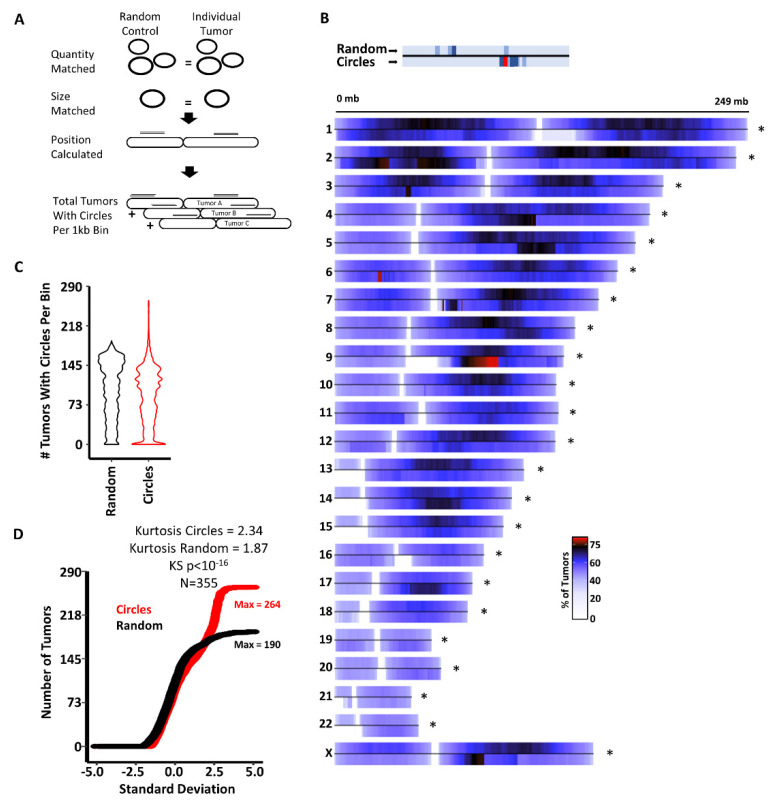
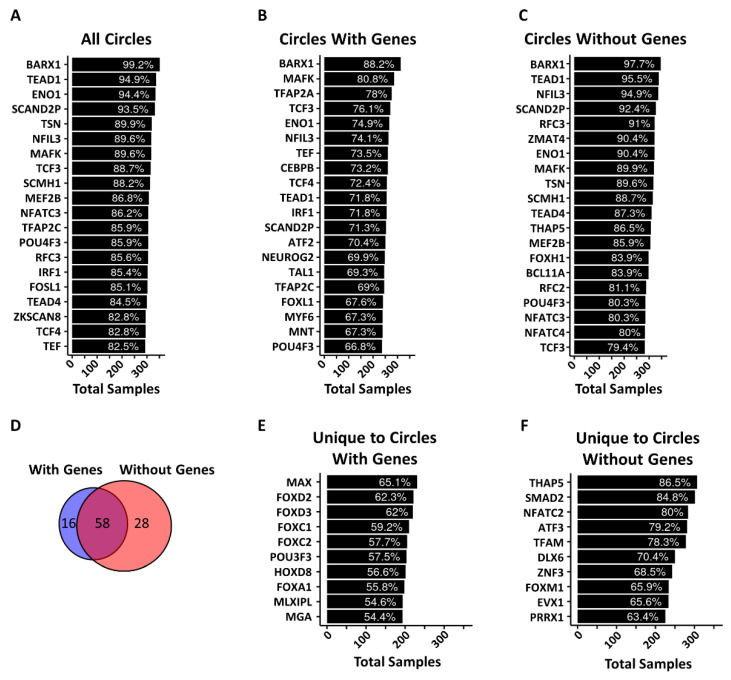
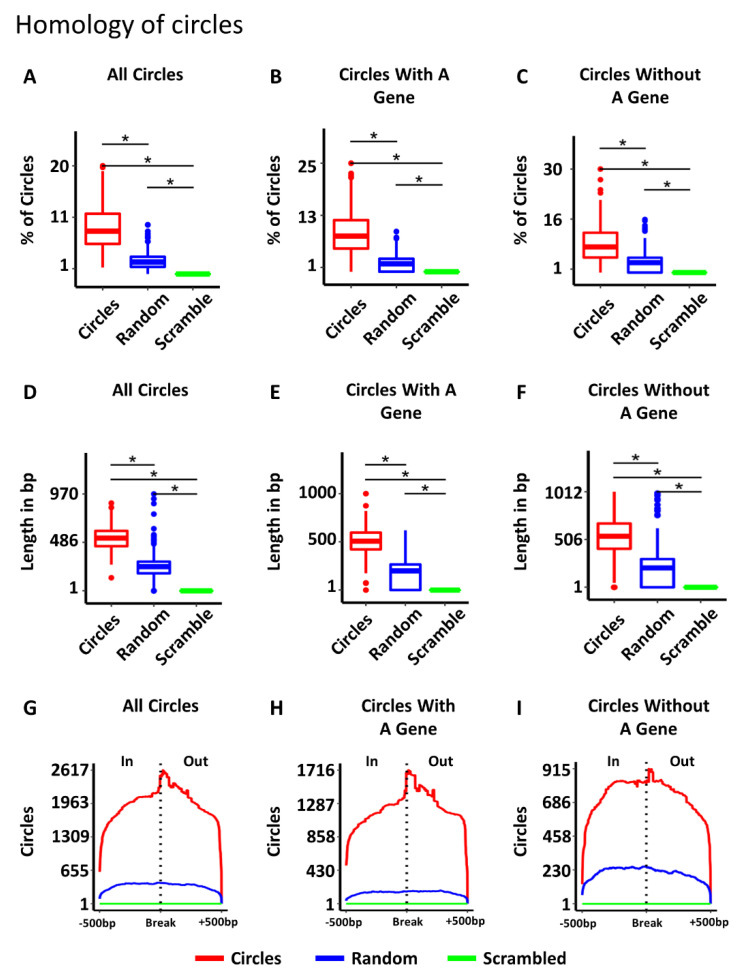
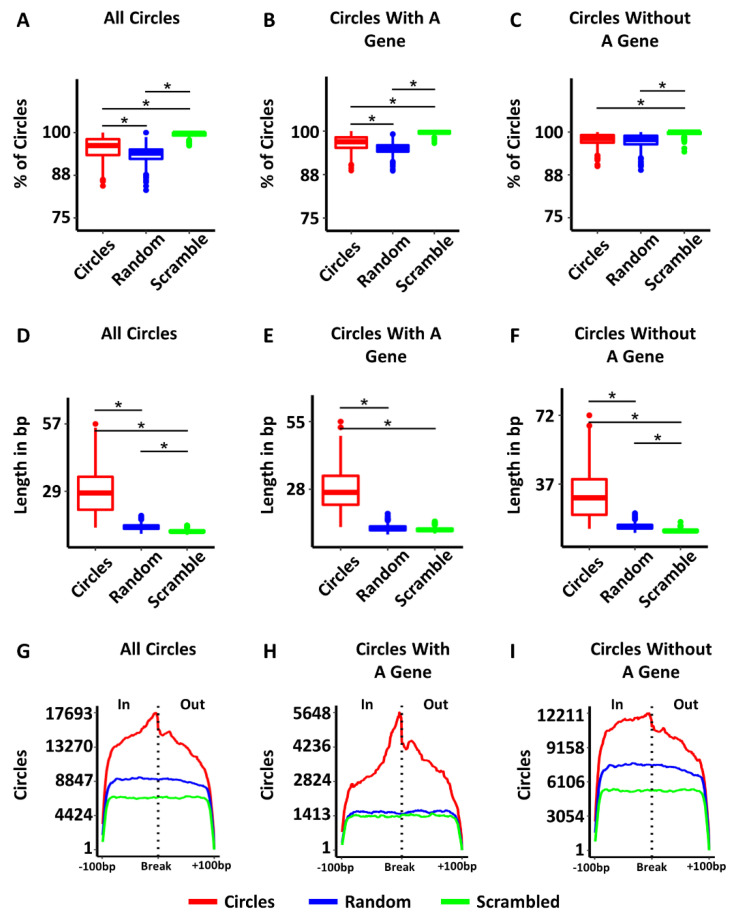
Extrachromosomal circular DNA has emerged as a frequent genomic alteration in tumors. High numbers of circular DNAs correspond to poor prognosis suggesting an important function in tumor biology. However, despite mounting evidence supporting the importance of circular DNA, little is known about their production, maintenance, or selection. To provide insight into these processes, we analyzed circular DNA elements computationally identified in 355 TCGA tumors spanning 22 tumor types. Circular DNAs originated from common genomic loci irrespective of cancer type. Genes found in circularized genomic regions were more likely to be expressed and were enriched in cancer-related pathways. Finally, in support of a model for circle generation through either a homology or microhomology-mediated process, circles exhibit homology near their breakpoint. These breakpoints are also enriched in specific DNA motifs. Our analysis supports a model where gene-containing circles emerge from common, highly transcribed regions through a homology-mediated process.
染色体外环状DNA已成为肿瘤中常见的基因组改变。大量的环状DNA与不良预后相关,提示其在肿瘤生物学中具有重要功能。然而,尽管越来越多的证据支持环状DNA的重要性,但对其产生、维持或选择的了解却很少。为了深入了解这些过程,我们对在涵盖22种肿瘤类型的355个TCGA肿瘤中通过计算鉴定出的环状DNA元件进行了分析。环状DNA起源于常见的基因组位点,与癌症类型无关。在环化基因组区域中发现的基因更有可能表达,并且在癌症相关途径中富集。最后,为了支持通过同源性或微同源性介导的过程产生环的模型,环在其断点附近表现出同源性。这些断点在特定的DNA基序中也很丰富。我们的分析支持了一个模型,即含基因的环通过同源性介导的过程从常见的、高度转录的区域中产生。