Vonk Jennifer, McGuire Molly, Leete Jessica
Department of Psychology, Oakland University, Rochester, MI 48309, USA.
Zoo Miami, Miami, FL 33177, USA.
Animals (Basel). 2022 May 6;12(9):1188. doi: 10.3390/ani12091188.
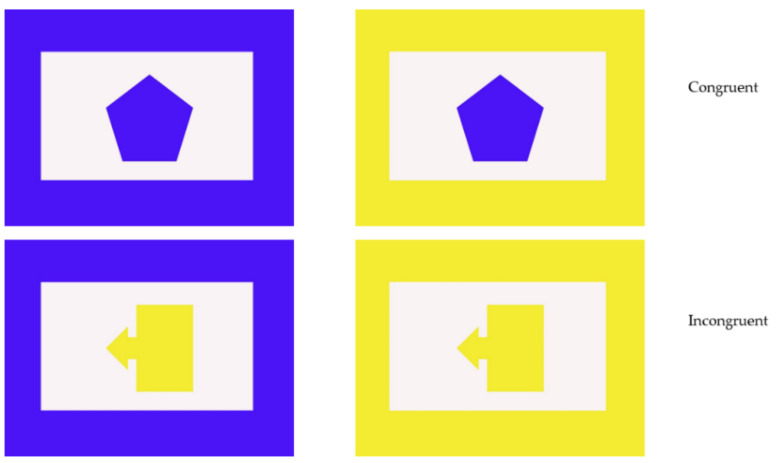
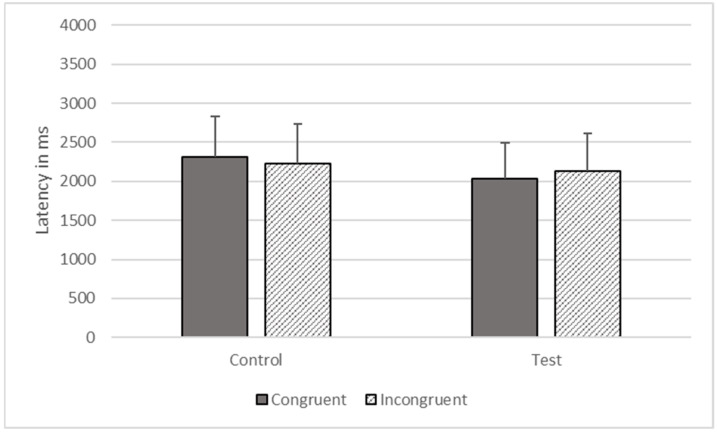
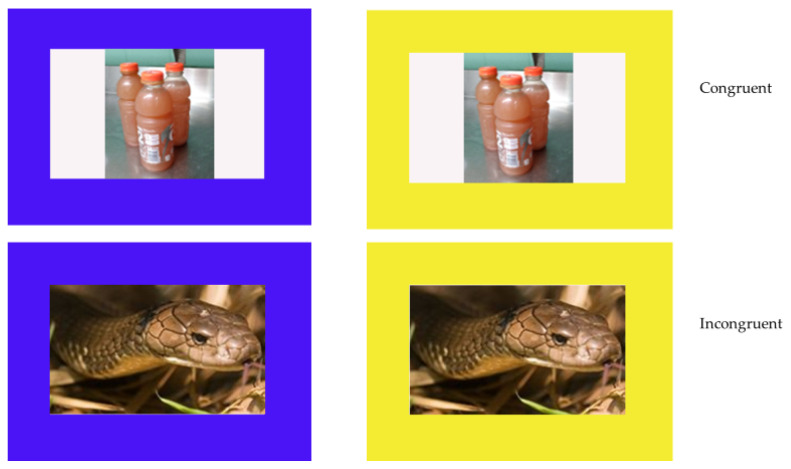
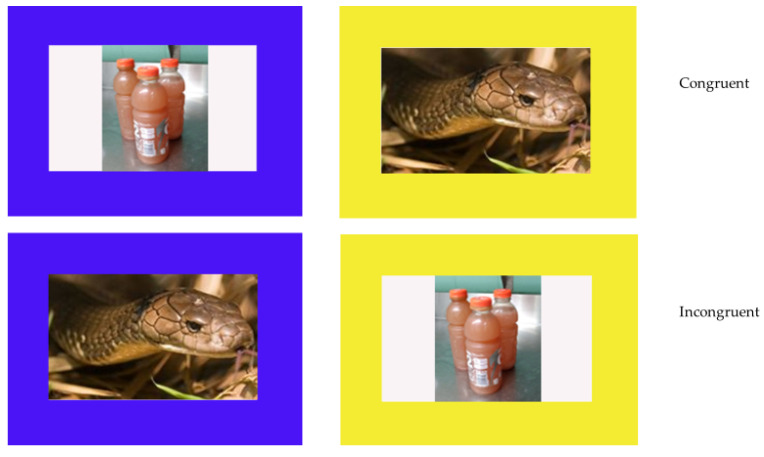
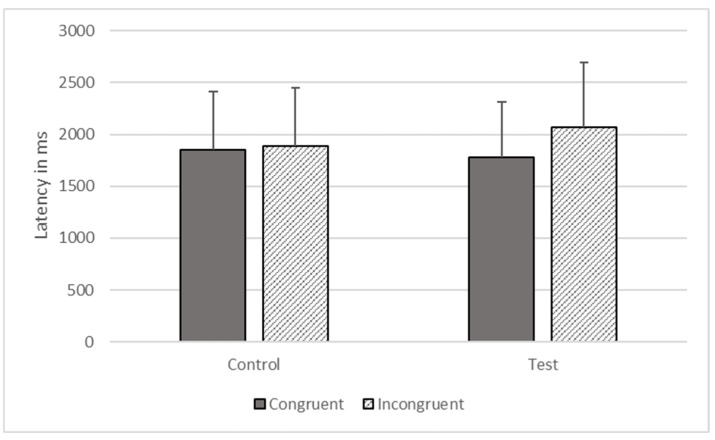
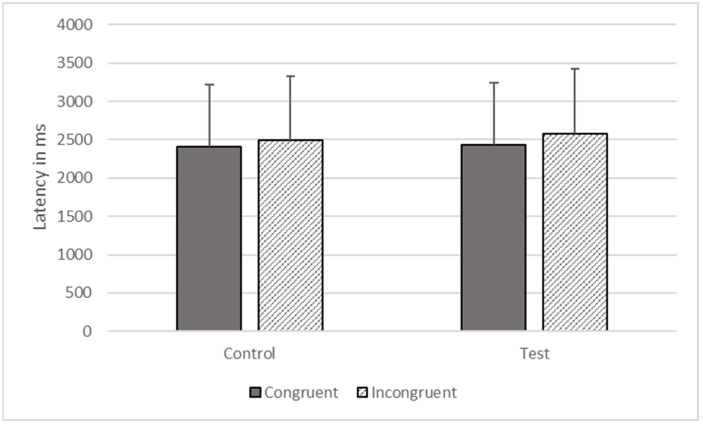
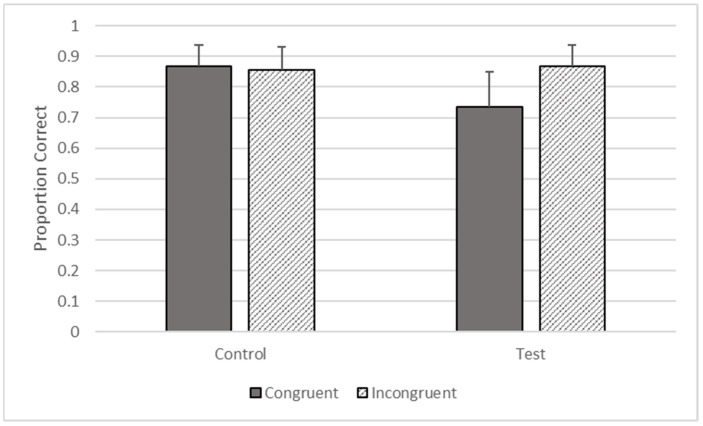
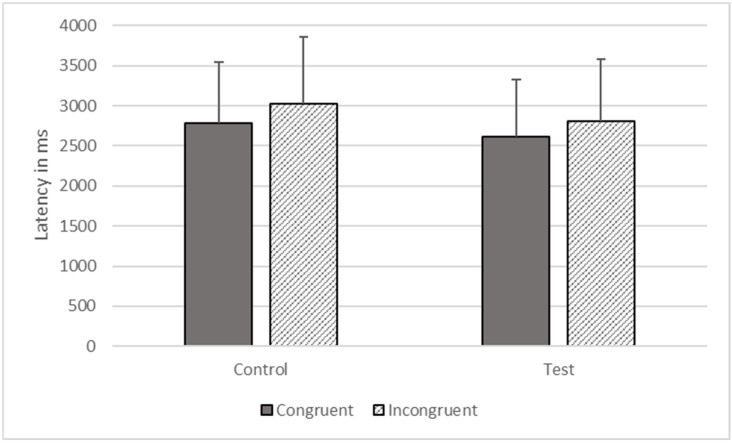
We adapted the emotional Stroop task developed for primates to test whether gorillas would show response slowing for images of 'negative' compared to images of 'positive' items placed within previously reinforced borders. Three zoo-housed male gorillas participated in six phases of an emotional Stroop paradigm. In Phase One, they learned to select blue borders over yellow borders in a forced choice task presented on the touchscreen. In Phase Two, neutral yellow or blue two-dimensional shapes were placed within the borders. On congruent trials, blue images were presented within both blue and yellow borders. On incongruent trials, yellow images were placed within both blue and yellow borders. We continued to use these trials as control trials in subsequent phases. We predicted that response latencies would be slower and accuracy would be lower on incongruent trials. Although the gorillas responded more quickly to incongruent trials, in contrast to predictions, they were more accurate on congruent trials, consistent with predictions. Therefore, we proceeded with Phase Three in which photographs of images assumed to have positive and negative valences for the gorillas were placed within the borders. On test trials, the same positive or negative image was placed within both borders. In Phase Four, a positive image was paired with a negative image on each trial and the positive image appeared in either the blue (congruent trials) or yellow border (incongruent trials). Phases Five and Six replicated Phases Three and Four with images of novel positive and negative items. The gorillas responded more quickly on congruent trials compared to incongruent trials on test trials but not on control trials throughout Phases 3-6. These findings provide some validation for the emotional Stroop task to test attentional shift with emotionally valenced items.
我们改编了为灵长类动物开发的情绪斯特鲁普任务,以测试大猩猩在先前强化边框内放置的“负面”图像与“正面”图像相比,是否会出现反应减慢的情况。三只圈养在动物园的雄性大猩猩参与了情绪斯特鲁普范式的六个阶段。在第一阶段,它们在触摸屏上呈现的强制选择任务中学会选择蓝色边框而非黄色边框。在第二阶段,中性的黄色或蓝色二维形状被放置在边框内。在一致试验中,蓝色图像呈现在蓝色和黄色边框内。在不一致试验中,黄色图像被放置在蓝色和黄色边框内。在后续阶段,我们继续将这些试验用作对照试验。我们预测在不一致试验中反应潜伏期会更长,准确率会更低。尽管大猩猩对不一致试验的反应更快,但与预测相反的是,它们在一致试验中更准确,这与预测一致。因此,我们进入第三阶段,在边框内放置据信对大猩猩具有正价和负价的图像照片。在测试试验中,相同的正性或负性图像被放置在两个边框内。在第四阶段,每次试验将一个正性图像与一个负性图像配对,正性图像出现在蓝色边框(一致试验)或黄色边框(不一致试验)中。第五阶段和第六阶段用新的正性和负性项目的图像重复第三阶段和第四阶段。在整个第3至6阶段的测试试验中,与不一致试验相比,大猩猩在一致试验中的反应更快,但在对照试验中并非如此。这些发现为情绪斯特鲁普任务用于测试对具有情绪效价项目的注意力转移提供了一些验证。