Ivascu Larisa, Domil Aura Emanuela, Artene Alin Emanuel, Bogdan Oana, Burcă Valentin, Pavel Codruta
Faculty of Management in Production and Transportation, Politehnica University of Timisoara, Timioara, Romania.
Academy of Romanian Scientists, Bucharest, Romania.
Front Psychol. 2022 Apr 29;13:879368. doi: 10.3389/fpsyg.2022.879368. eCollection 2022.
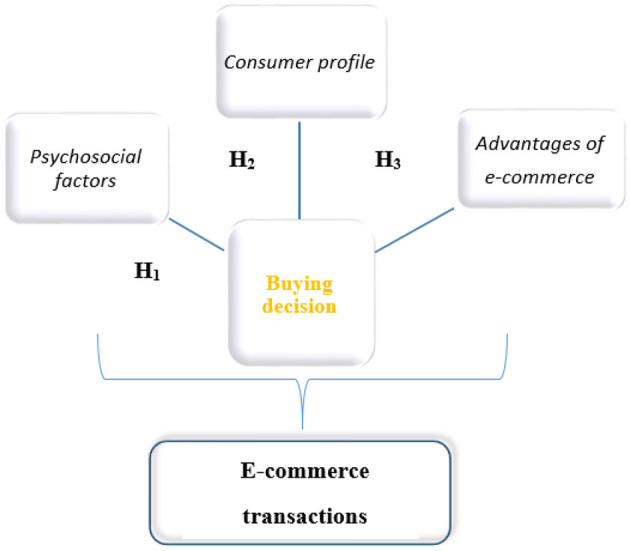
The life we considered normal was disrupted due to measures taken to limit the spread of the novel coronavirus. Quarantine, isolation, social distancing, and community containment have influenced consumer behavior and contributed to the rapid development of e-commerce. In pandemic times, even those unfamiliar with the online environment have had to adapt and make acquisitions in this new manner. Hence, we focused our research on measuring the perception of consumers on how the restrictive measures imposed to limit the spread of the COVID-19 virus had influenced their decision to buy a product or service from the online environment, given that purchases are highly subjective and influenced by cumulative effects of economic, social, psychological and behavioral factors. Our paper comes with additional insights from the literature. It adds empirical evidence that reveals that the number of transactions and the value per transaction increased during the COVID-19 pandemic and highlights that online purchases will continue as such even after the pandemic.
我们原本认为正常的生活因采取措施限制新型冠状病毒传播而被打乱。隔离、检疫、社交距离以及社区管控影响了消费者行为,并推动了电子商务的迅速发展。在疫情期间,即使那些不熟悉网络环境的人也不得不适应并以这种新方式进行购物。因此,鉴于购买行为具有高度主观性且受经济、社会、心理和行为因素的累积影响,我们将研究重点放在衡量消费者对于为限制新冠病毒传播而实施的限制措施如何影响他们从网络环境购买产品或服务的决策的认知上。我们的论文还提供了文献中的其他见解。它补充了实证证据,表明在新冠疫情期间交易数量和每笔交易价值有所增加,并强调即使在疫情之后,在线购物仍将如此持续下去。