• 文献检索
  • 文档翻译
  • 深度研究
  • 学术资讯
  • Suppr Zotero 插件Zotero 插件
  • 邀请有礼
  • 套餐&价格
  • 历史记录
应用&插件
Suppr Zotero 插件Zotero 插件浏览器插件Mac 客户端Windows 客户端微信小程序
定价
高级版会员购买积分包购买API积分包
服务
文献检索文档翻译深度研究API 文档MCP 服务
关于我们
关于 Suppr公司介绍联系我们用户协议隐私条款
关注我们

Suppr 超能文献

核心技术专利:CN118964589B侵权必究
粤ICP备2023148730 号-1Suppr @ 2026

文献检索

告别复杂PubMed语法,用中文像聊天一样搜索,搜遍4000万医学文献。AI智能推荐,让科研检索更轻松。

立即免费搜索

文件翻译

保留排版,准确专业,支持PDF/Word/PPT等文件格式,支持 12+语言互译。

免费翻译文档

深度研究

AI帮你快速写综述,25分钟生成高质量综述,智能提取关键信息,辅助科研写作。

立即免费体验

一种预测新冠疫情期间消费者行为的计算模型。

A Computational Model to Predict Consumer Behaviour During COVID-19 Pandemic.

作者信息

Safara Fatemeh

机构信息

Department of Computer Engineering, Islamic Azad University, Islamshahr Branch, Islamshahr, Iran.

出版信息

Comput Econ. 2022;59(4):1525-1538. doi: 10.1007/s10614-020-10069-3. Epub 2020 Nov 5.

DOI:10.1007/s10614-020-10069-3
PMID:33169049
原文链接:https://pmc.ncbi.nlm.nih.gov/articles/PMC7643087/
Abstract

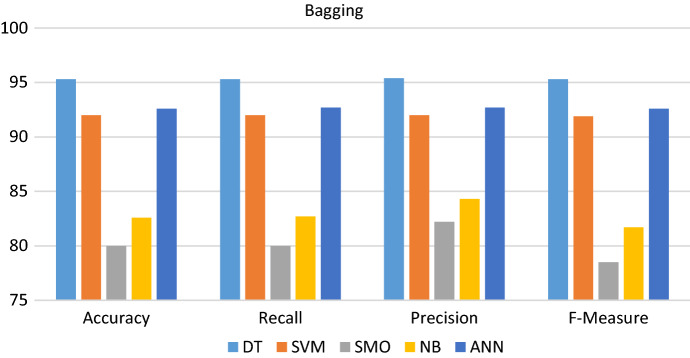
The knowledge-based economy has drawn increasing attention recently, particularly in online shopping applications where all the transactions and consumer opinions are logged. Machine learning methods could be used to extract implicit knowledge from the logs. Industries and businesses use the knowledge to better understand the consumer behavior, and opportunities and threats correspondingly. The outbreak of coronavirus (COVID-19) pandemic has a great impact on the different aspects of our daily life, in particular, on our shopping behaviour. To predict electronic consumer behaviour could be of valuable help for managers in government, supply chain and retail industry. Although, before coronavirus pandemic we have experienced online shopping, during the disease the number of online shopping increased dramatically. Due to high speed transmission of COVID-19, we have to observe personal and social health issues such as social distancing and staying at home. These issues have direct effect on consumer behaviour in online shopping. In this paper, a prediction model is proposed to anticipate the consumers behaviour using machine learning methods. Five individual classifiers, and their ensembles with Bagging and Boosting are examined on the dataset collected from an online shopping site. The results indicate the model constructed using decision tree ensembles with Bagging achieved the best prediction of consumer behavior with the accuracy of 95.3%. In addition, correlation analysis is performed to determine the most important features influencing the volume of online purchase during coronavirus pandemic.

摘要

近年来,知识经济受到了越来越多的关注,尤其是在所有交易和消费者意见都有记录的在线购物应用中。机器学习方法可用于从日志中提取隐含知识。行业和企业利用这些知识来更好地了解消费者行为以及相应的机遇和威胁。冠状病毒(COVID-19)大流行的爆发对我们日常生活的各个方面都产生了重大影响,尤其是对我们的购物行为。预测电子消费者行为对政府、供应链和零售行业的管理者可能会有很大帮助。虽然在冠状病毒大流行之前我们就已经体验过在线购物,但在疫情期间,在线购物的数量急剧增加。由于COVID-19的高速传播,我们必须遵守个人和社会健康问题,如保持社交距离和居家。这些问题对在线购物中的消费者行为有直接影响。在本文中,提出了一种使用机器学习方法来预测消费者行为的模型。在从一个在线购物网站收集的数据集上,研究了五个单独的分类器及其通过装袋法和提升法形成的集成分类器。结果表明,使用带有装袋法的决策树集成构建的模型对消费者行为的预测效果最佳,准确率达到了95.3%。此外,还进行了相关性分析,以确定在冠状病毒大流行期间影响在线购买量的最重要特征。
https://cdn.ncbi.nlm.nih.gov/pmc/blobs/e897/7643087/9c27146e3496/10614_2020_10069_Fig5_HTML.jpg
https://cdn.ncbi.nlm.nih.gov/pmc/blobs/e897/7643087/7f627240bee0/10614_2020_10069_Fig1_HTML.jpg
https://cdn.ncbi.nlm.nih.gov/pmc/blobs/e897/7643087/069505d0fa04/10614_2020_10069_Fig2_HTML.jpg
https://cdn.ncbi.nlm.nih.gov/pmc/blobs/e897/7643087/cdb780eb29b9/10614_2020_10069_Fig3_HTML.jpg
https://cdn.ncbi.nlm.nih.gov/pmc/blobs/e897/7643087/eed82c9edd7d/10614_2020_10069_Fig4_HTML.jpg
https://cdn.ncbi.nlm.nih.gov/pmc/blobs/e897/7643087/9c27146e3496/10614_2020_10069_Fig5_HTML.jpg
https://cdn.ncbi.nlm.nih.gov/pmc/blobs/e897/7643087/7f627240bee0/10614_2020_10069_Fig1_HTML.jpg
https://cdn.ncbi.nlm.nih.gov/pmc/blobs/e897/7643087/069505d0fa04/10614_2020_10069_Fig2_HTML.jpg
https://cdn.ncbi.nlm.nih.gov/pmc/blobs/e897/7643087/cdb780eb29b9/10614_2020_10069_Fig3_HTML.jpg
https://cdn.ncbi.nlm.nih.gov/pmc/blobs/e897/7643087/eed82c9edd7d/10614_2020_10069_Fig4_HTML.jpg
https://cdn.ncbi.nlm.nih.gov/pmc/blobs/e897/7643087/9c27146e3496/10614_2020_10069_Fig5_HTML.jpg

相似文献

1
A Computational Model to Predict Consumer Behaviour During COVID-19 Pandemic.一种预测新冠疫情期间消费者行为的计算模型。
Comput Econ. 2022;59(4):1525-1538. doi: 10.1007/s10614-020-10069-3. Epub 2020 Nov 5.
2
A retentive consumer behavior assessment model of the online purchase decision-making process.在线购买决策过程的保留型消费者行为评估模型。
Heliyon. 2021 Oct 13;7(10):e08169. doi: 10.1016/j.heliyon.2021.e08169. eCollection 2021 Oct.
3
Online shopping consumer perception analysis and future network security service technology using logistic regression model.基于逻辑回归模型的网络购物消费者感知分析及未来网络安全服务技术
PeerJ Comput Sci. 2024 Jan 15;10:e1777. doi: 10.7717/peerj-cs.1777. eCollection 2024.
4
Determinants of Consumers' Online/Offline Shopping Behaviours during the COVID-19 Pandemic.新冠疫情期间消费者线上/线下购物行为的决定因素。
Int J Environ Res Public Health. 2021 Feb 8;18(4):1593. doi: 10.3390/ijerph18041593.
5
The demand for online grocery shopping: COVID-induced changes in grocery shopping behavior of Canadian consumers.在线杂货购物的需求:加拿大消费者因 COVID-19 而改变的杂货购物行为。
PLoS One. 2024 Feb 8;19(2):e0295538. doi: 10.1371/journal.pone.0295538. eCollection 2024.
6
Touch, threats, and transactions: Pandemic influences on consumer responses and the mediating role of touch likelihood when shopping for fruits and vegetables.触摸、威胁与交易:疫情对消费者反应的影响以及购买水果和蔬菜时触摸可能性的中介作用。
Food Qual Prefer. 2022 Apr;97:104461. doi: 10.1016/j.foodqual.2021.104461. Epub 2021 Nov 11.
7
Consumer Privacy Protection With the Growth of AI-Empowered Online Shopping Based on the Evolutionary Game Model.基于进化博弈模型的人工智能赋能在线购物发展下的消费者隐私保护
Front Public Health. 2021 Jul 7;9:705777. doi: 10.3389/fpubh.2021.705777. eCollection 2021.
8
Utilizing SEM-RFC to predict factors affecting online shopping cart abandonment during the COVID-19 pandemic.利用结构方程模型-随机森林算法预测2019年冠状病毒病疫情期间影响在线购物车放弃行为的因素。
Heliyon. 2022 Oct 28;8(11):e11293. doi: 10.1016/j.heliyon.2022.e11293. eCollection 2022 Nov.
9
The use of mobile technologies in online shopping during the Covid-19 pandemic - an empirical study.新冠疫情期间移动技术在网络购物中的应用——一项实证研究。
Procedia Comput Sci. 2021;192:3413-3422. doi: 10.1016/j.procs.2021.09.114. Epub 2021 Oct 1.
10
Consumers' Decision-Making Process on Social Commerce Platforms: Online Trust, Perceived Risk, and Purchase Intentions.社交商务平台上消费者的决策过程:在线信任、感知风险与购买意愿
Front Psychol. 2020 May 15;11:890. doi: 10.3389/fpsyg.2020.00890. eCollection 2020.

引用本文的文献

1
Susceptibility of AutoML mortality prediction algorithms to model drift caused by the COVID pandemic.自动化机器学习死亡率预测算法对由 COVID 大流行引起的模型漂移的敏感性。
BMC Med Inform Decis Mak. 2024 Feb 2;24(1):34. doi: 10.1186/s12911-024-02428-z.
2
Predictive modeling of consumer purchase behavior on social media: Integrating theory of planned behavior and machine learning for actionable insights.社交媒体上消费者购买行为的预测模型:整合计划行为理论和机器学习以获得可行的见解。
PLoS One. 2023 Dec 27;18(12):e0296336. doi: 10.1371/journal.pone.0296336. eCollection 2023.
3
Understanding Covid-19 Mobility Through Human Capital: A Unified Causal Framework.

本文引用的文献

1
Consumer food stockpiling behavior and willingness to pay for food reserves in COVID-19.新冠疫情期间消费者的食品储备行为及为食品储备支付费用的意愿
Food Secur. 2020;12(4):739-747. doi: 10.1007/s12571-020-01092-1. Epub 2020 Aug 6.
2
Competing during a pandemic? Retailers' ups and downs during the COVID-19 outbreak.在疫情期间竞争?新冠疫情爆发期间零售商的兴衰。
J Bus Res. 2020 Aug;116:209-213. doi: 10.1016/j.jbusres.2020.05.036. Epub 2020 May 21.
3
The socio-economic implications of the coronavirus pandemic (COVID-19): A review.冠状病毒大流行(COVID-19)的社会经济影响:综述。
通过人力资本理解新冠疫情下的人员流动:一个统一的因果框架。
Comput Econ. 2023 Feb 21:1-41. doi: 10.1007/s10614-023-10359-6.
4
Turkish Stock Market from Pandemic to Russian Invasion, Evidence from Developed Machine Learning Algorithm.从疫情到俄乌冲突下的土耳其股票市场:基于先进机器学习算法的证据
Comput Econ. 2022 Jul 14:1-17. doi: 10.1007/s10614-022-10293-z.
5
Deep Learning for Financial Engineering.金融工程中的深度学习
Comput Econ. 2022;59(4):1277-1281. doi: 10.1007/s10614-022-10260-8. Epub 2022 Apr 20.
6
COVID-19, consumer behavior, technology, and society: A literature review and bibliometric analysis.新型冠状病毒肺炎、消费者行为、技术与社会:文献综述与文献计量分析
Technol Forecast Soc Change. 2021 Dec;173:121179. doi: 10.1016/j.techfore.2021.121179. Epub 2021 Sep 1.
7
Recognition and the development potential of mobile shopping of customized cosmetic on untact coronavirus disease 2019 period: Focused on 40's to 60's women in Seoul, Republic of Korea.非接触式新冠病毒疾病 2019 期间对定制化妆品的移动购物的认识和发展潜力:以韩国首尔 40 至 60 岁女性为重点。
J Cosmet Dermatol. 2021 Jul;20(7):1975-1991. doi: 10.1111/jocd.14150. Epub 2021 Jun 2.
Int J Surg. 2020 Jun;78:185-193. doi: 10.1016/j.ijsu.2020.04.018. Epub 2020 Apr 17.
4
Predicting the impacts of epidemic outbreaks on global supply chains: A simulation-based analysis on the coronavirus outbreak (COVID-19/SARS-CoV-2) case.预测疫情爆发对全球供应链的影响:基于模拟的新型冠状病毒疫情(COVID-19/SARS-CoV-2)案例分析
Transp Res E Logist Transp Rev. 2020 Apr;136:101922. doi: 10.1016/j.tre.2020.101922. Epub 2020 Mar 24.
5
Early dynamics of transmission and control of COVID-19: a mathematical modelling study.COVID-19 的传播和控制的早期动态:一项数学建模研究。
Lancet Infect Dis. 2020 May;20(5):553-558. doi: 10.1016/S1473-3099(20)30144-4. Epub 2020 Mar 11.
6
Urban freight and road safety in the era of e-commerce.电子商务时代的城市货运与道路安全。
Traffic Inj Prev. 2019;20(7):764-770. doi: 10.1080/15389588.2019.1651930. Epub 2019 Sep 5.