Calcabrini Mariano, Van den Eynden Dietger, Ribot Sergi Sánchez, Pokratath Rohan, Llorca Jordi, De Roo Jonathan, Ibáñez Maria
IST Austria, Am Campus 1, 3400 Klosterneuburg, Austria.
Department of Chemistry, University of Basel, 4058 Basel, Switzerland.
JACS Au. 2021 Oct 12;1(11):1898-1903. doi: 10.1021/jacsau.1c00349. eCollection 2021 Nov 22.
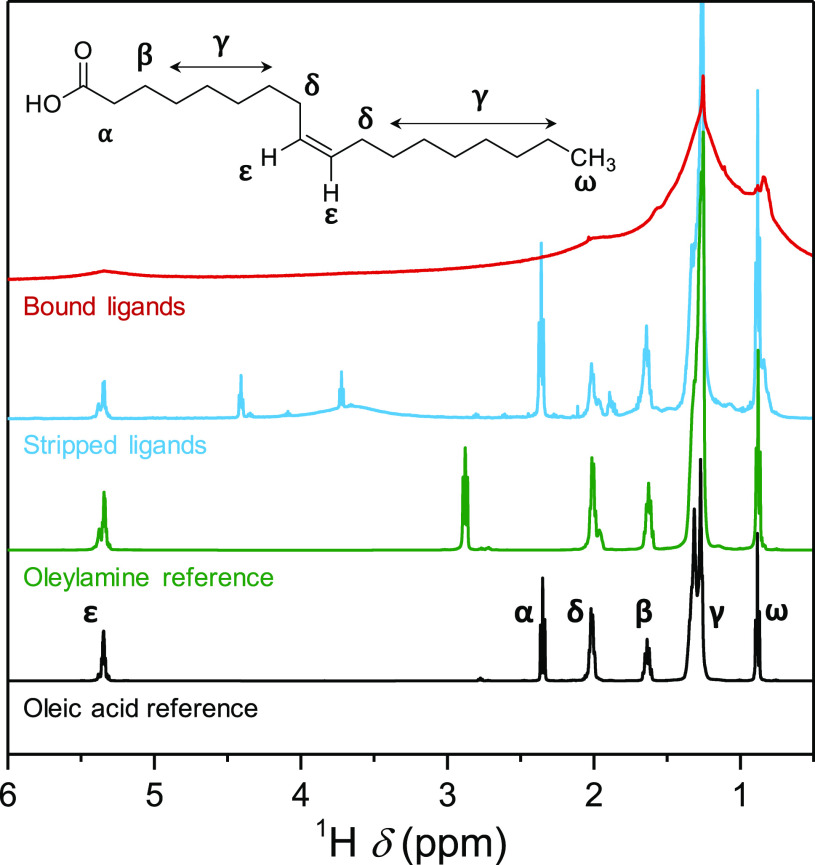
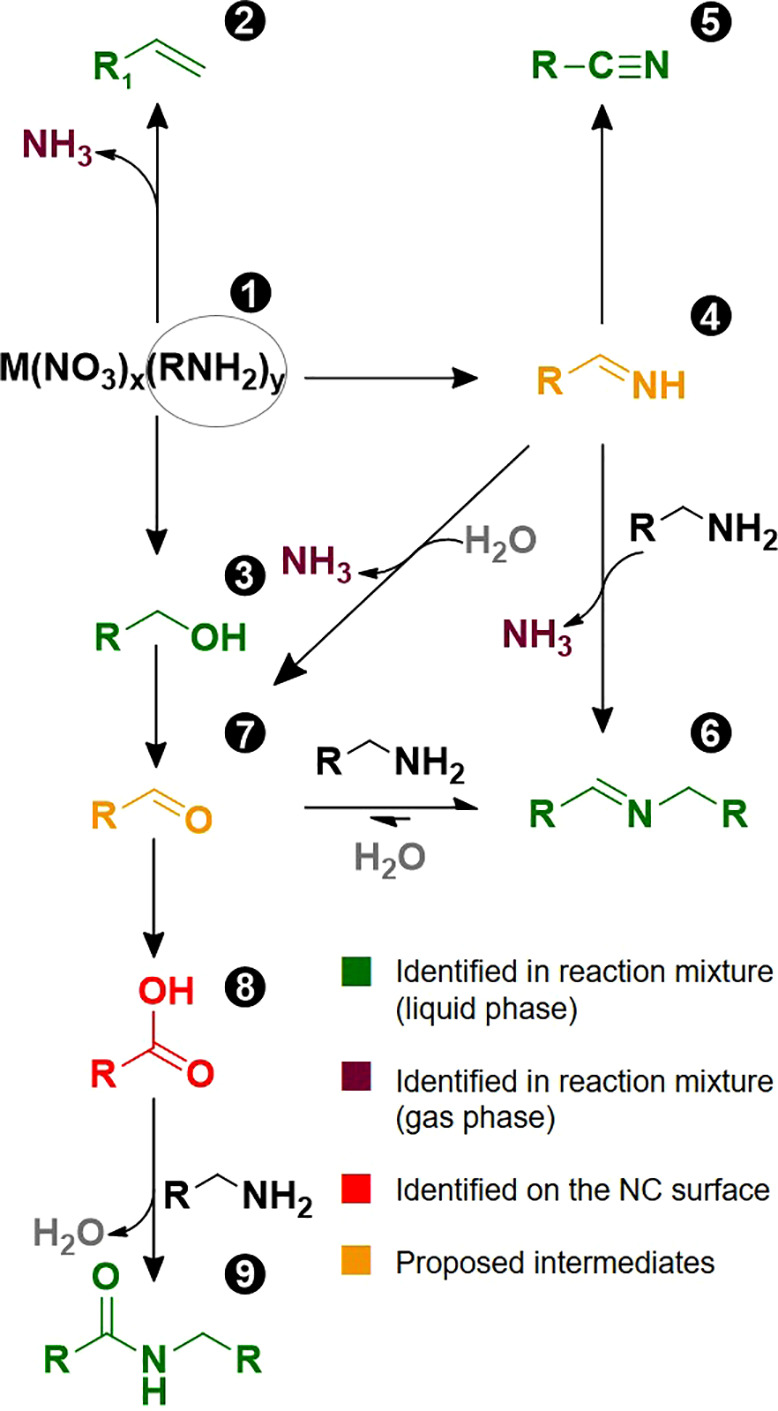
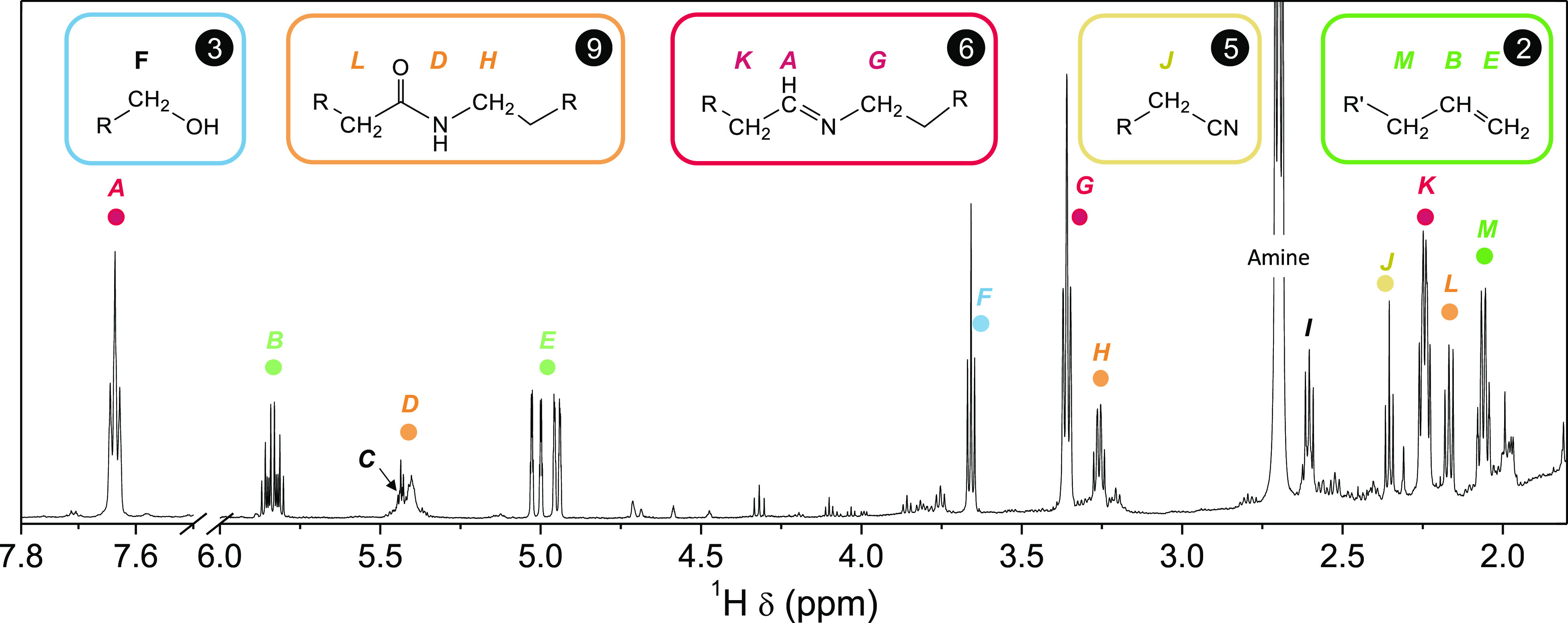
Ligands are a fundamental part of nanocrystals. They control and direct nanocrystal syntheses and provide colloidal stability. Bound ligands also affect the nanocrystals' chemical reactivity and electronic structure. Surface chemistry is thus crucial to understand nanocrystal properties and functionality. Here, we investigate the synthesis of metal oxide nanocrystals (CeO , ZnO, and NiO) from metal nitrate precursors, in the presence of oleylamine ligands. Surprisingly, the nanocrystals are capped exclusively with a fatty acid instead of oleylamine. Analysis of the reaction mixtures with nuclear magnetic resonance spectroscopy revealed several reaction byproducts and intermediates that are common to the decomposition of Ce, Zn, Ni, and Zr nitrate precursors. Our evidence supports the oxidation of alkylamine and formation of a carboxylic acid, thus unraveling this counterintuitive surface chemistry.
配体是纳米晶体的基本组成部分。它们控制并指导纳米晶体的合成,并提供胶体稳定性。结合的配体还会影响纳米晶体的化学反应性和电子结构。因此,表面化学对于理解纳米晶体的性质和功能至关重要。在这里,我们研究了在油胺配体存在下,由金属硝酸盐前驱体合成金属氧化物纳米晶体(CeO、ZnO和NiO)的过程。令人惊讶的是,纳米晶体仅被脂肪酸而非油胺覆盖。用核磁共振光谱对反应混合物进行分析,揭示了几种Ce、Zn、Ni和Zr硝酸盐前驱体分解过程中常见的反应副产物和中间体。我们的证据支持烷基胺的氧化和羧酸的形成,从而揭示了这种违反直觉的表面化学现象。