Li Ping, Zhang Hai-Yan, Gao Jian-Zhen, Du Wen-Qiang, Tang Dong, Wang Wei, Wang Liu-Hua
Department of General Surgery, Huaian Tumor Hospital & Huaian Hospital of Huaian City, Huaian, China.
Department of Central Laboratory, Huaian Tumor Hospital & Huaian Hospital of Huaian City, Huaian, China.
J Cell Mol Med. 2022 Jun;26(11):3133-3146. doi: 10.1111/jcmm.17176. Epub 2022 May 17.
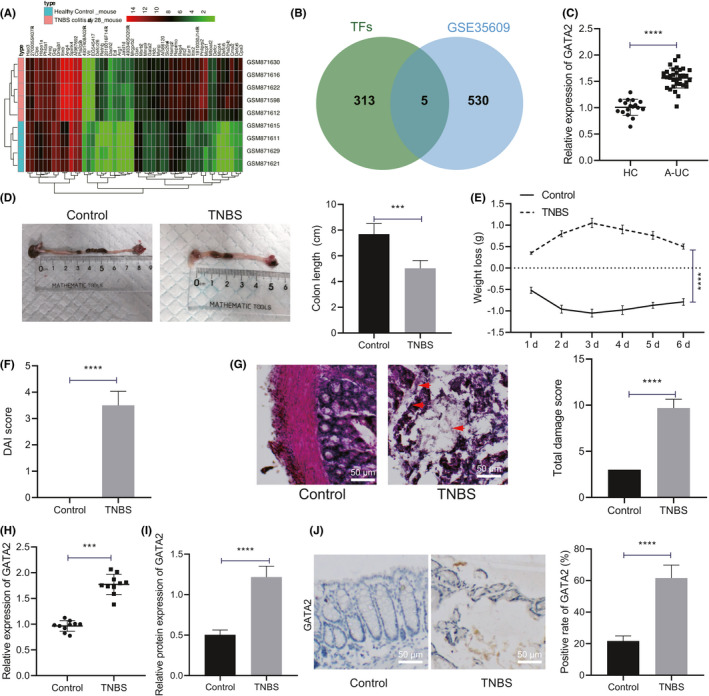
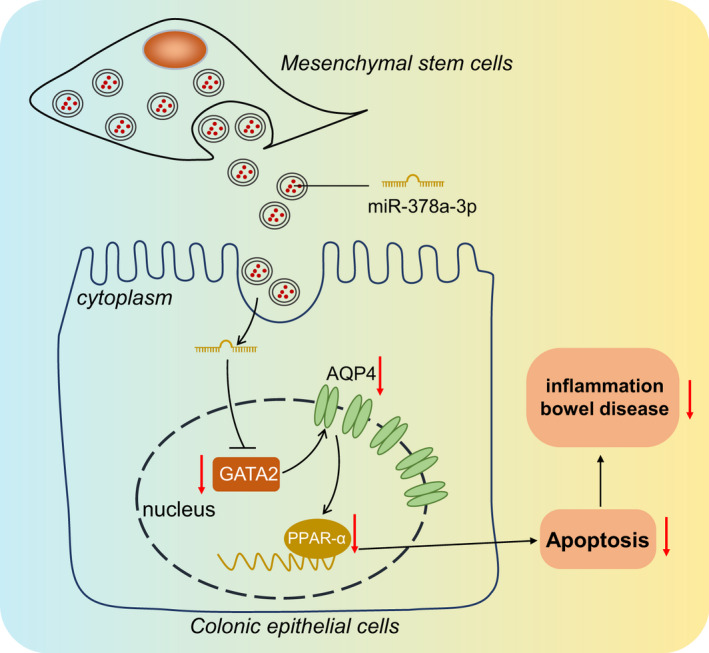
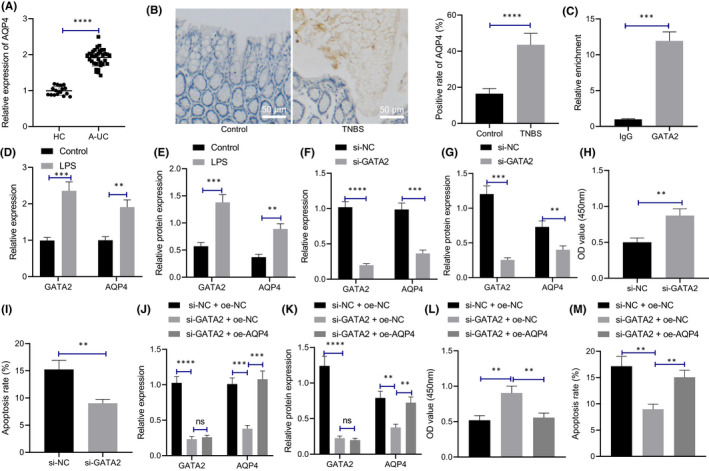
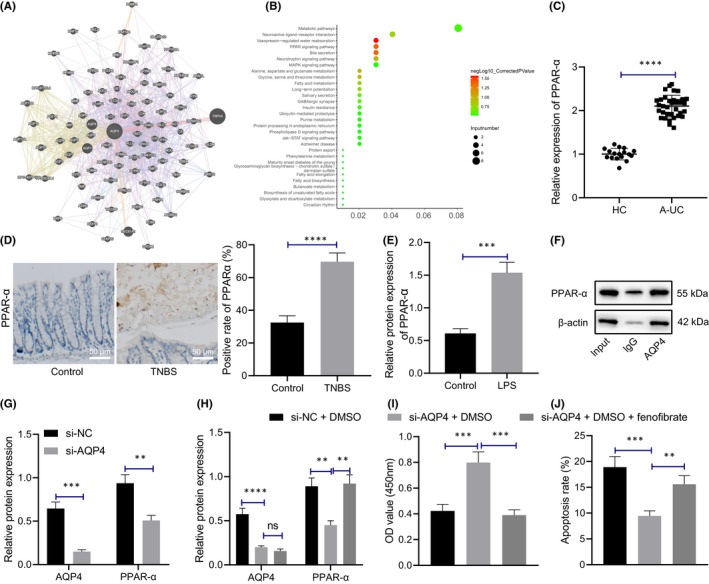
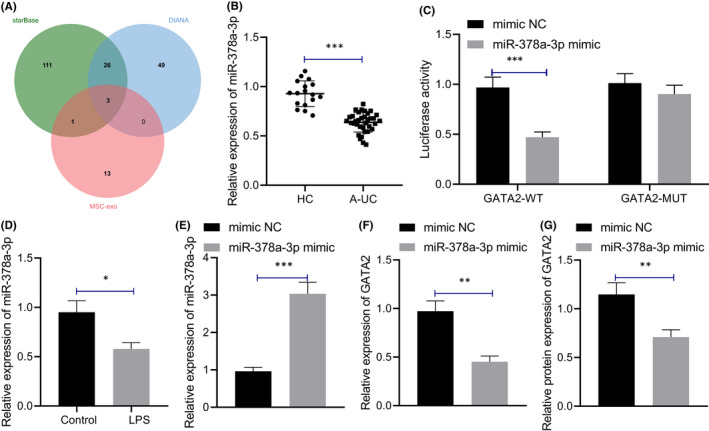
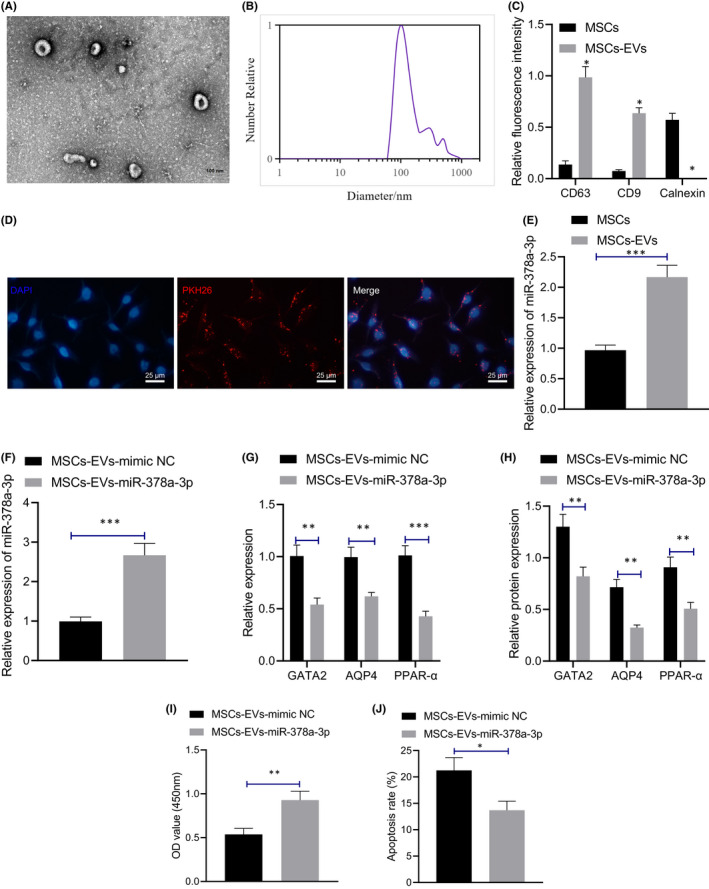
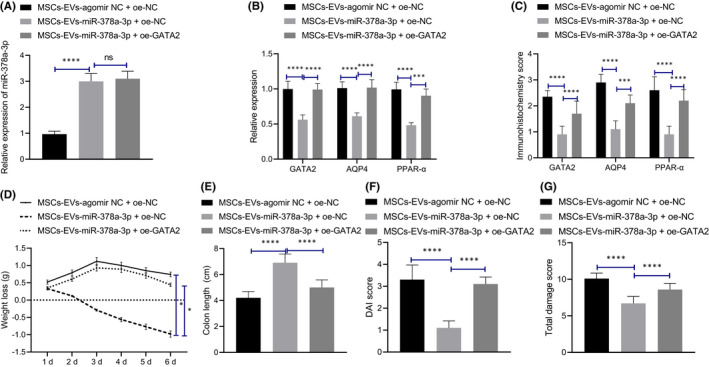
This study sought to determine whether mesenchymal stem cells-derived extracellular vesicles (MSCs-EVs) carrying microRNA-378a-3p (miR-378a-3p) could affect the pathogenesis of inflammatory bowel disease (IBD) by regulating the GATA-binding protein 2 (GATA2)/aquaporin-4 (AQP4)/peroxisome proliferator-activated receptor α (PPAR-α) axis. Initially, colon mucosa biopsy tissues were harvested from healthy controls and patients with IBD for qRT-PCR and immunohistochemistry analysis. EVs harvested from MSCs and lipopolysaccharide (LPS) were used to stimulate the M064 cells to establish an in vitro inflammation cell model. Besides, 2,4,6-trinitrobenzene sulfonic acid intracolon administration was performed to establish in vivo IBD mouse models. After loss- and gain-of-function assays, the regulatory role of MSCs-derived EVs loaded with manipulated miR-378a-3p in IBD in relation to GATA2/AQP4/PPAR-α were explored. Upregulation of GATA2 was identified in the colon tissue of IBD patients. GATA2, which was a target gene of miR-378a-3p, transcriptionally upregulated AQP4. After silencing of GATA2, LPS-induced apoptosis of M064 cells was reduced by the downregulation of AQP4. Decreased AQP4 contributed to PPAR-α pathway inactivation and weakened the LPS-induced apoptosis of M064 cells. MSCs-EVs delivering miR-378a-3p suppressed the GATA2/AQP4/PPAR-α pathway, which reduced LPS-induced apoptosis of M064 cells and the occurrence of IBD in mice. Altogether, the current study illustrated that MSCs-EVs transfer miR-378a-3p to reduce the GATA2 expression, which downregulates AQP4 to block the PPAR-α signalling pathway, thus suppressing the occurrence of IBD.
本研究旨在确定携带微小RNA-378a-3p(miR-378a-3p)的间充质干细胞衍生的细胞外囊泡(MSCs-EVs)是否可通过调节GATA结合蛋白2(GATA2)/水通道蛋白4(AQP4)/过氧化物酶体增殖物激活受体α(PPAR-α)轴来影响炎症性肠病(IBD)的发病机制。首先,从健康对照者和IBD患者中获取结肠黏膜活检组织进行qRT-PCR和免疫组织化学分析。从间充质干细胞和脂多糖(LPS)中收获的细胞外囊泡用于刺激M064细胞以建立体外炎症细胞模型。此外,通过结肠内注射2,4,6-三硝基苯磺酸来建立体内IBD小鼠模型。在进行功能丧失和功能获得实验后,探索了装载有调控性miR-378a-3p的间充质干细胞衍生的细胞外囊泡在IBD中相对于GATA2/AQP4/PPAR-α的调控作用。在IBD患者的结肠组织中发现GATA2上调。作为miR-378a-3p靶基因的GATA2转录上调AQP4。沉默GATA2后,AQP4的下调降低了LPS诱导的M064细胞凋亡。AQP4的减少导致PPAR-α途径失活,并减弱了LPS诱导的M064细胞凋亡。传递miR-378a-3p的间充质干细胞衍生的细胞外囊泡抑制了GATA2/AQP4/PPAR-α途径,这减少了LPS诱导的M064细胞凋亡以及小鼠IBD的发生。总之,当前研究表明间充质干细胞衍生的细胞外囊泡转移miR-378a-3p以降低GATA2表达,从而下调AQP4以阻断PPAR-α信号通路,进而抑制IBD的发生。