Department of Global and Community Health, George Mason University, Fairfax, Virginia, USA.
National Center for Zoonotic Diseases, Ulaanbaatar, Mongolia.
Zoonoses Public Health. 2022 Sep;69(6):655-662. doi: 10.1111/zph.12954. Epub 2022 May 18.
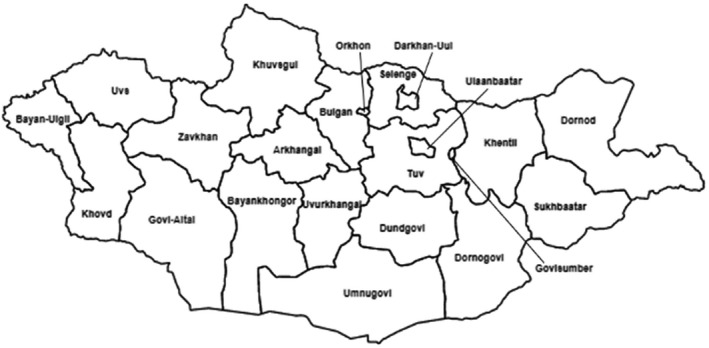
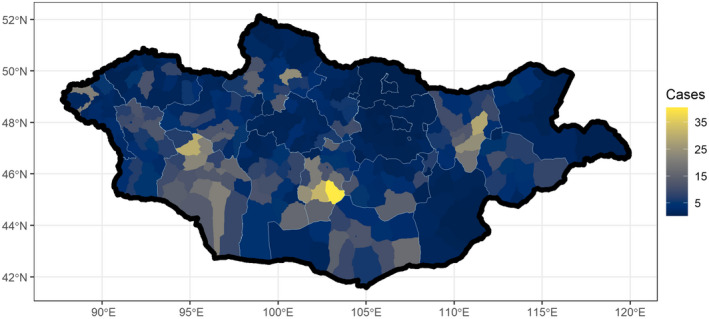
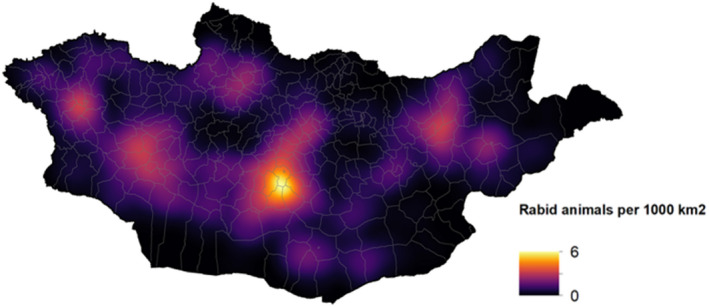
The epidemiological profile of rabies virus within Mongolia remains poorly characterized despite 21,302 domestic animal cases being reported between 1970-2005. This lack of knowledge is particularly concerning given that roughly 26% of the population lives a pastoral herding lifestyle and livestock production contributes up to 18% of Mongolia's total gross domestic product (GDP). The gaps in knowledge of the rabies disease ecology within Mongolia combined with the lack of routine vaccination of domestic animals and wildlife poses a significant threat to the more than 60 million heads of livestock within Mongolia. Animal rabies case data from the General Authority for Veterinary Services and National Center for Zoonotic Diseases were used in this study. Each data point included year of report, an animal descriptor, geographic coordinates and the aimag (province) of origin. A total of 2,359 animal rabies cases were reported between 2012-2018. Cattle were the most commonly reported animal overall (861 cases), followed by goats (268), sheep (251) and dogs (221) within the domestic animal category. Red foxes were responsible for most reported wildlife cases (317) followed by wolves (151). Most rabid animals were reported in the Khuvsgul, Uvurkhangai and Govi-Altai aimags, and a positive correlation was found between livestock numbers per soum and the number of rabies cases reported. Rabies poses a significant threat to the Mongolian economy and the health of human and animal populations within Mongolia. The close association of the nomadic pastoralists with both domestic animals and wildlife represents a significant threat for disease emergence and necessitates studies that describe the ecology of rabies, which may threaten these populations.
尽管 1970 年至 2005 年间报告了 21,302 例家畜病例,但蒙古国内的狂犬病病毒流行病学特征仍未得到很好的描述。鉴于约 26%的人口过着游牧放牧生活方式,畜牧业生产贡献了蒙古国内生产总值(GDP)的 18%,这种缺乏知识的情况尤其令人担忧。蒙古国内对狂犬病疾病生态学的认识存在差距,加上家畜和野生动物常规接种疫苗的缺乏,对蒙古国内的 6000 多万头牲畜构成了重大威胁。本研究使用了兽医服务总局和国家人畜共患病中心的动物狂犬病病例数据。每个数据点都包括报告年份、动物描述符、地理坐标和原籍 aimag(省)。2012 年至 2018 年期间共报告了 2359 例动物狂犬病病例。在家畜中,牛是最常见的报告动物(861 例),其次是山羊(268 例)、绵羊(251 例)和狗(221 例)。狐狸是报告的野生动物病例最多的(317 例),其次是狼(151 例)。大多数狂犬病动物是在库苏古尔、乌布苏和戈壁阿尔泰 aimags 报告的,发现牲畜数量与报告的狂犬病病例数量之间存在正相关关系。狂犬病对蒙古经济以及蒙古国内人畜健康构成重大威胁。游牧牧民与家畜和野生动物的密切联系对疾病的出现构成了重大威胁,需要进行研究以描述可能威胁这些人群的狂犬病生态学。