Heller School for Social Policy and Management, Brandeis University, Waltham, MA, United States of America.
Kirwan Institute for the Study of Race and Ethnicity, Ohio State University, Columbus, OH, United States of America.
PLoS One. 2022 May 19;17(5):e0267606. doi: 10.1371/journal.pone.0267606. eCollection 2022.
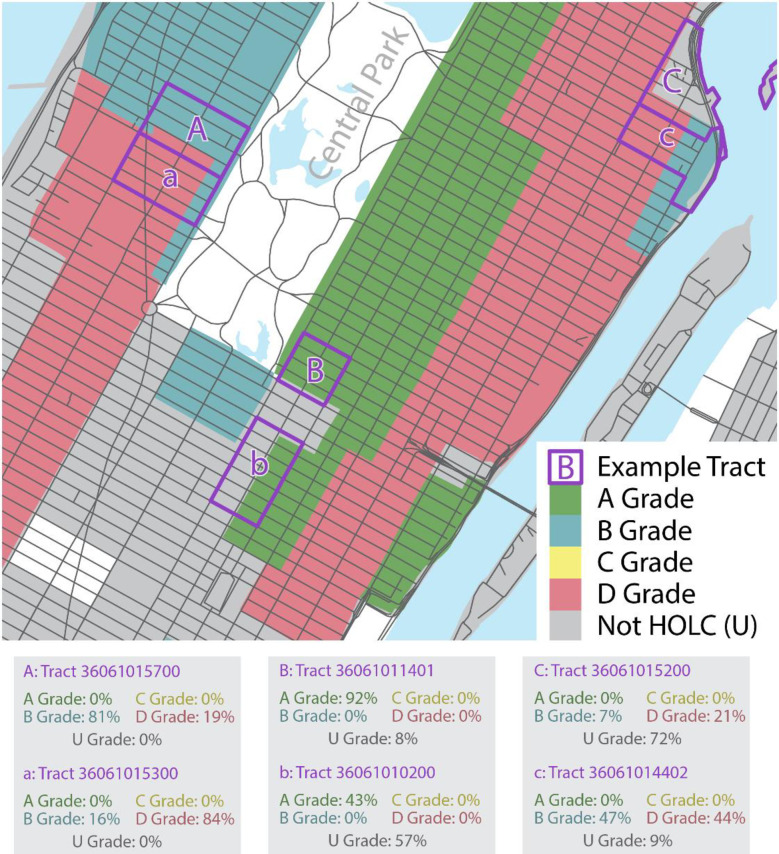
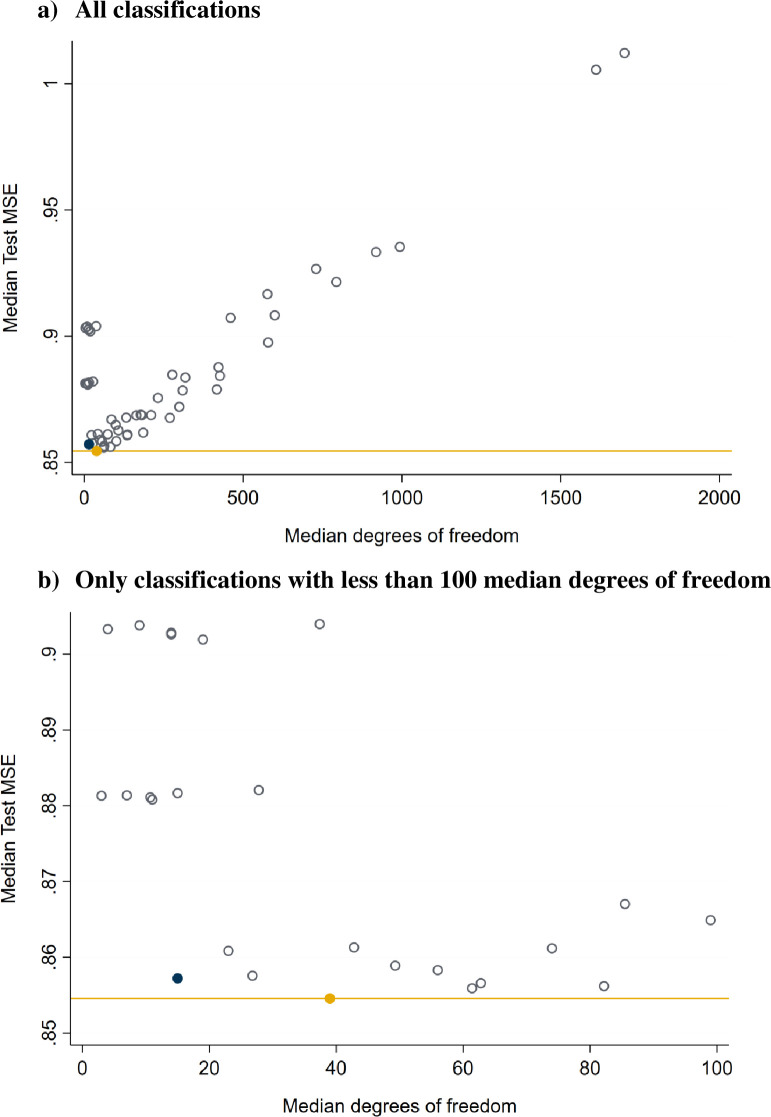
In the 1930's, the Home Owner Loan Corporation (HOLC) drafted maps to quantify variation in real estate credit risk across US city neighborhoods. The letter grades and associated risk ratings assigned to neighborhoods discriminated against those with black, lower class, or immigrant residents and benefitted affluent white neighborhoods. An emerging literature has begun linking current individual and community health effects to government redlining, but each study faces the same measurement problem: HOLC graded area boundaries and neighborhood boundaries in present-day health datasets do not match. Previous studies have taken different approaches to classify present day neighborhoods (census tracts) in terms of historical HOLC grades. This study reviews these approaches, examines empirically how different classifications fare in terms of predictive validity, and derives a predictively optimal present-day neighborhood redlining classification for neighborhood and health research.
20 世纪 30 年代,房主贷款公司(HOLC)绘制地图,量化美国城市社区房地产信贷风险的变化。分配给社区的字母等级和相关风险评级歧视了那些有黑人、低收入者或移民居民的社区,并使富裕的白人社区受益。新兴文献开始将当前个人和社区健康影响与政府红线联系起来,但每项研究都面临着相同的衡量问题:HOLC 对当今健康数据集中的区域边界和社区边界进行评级,两者并不匹配。之前的研究采用不同的方法来根据历史 HOLC 等级对当今的社区(人口普查区)进行分类。本研究回顾了这些方法,从实证角度检验了不同分类在预测有效性方面的表现,并为社区和健康研究得出了一种预测最优的当前社区红线分类。