Center for Autoimmune Genomics and Etiology, Cincinnati Children's Hospital Medical Center, Cincinnati, Ohio; Department of Pediatrics, College of Medicine, University of Cincinnati, Cincinnati, Ohio.
Center for Autoimmune Genomics and Etiology, Cincinnati Children's Hospital Medical Center, Cincinnati, Ohio; Division of Biomedical Informatics, Cincinnati Children's Hospital Medical Center, Cincinnati, Ohio.
J Allergy Clin Immunol. 2022 Nov;150(5):1086-1096. doi: 10.1016/j.jaci.2022.03.035. Epub 2022 May 18.
Asthma is the most common chronic condition in children and the third leading cause of hospitalization in pediatrics. The genome-wide association study catalog reports 140 studies with genome-wide significance. A polygenic risk score (PRS) with predictive value across ancestries has not been evaluated for this important trait.
This study aimed to train and validate a PRS relying on genetic determinants for asthma to provide predictions for disease occurrence in pediatric cohorts of diverse ancestries.
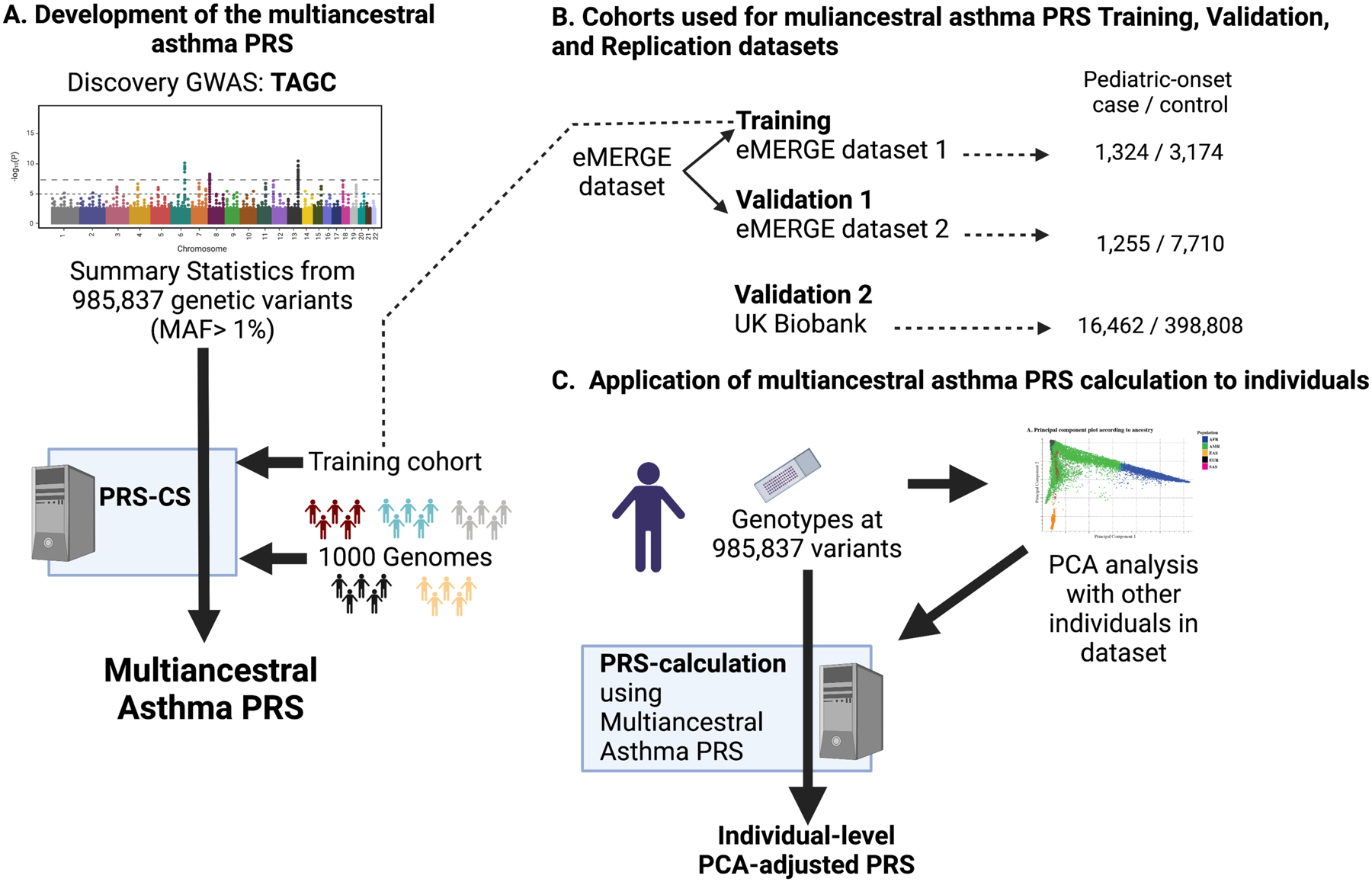
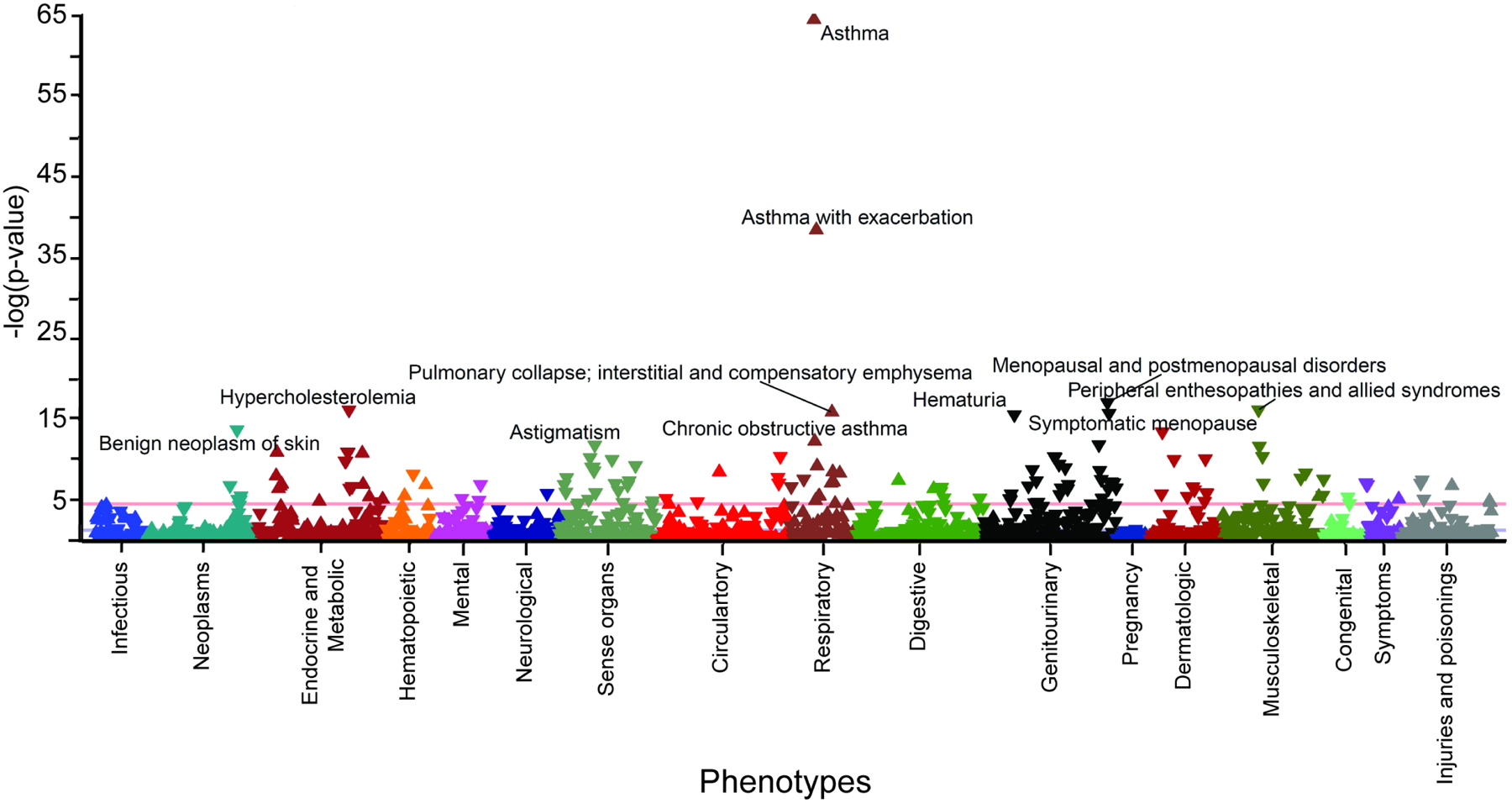
This study applied a Bayesian regression framework method using the Trans-National Asthma Genetic Consortium genome-wide association study summary statistics to derive a multiancestral PRS score, used one Electronic Medical Records and Genomics (eMERGE) cohort as a training set, used a second independent eMERGE cohort to validate the score, and used the UK Biobank data to replicate the findings. A phenome-wide association study was performed using the PRS to identify shared genetic etiology with other phenotypes.
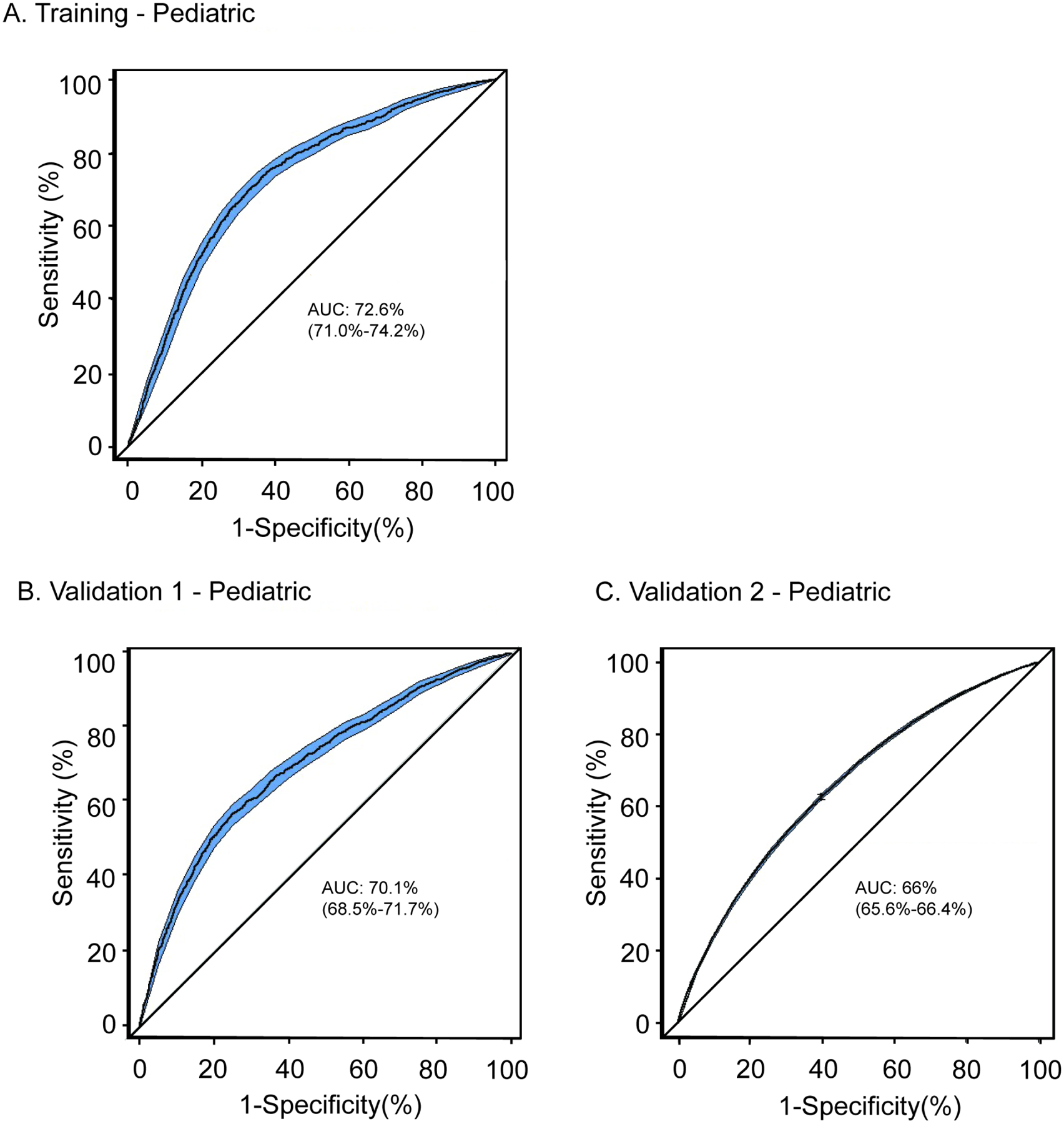
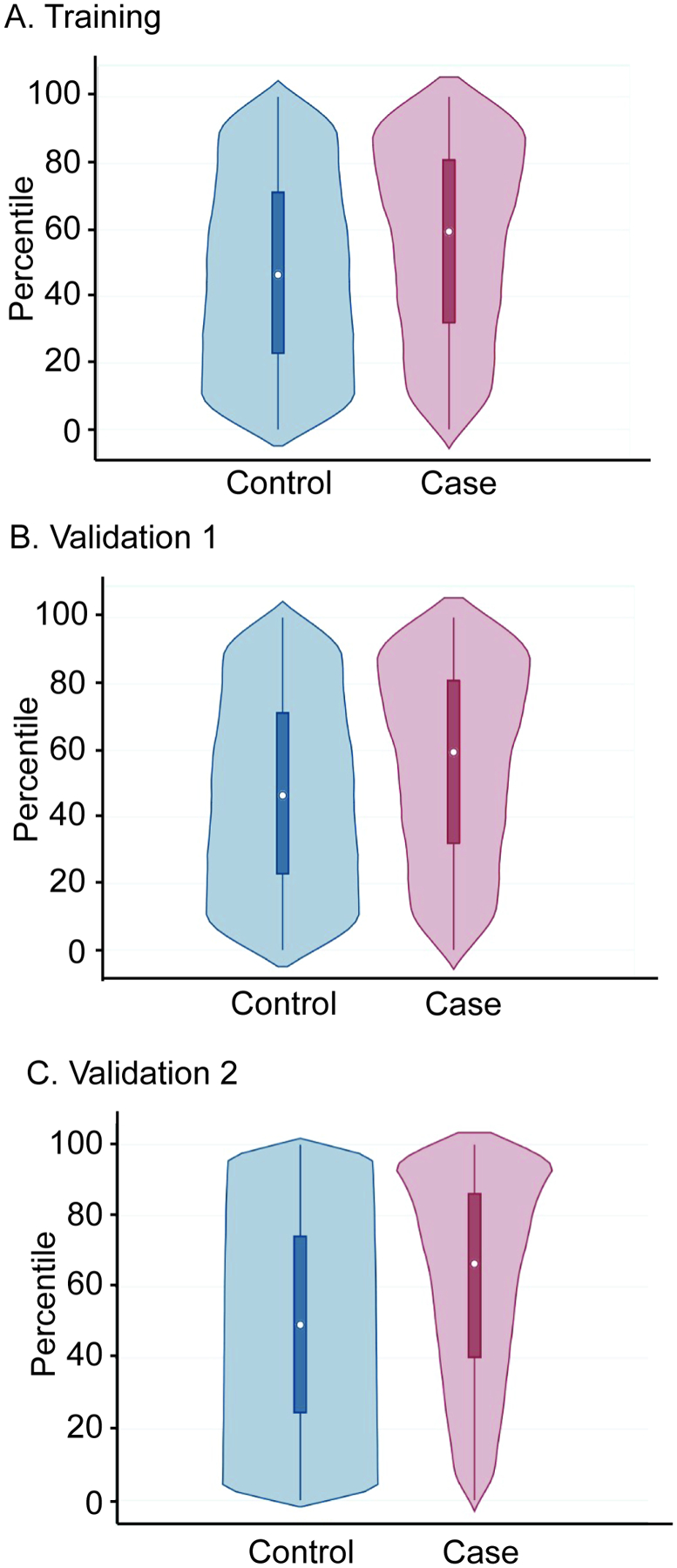
The multiancestral asthma PRS was associated with asthma in the 2 pediatric validation datasets. Overall, the multiancestral asthma PRS has an area under the curve (AUC) of 0.70 (95% CI, 0.69-0.72) in the pediatric validation 1 and AUC of 0.66 (0.65-0.66) in the pediatric validation 2 datasets. We found significant discrimination across pediatric subcohorts of European (AUC, 95% CI, 0.60 and 0.66), African (AUC, 95% CI, 0.61 and 0.66), admixed American (AUC, 0.64 and 0.70), Southeast Asian (AUC, 0.65), and East Asian (AUC, 0.73) ancestry. Pediatric participants with the top 5% PRS had 2.80 to 5.82 increased odds of asthma compared to the bottom 5% across the training, validation 1, and validation 2 cohorts when adjusted for ancestry. Phenome-wide association study analysis confirmed the strong association of the identified PRS with asthma (odds ratio, 2.71, P = 3.71 × 10) and related phenotypes.
A multiancestral PRS for asthma based on Bayesian posterior genomic effect sizes identifies increased odds of pediatric asthma.
哮喘是儿童中最常见的慢性疾病,也是儿科住院的第三大主要原因。全基因组关联研究目录报告了 140 项具有全基因组意义的研究。尚未针对这一重要特征评估具有预测价值的多基因风险评分(PRS)。
本研究旨在训练和验证一种基于哮喘遗传决定因素的 PRS,为不同祖源的儿科队列中的疾病发生提供预测。
本研究应用贝叶斯回归框架方法,使用跨民族哮喘遗传联盟全基因组关联研究汇总统计数据得出多民族 PRS 评分,使用一个电子病历和基因组学(eMERGE)队列作为训练集,使用第二个独立的 eMERGE 队列验证评分,并使用英国生物库数据复制发现。进行了表型全基因组关联研究,使用 PRS 识别与其他表型的共同遗传病因。
多民族哮喘 PRS 与两个儿科验证数据集的哮喘相关。总体而言,多民族哮喘 PRS 在儿科验证 1 数据集的 AUC 为 0.70(95%CI,0.69-0.72),在儿科验证 2 数据集的 AUC 为 0.66(0.65-0.66)。我们发现,在欧洲(AUC,95%CI,0.60 和 0.66)、非洲(AUC,95%CI,0.61 和 0.66)、混合美洲(AUC,0.64 和 0.70)、东南亚(AUC,0.65)和东亚(AUC,0.73)亚群的儿科亚群中存在显著的区分。在调整了祖源后,与训练、验证 1 和验证 2 队列中的第 5%PRS 最低分相比,前 5%PRS 的儿科参与者患哮喘的几率增加了 2.80 到 5.82 倍。表型全基因组关联研究分析证实,所确定的 PRS 与哮喘(优势比,2.71,P=3.71×10)和相关表型之间存在强烈关联。
基于贝叶斯后基因组效应大小的多民族哮喘 PRS 可识别出儿童哮喘的患病几率增加。