Department of Molecular Biotechnology and Gene Therapy, Paul-Ehrlich-Institut, Paul-Ehrlich-Straße 51-59, 63225 Langen, Germany.
Department of Molecular Biotechnology and Gene Therapy, Paul-Ehrlich-Institut, Paul-Ehrlich-Straße 51-59, 63225 Langen, Germany; Frankfurt Cancer Institute (FCI), Goethe-University, Paul-Ehrlich-Straße 42-44, 60596 Frankfurt am Main, Germany.
Mol Ther. 2022 Jul 6;30(7):2401-2415. doi: 10.1016/j.ymthe.2022.05.018. Epub 2022 May 20.
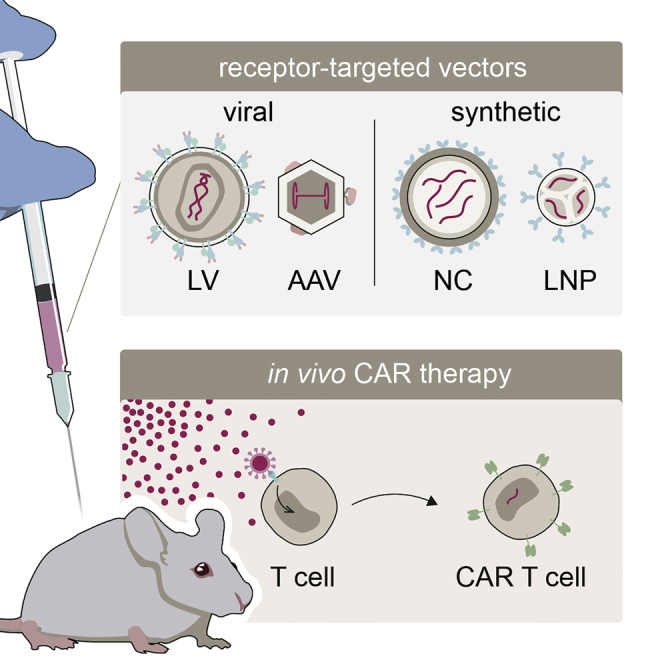
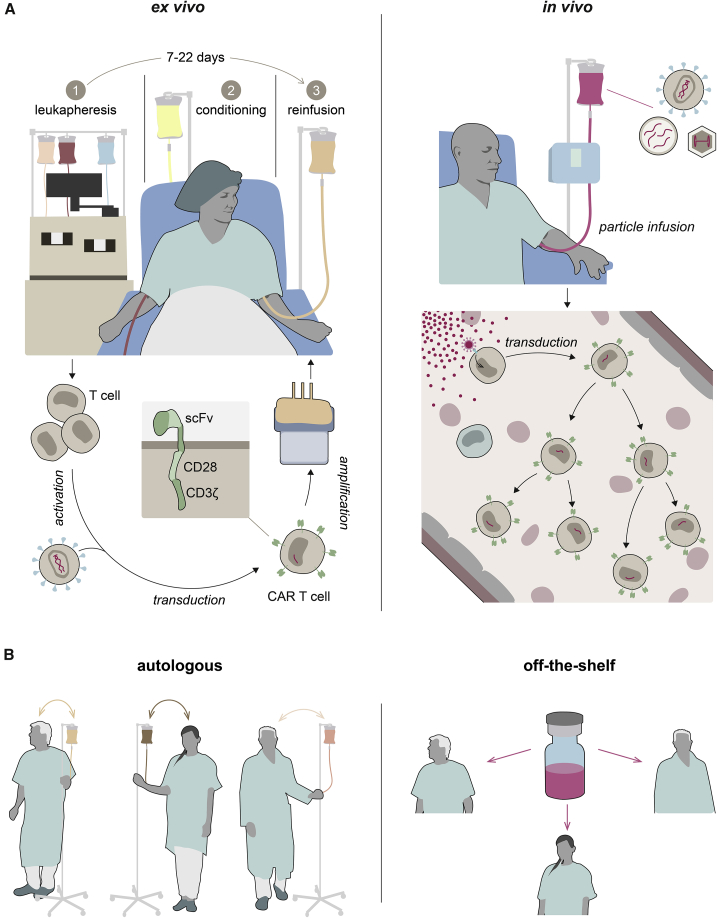
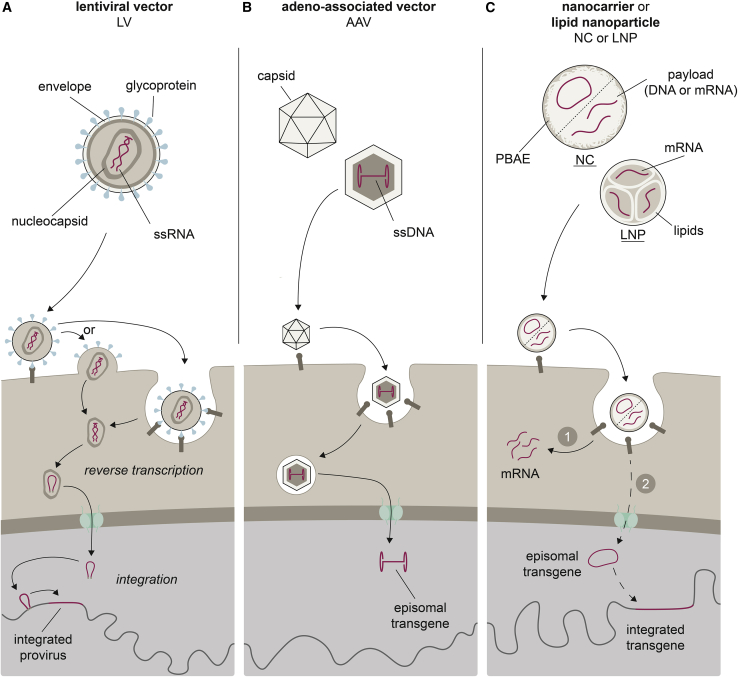
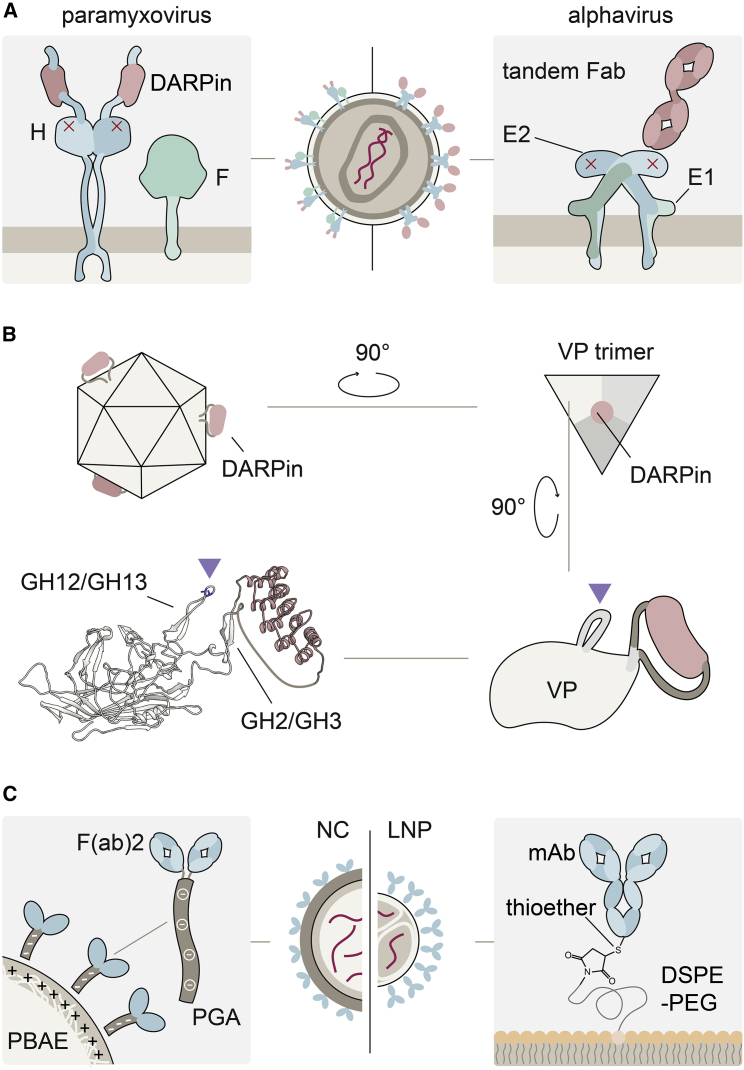
Chimeric antigen receptor (CAR) T cells are a cancer immunotherapy of extremes. Unprecedentedly effective, but complex and costly to manufacture, they are not yet a therapeutic option for all who would benefit. This disparity has motivated worldwide efforts to simplify treatment. Among the proposed solutions, the generation of CAR T cells directly in the patient, i.e., in vivo, is arguably simultaneously the most technically challenging and clinically useful approach to convert CAR therapy from a cell-based autologous medicinal product into a universally applicable off-the-shelf treatment. Here, we review the current state of the art of in vivo CAR therapy, focusing especially on the vector technologies used. These cover lentiviral vectors and adenovirus-associated vectors as well as synthetic polymer nanocarriers and lipid nanoparticles. Proof of concept, i.e., the generation of CAR cells directly in mouse models, has been demonstrated for all vector platforms. Receptor targeting of vector particles is crucial, as it can prevent CAR gene delivery into off-target cells, thus reducing toxicities. We discuss the properties of the vector platforms, such as their immunogenicity, potency, and modes of CAR delivery (permanent versus transient). Finally, we outline the work required to advance in vivo CAR therapy from proof of concept to a robust, scalable technology for clinical testing.
嵌合抗原受体 (CAR) T 细胞是一种极端的癌症免疫疗法。它们具有前所未有的疗效,但制造复杂且昂贵,并非所有受益患者都能获得这种治疗。这种差异促使全球努力简化治疗方法。在提出的解决方案中,直接在患者体内(即体内)生成 CAR T 细胞,可能是将 CAR 疗法从基于细胞的自体药物转化为通用即用型现成治疗的最具挑战性和最实用的方法。在这里,我们回顾了体内 CAR 疗法的最新技术状态,特别关注所使用的载体技术。这些载体技术包括慢病毒载体和腺相关病毒载体以及合成聚合物纳米载体和脂质纳米颗粒。已经证明,所有载体平台都可以在小鼠模型中直接生成 CAR 细胞,证明了其概念验证。载体颗粒的受体靶向至关重要,因为它可以防止 CAR 基因递送到靶外细胞,从而降低毒性。我们讨论了载体平台的特性,例如它们的免疫原性、效力以及 CAR 传递模式(永久性与瞬时性)。最后,我们概述了将体内 CAR 疗法从概念验证推进到用于临床测试的稳健、可扩展技术所需的工作。