Ijoma Grace N, Mutungwazi Asheal, Mannie Thulani, Nurmahomed Weiz, Matambo Tonderayi S, Hildebrandt Diane
Institute for the Development of Energy for African Sustainability (IDEAS), University of South Africa, College of Science, Engineering and Technology, Florida, Roodepoort, 1709, South Africa.
Department of Environmental Sciences, University of South Africa, College of Agricultural and Environmental Sciences, Florida, Roodepoort, 1709, South Africa.
Heliyon. 2022 May 9;8(5):e09385. doi: 10.1016/j.heliyon.2022.e09385. eCollection 2022 May.
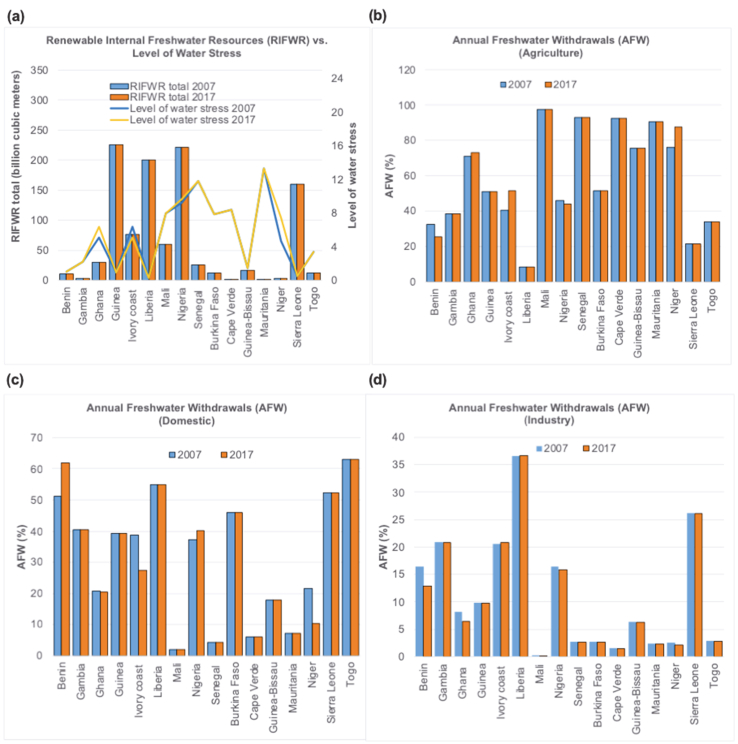
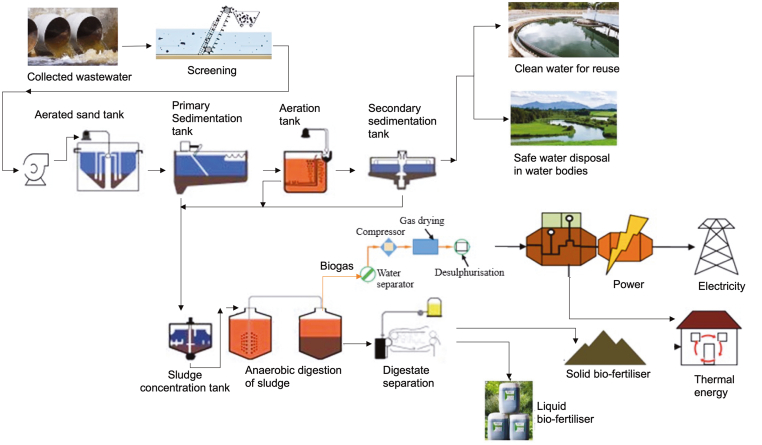
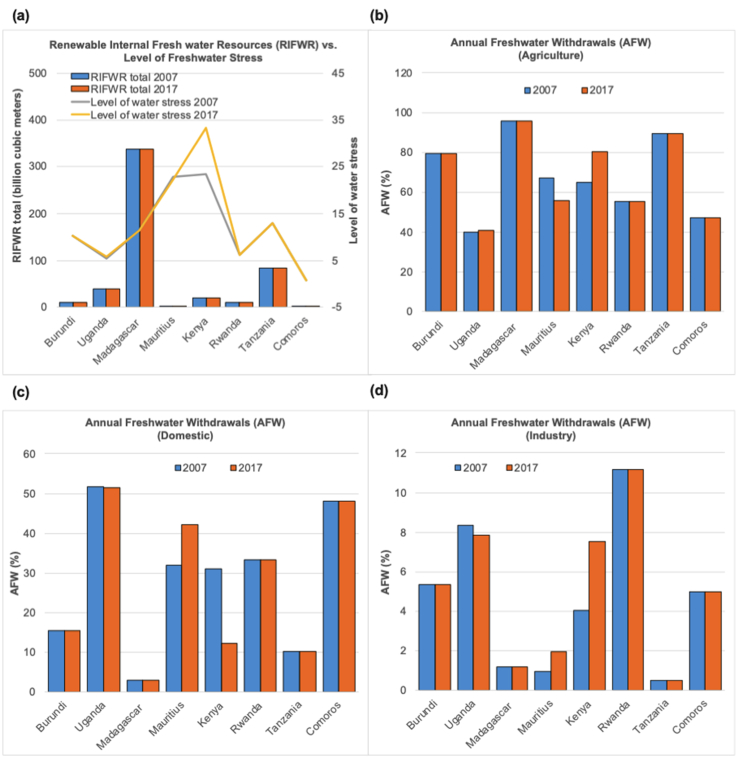
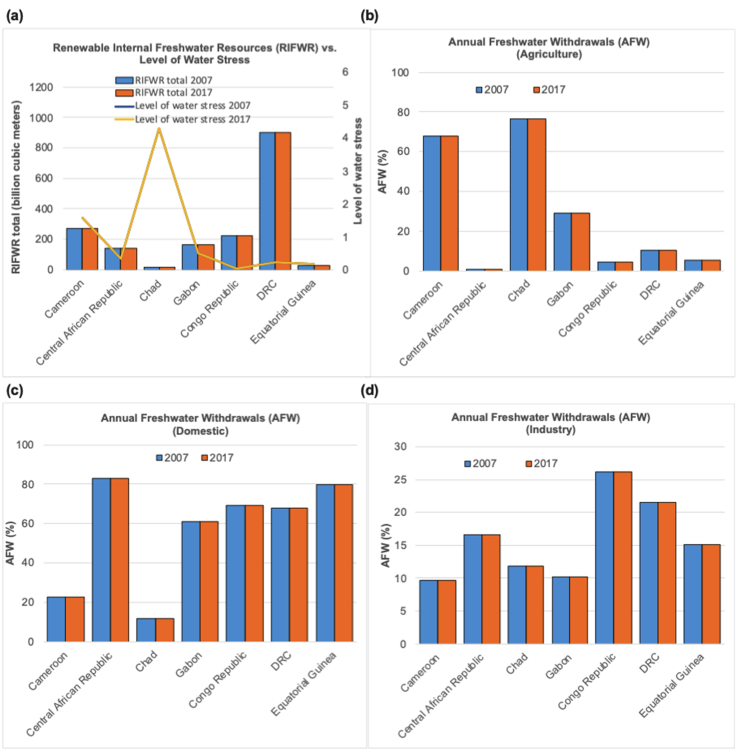
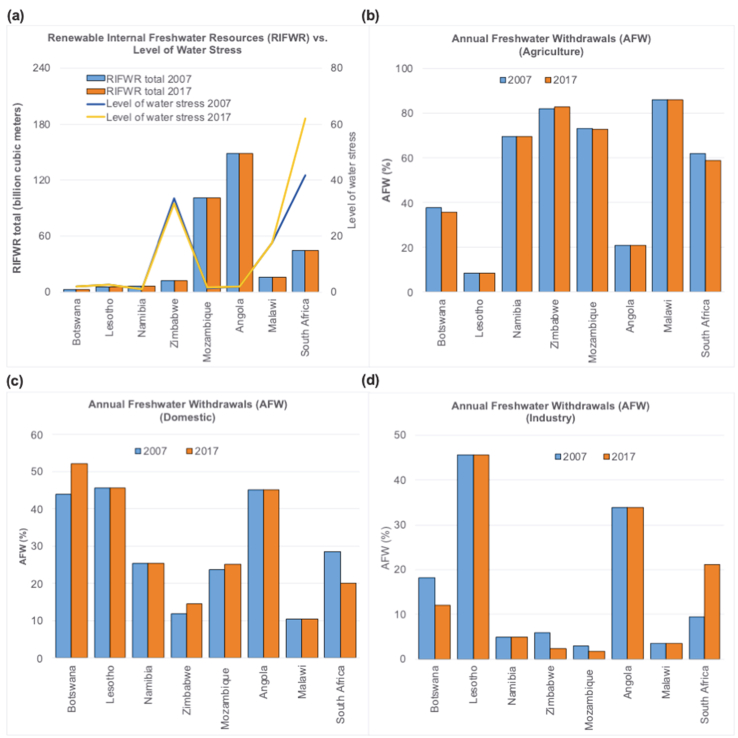
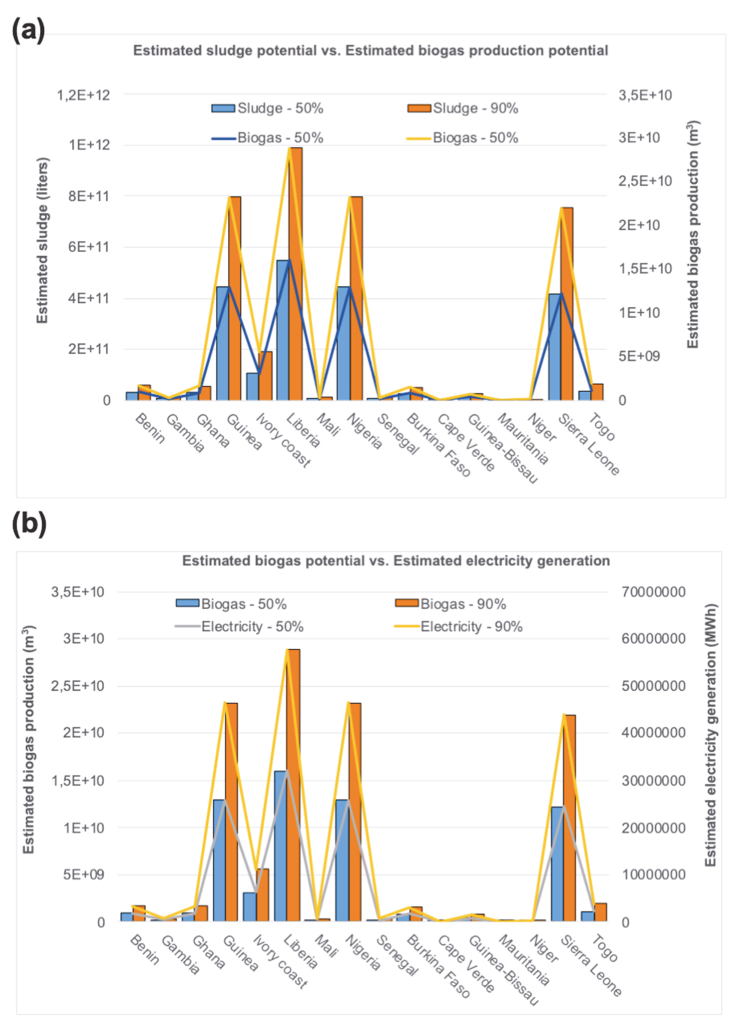
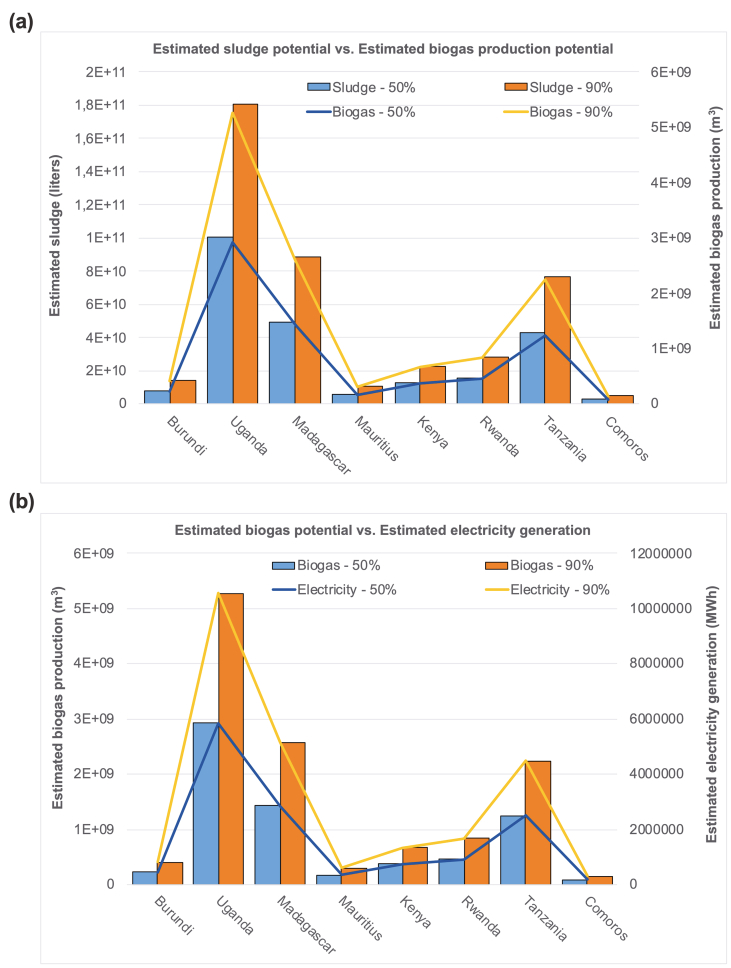
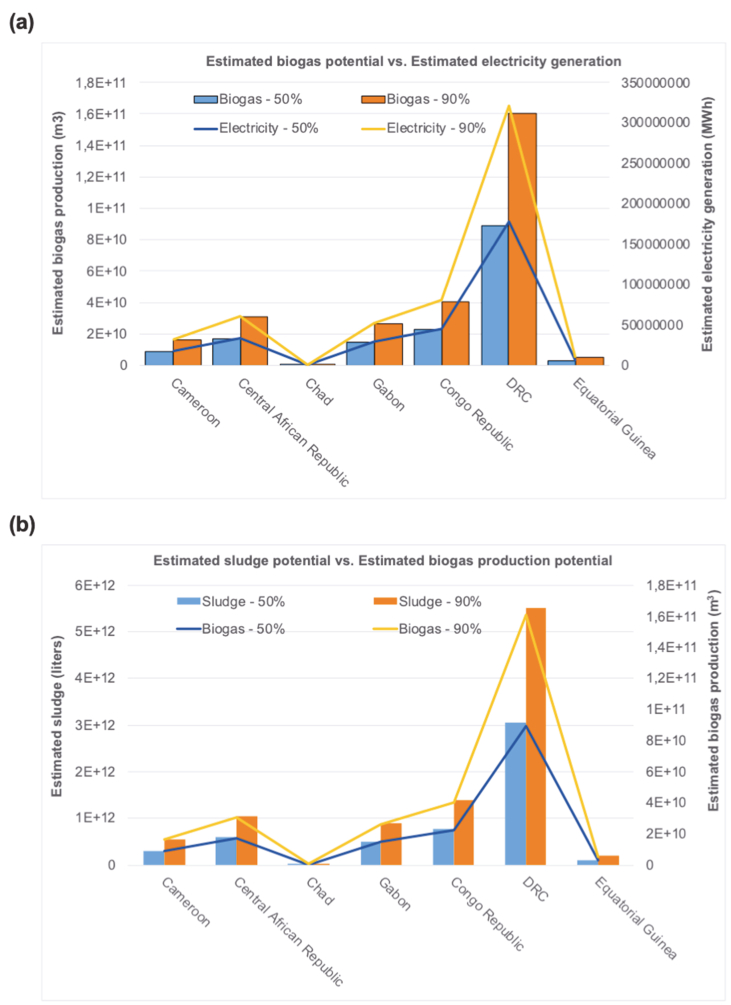
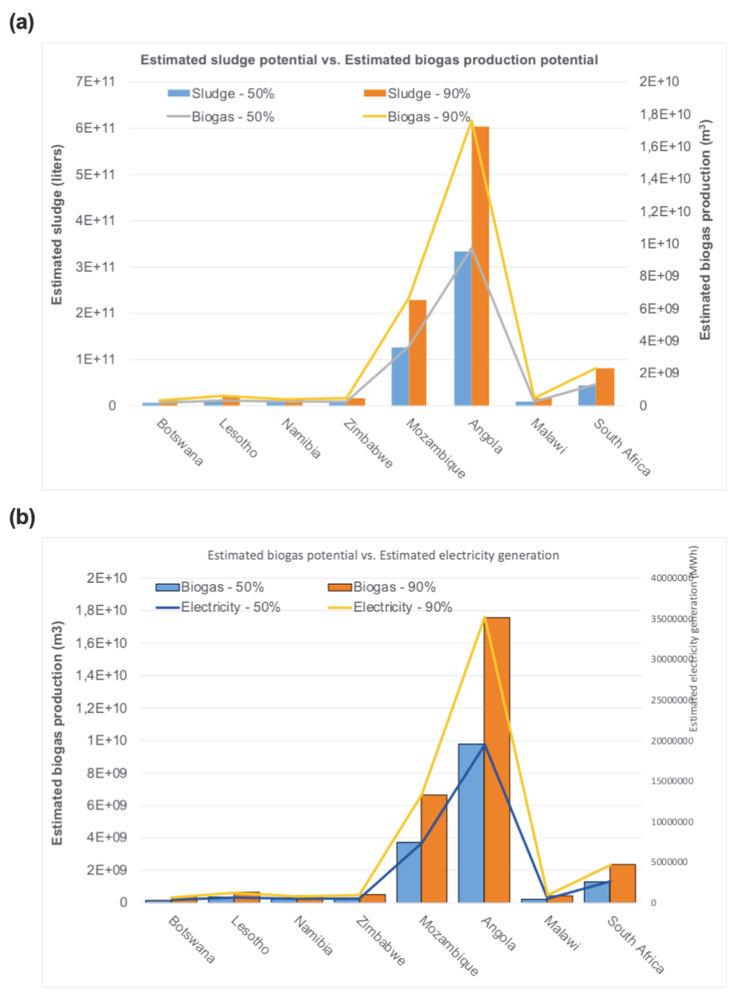
Several anthropogenic activities reduce the supply of freshwater to living organisms in all ecological systems, particularly the human population. Organic matter in derived wastewater can be converted into potential energy, such as biogas (methane), through microbial transformation during anaerobic digestion (AD). To address the current lack of data and values for wastewater generation in Sub-Saharan Africa, this review analyzes and estimates (at 50% and 90% conversion rates) the potential amount of wastewater-related sludge that can be generated from domestic freshwater withdrawals using the most recent update in 2017 from the World Bank repository and database on freshwater status in Sub-Saharan Africa. The Democratic Republic of the Congo (DRC) could potentially produce the highest estimate of biogas in Sub-Saharan Africa from domestic wastewater sludge of approximately 90 billion m, which could be converted to 178 million MWh of electricity annually, based on this extrapolation at 50% conversion rates. Using same conversion rates estimates, at least nine other countries, including Guinea, Liberia, Nigeria, Sierra Leone, Angola, Cameroon, Central African Republic, Gabon, and Congo Republic, could potentially produce biogas in the range of 1-20 billion m. These estimates show how much energy could be extracted from wastewater treatment plants in Sub-Saharan Africa. AD process to produce biogas and energy harvesting are essential supplementary operations for Sub-Saharan African wastewater treatment plants. This approach could potentially solve the problem of data scarcity because these values for Freshwater withdrawals are readily available in the database could be used for estimation and projections towards infrastructure development and energy production planning. The review also highlights the possibilities for energy generation from wastewater treatment facilities towards wastewater management, clean energy, water, and sanitation sustainability, demonstrating the interconnections and actualization of the various related UN Sustainable Development Goals.
在所有生态系统中,尤其是对人类而言,多种人为活动减少了生物体可获取的淡水资源。在厌氧消化(AD)过程中,衍生废水中的有机物可通过微生物转化,转化为潜在能源,如沼气(甲烷)。为解决撒哈拉以南非洲地区目前废水产生数据和相关数值缺失的问题,本综述利用世界银行关于撒哈拉以南非洲地区淡水状况的最新(2017年)存储库和数据库,分析并估算了(转化率为50%和90%时)因家庭淡水取用可能产生的与废水相关的污泥潜在量。根据这一50%转化率的推断,刚果民主共和国(DRC)可能从家庭废水污泥中产生撒哈拉以南非洲地区最高估计量的沼气,约900亿立方米,每年可转化为1.78亿兆瓦时的电力。使用相同的转化率估算,至少还有其他九个国家,包括几内亚、利比里亚、尼日利亚、塞拉利昂、安哥拉、喀麦隆、中非共和国、加蓬和刚果共和国,可能产生10亿至200亿立方米的沼气。这些估算显示了撒哈拉以南非洲地区的废水处理厂可提取的能源量。厌氧消化过程产生沼气以及能源收集,是撒哈拉以南非洲地区废水处理厂至关重要的补充作业。这种方法有可能解决数据稀缺的问题,因为这些淡水取用数值在数据库中很容易获取,可用于基础设施发展和能源生产规划的估算及预测。本综述还强调了废水处理设施用于能源生产对废水管理、清洁能源、水和卫生可持续性的可能性,展示了联合国各相关可持续发展目标之间的相互联系及实现情况。