Camacho Jessica, de Conti Aline, Pogribny Igor P, Sprando Robert L, Hunt Piper Reid
Food and Drug Administration, Center for Food Safety and Applied Nutrition, Office of Applied Research and Safety Assessment, 8301 Muirkirk Road, Laurel, MD 20708, United States.
Food and Drug Administration, National Center for Toxicological Research, 3900 NCTR Rd, Jefferson, AR 72079, United States.
Curr Res Toxicol. 2022 May 8;3:100071. doi: 10.1016/j.crtox.2022.100071. eCollection 2022.
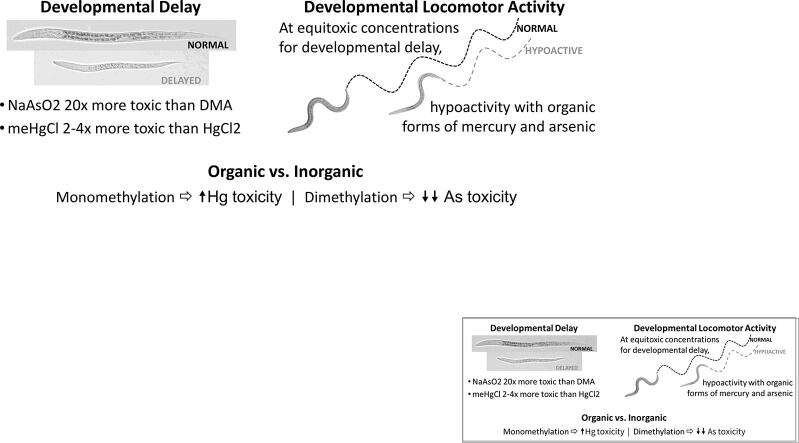
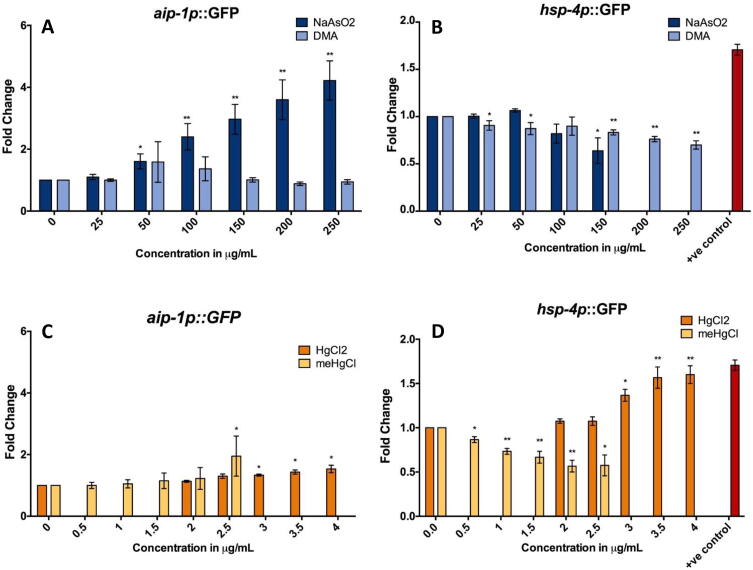
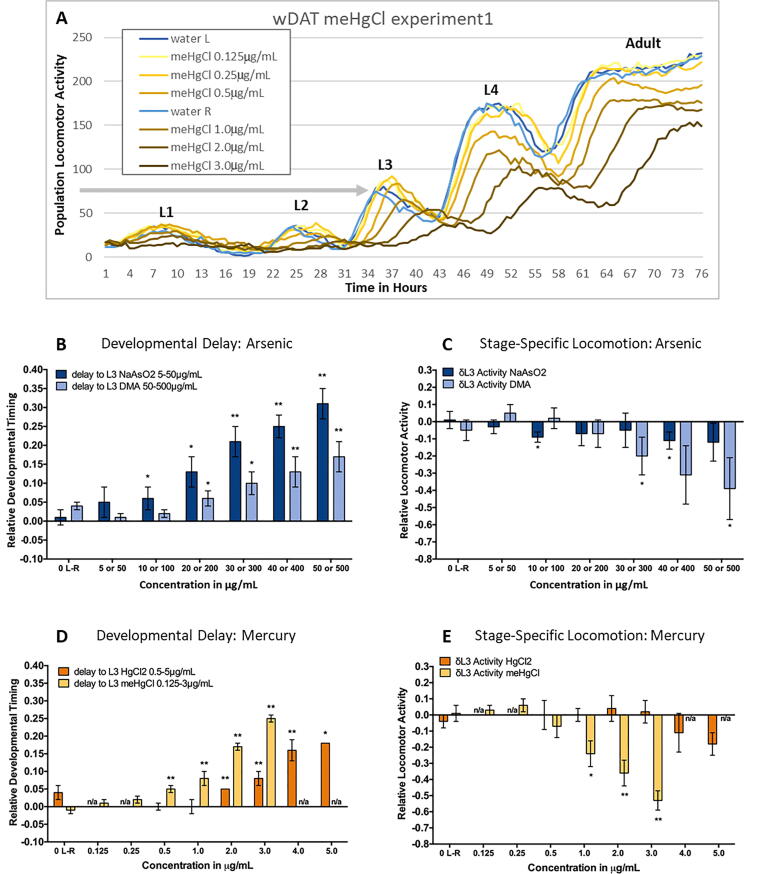
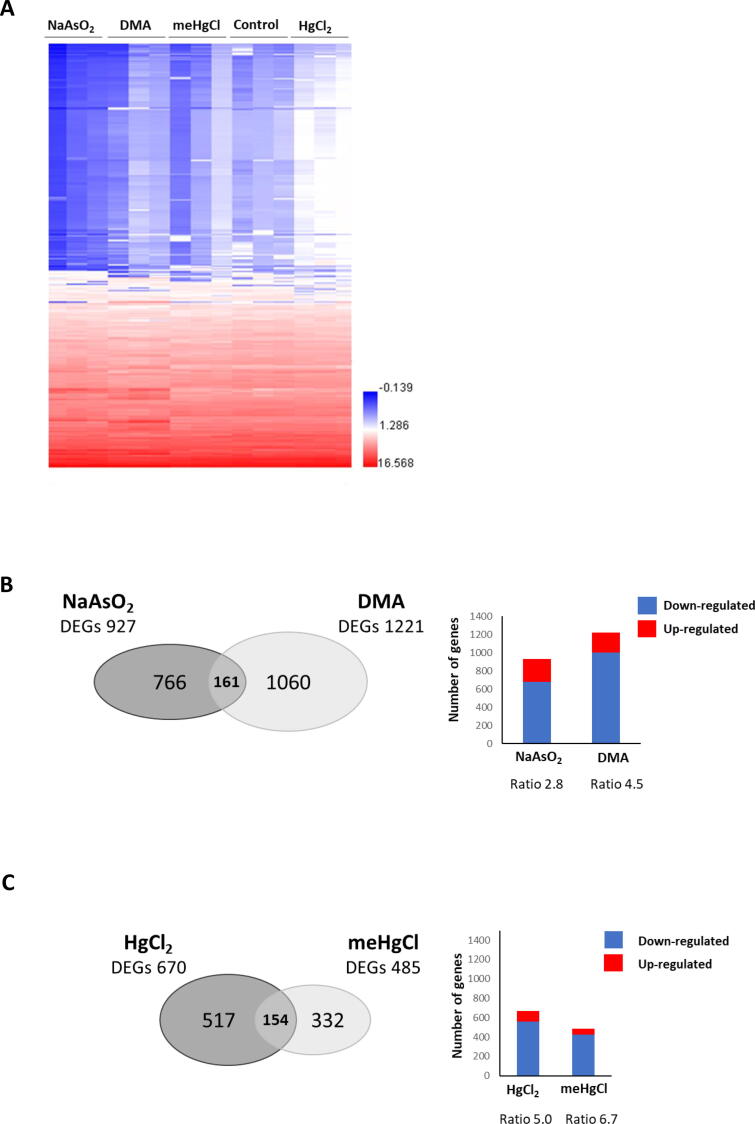
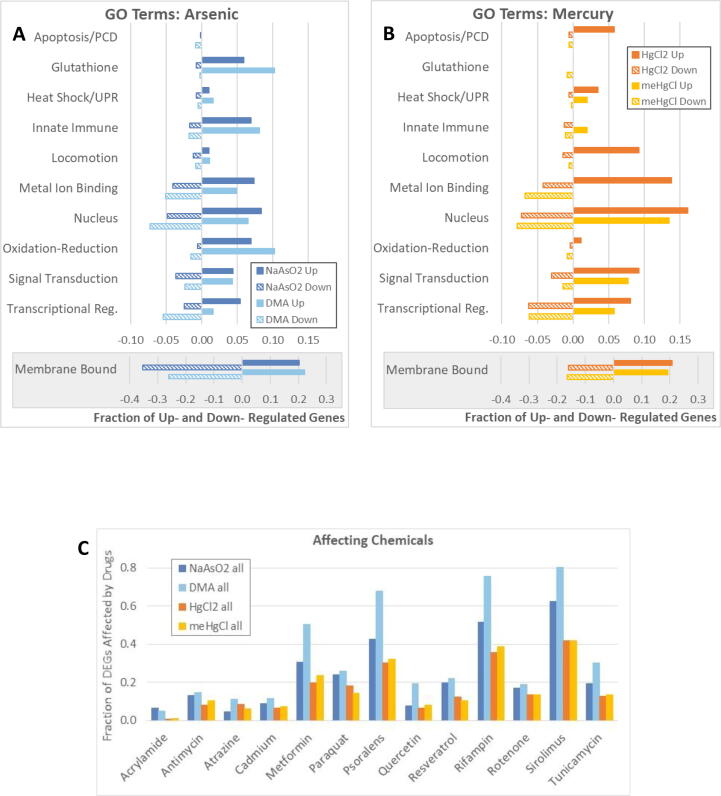
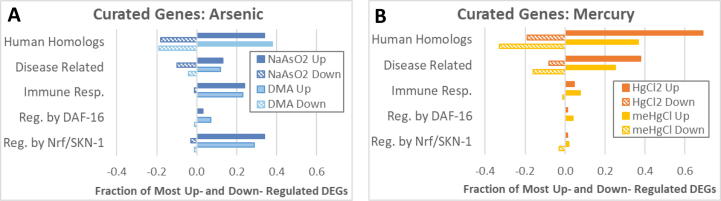
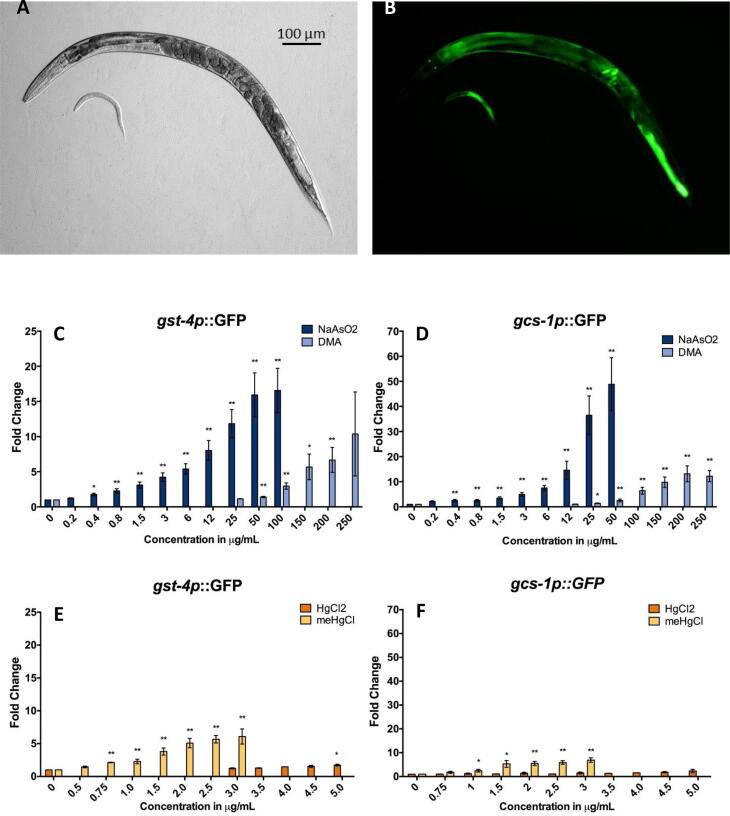
Exposures to mercury and arsenic are known to pose significant threats to human health. Effects specific to organic vs. inorganic forms of these toxic elements are less understood however, especially for organic dimethylarsinic acid (DMA), which has recently been detected in pups of rodent dams orally exposed to inorganic sodium (meta)arsenite (NaAsO2). is a small animal alternative toxicity model. To fill data gaps on the effects of DMA relative to NaAsO2, were exposed to these two compounds alongside more thoroughly researched inorganic mercury chloride (HgCl2) and organic methylmercury chloride (meHgCl). For timing of developmental milestone acquisition in , meHgCl was 2 to 4-fold more toxic than HgCl2, and NaAsO2 was 20-fold more toxic than DMA, ranking the four compounds meHgCl > HgCl2 > NaAsO2 ≫ DMA for developmental toxicity. Methylmercury induced significant decreases in population locomotor activity levels in developing . DMA was also associated with developmental hypoactivity, but at >100-fold higher concentrations than meHgCl. Transcriptional alterations in native genes were observed in wild type adults exposed to concentrations equitoxic for developmental delay in juveniles. Both forms of arsenic induced genes involved in immune defense and oxidative stress response, while the two mercury species induced proportionally more genes involved in transcriptional regulation. A transgenic bioreporter for activation of conserved proteosome specific unfolded protein response was strongly activated by NaAsO2, but not DMA at tested concentrations. HgCl2 and meHgCl had opposite effects on a bioreporter for unfolded protein response in the endoplasmic reticulum. Presented experiments indicating low toxicity for DMA in are consistent with human epidemiologic data correlating higher arsenic methylation capacity with resistance to arsenic toxicity. This work contributes to the understanding of the accuracy and fit-for-use categories for toxicity screening and its usefulness to prioritize compounds of concern for further testing.
已知接触汞和砷会对人类健康构成重大威胁。然而,对于这些有毒元素的有机形式与无机形式的特定影响,人们了解较少,尤其是对于有机二甲基胂酸(DMA),最近在经口暴露于无机偏亚砷酸钠(NaAsO₂)的啮齿动物幼崽中检测到了这种物质。这是一种小动物替代毒性模型。为了填补关于DMA相对于NaAsO₂影响的数据空白,将其与研究更深入的无机氯化汞(HgCl₂)和有机甲基氯化汞(甲基汞,meHgCl)一起暴露于这两种化合物中。对于幼崽发育里程碑获得的时间而言,甲基汞的毒性比HgCl₂高2至4倍,而NaAsO₂的毒性比DMA高20倍,在发育毒性方面,这四种化合物的毒性排序为甲基汞>HgCl₂>NaAsO₂≫DMA。甲基汞导致发育中的幼崽群体运动活动水平显著下降。DMA也与发育活动减退有关,但浓度比甲基汞高100倍以上。在暴露于对幼崽发育延迟具有同等毒性浓度的野生型幼崽成年个体中,观察到了天然基因的转录改变。两种形式的砷都诱导了参与免疫防御和氧化应激反应的基因,而两种汞物种诱导的参与转录调控的基因比例相对更多。一种用于激活保守的蛋白酶体特异性未折叠蛋白反应的转基因生物报告基因在测试浓度下被NaAsO₂强烈激活,但未被DMA激活。HgCl₂和甲基汞对内质网中未折叠蛋白反应的生物报告基因有相反的影响。所呈现的实验表明DMA对幼崽毒性较低,这与人类流行病学数据一致,该数据将较高的砷甲基化能力与对砷毒性的抗性相关联。这项工作有助于理解幼崽毒性筛选的准确性和适用性类别,以及其在确定需要进一步测试的关注化合物优先级方面的有用性。