Chen Shilin, Li Zheng, Zhang Sanyin, Zhou Yuxin, Xiao Xiaohe, Cui Pengdi, Xu Binjie, Zhao Qinghe, Kong Shasha, Dai Yuntao
Institute of Herbgenomics, Chengdu University of Traditional Chinese Medicine, Chengdu 611137, China.
Institute of Chinese Materia Medica, China Academy of Chinese Medical Sciences, Beijing 100700, China.
Acta Pharm Sin B. 2022 Nov;12(11):4075-4097. doi: 10.1016/j.apsb.2022.08.025. Epub 2022 Sep 5.
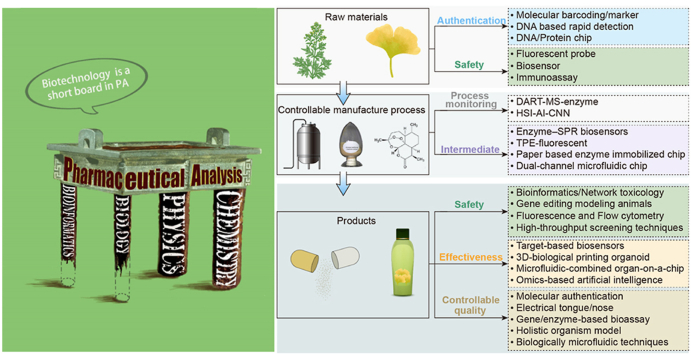
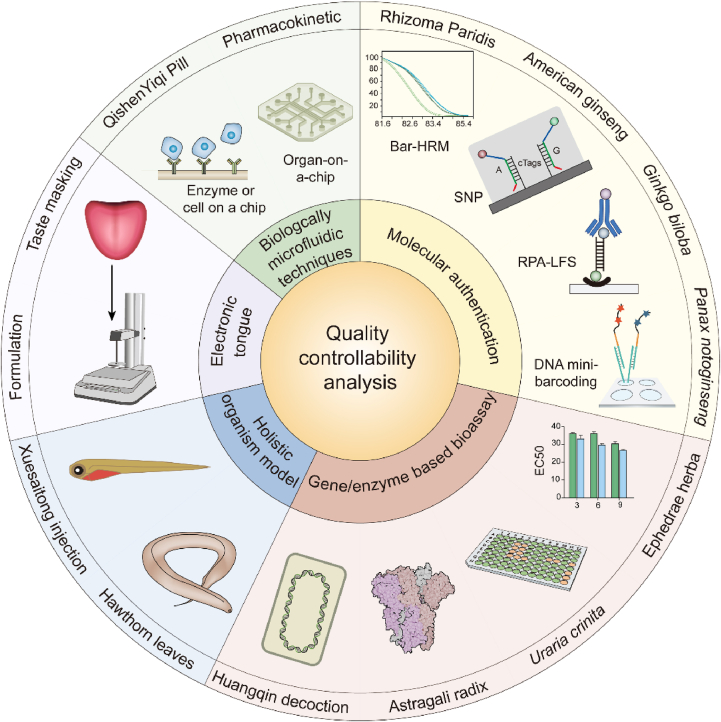
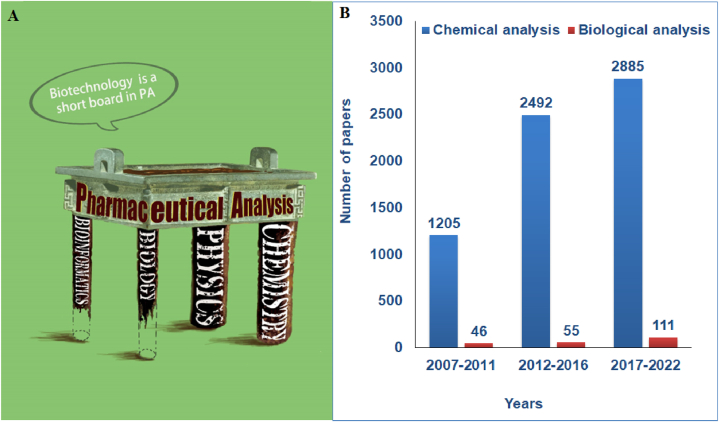
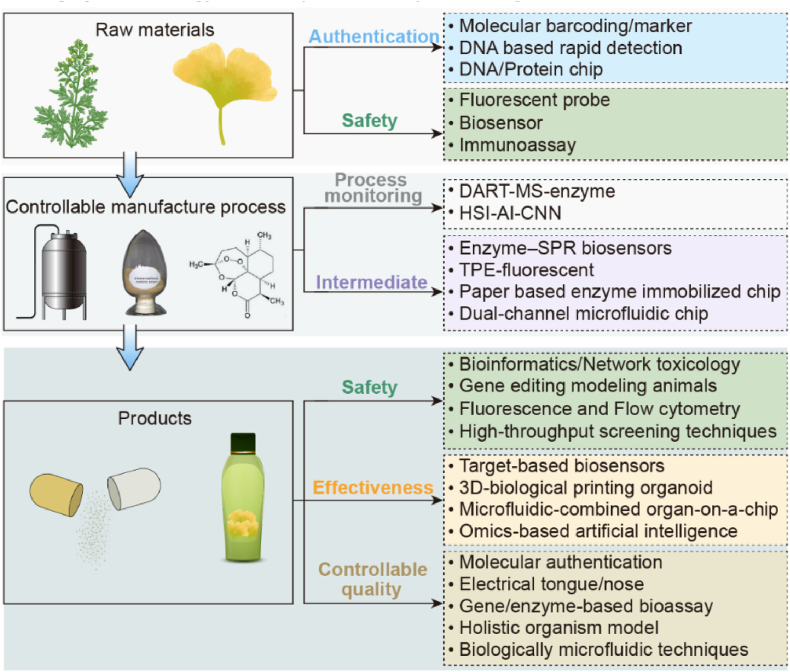
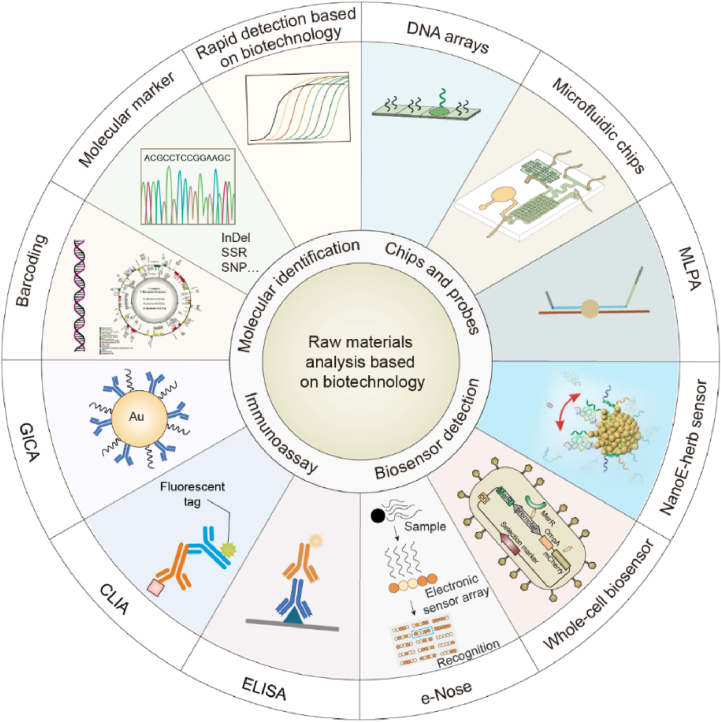
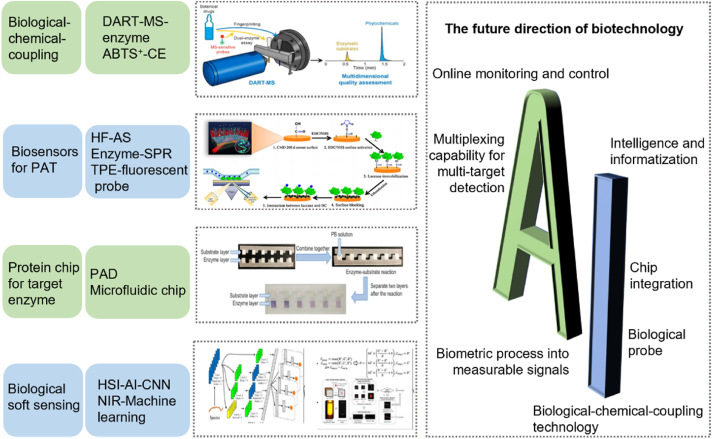
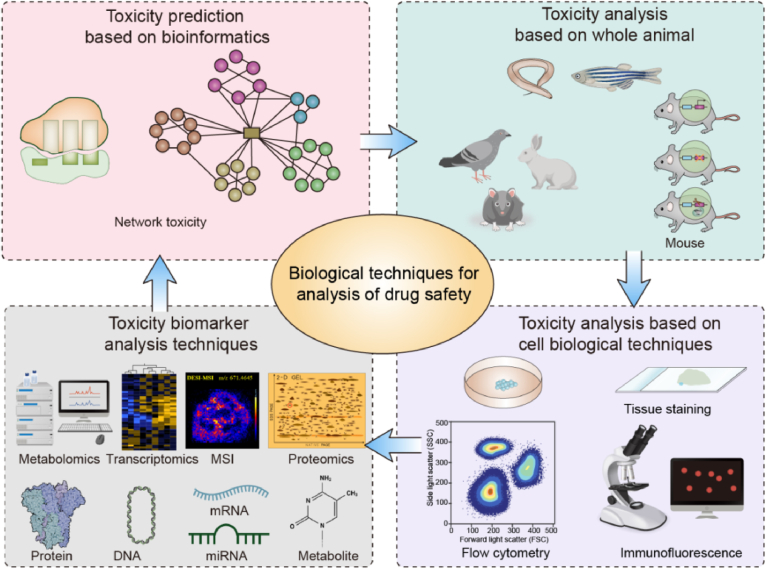
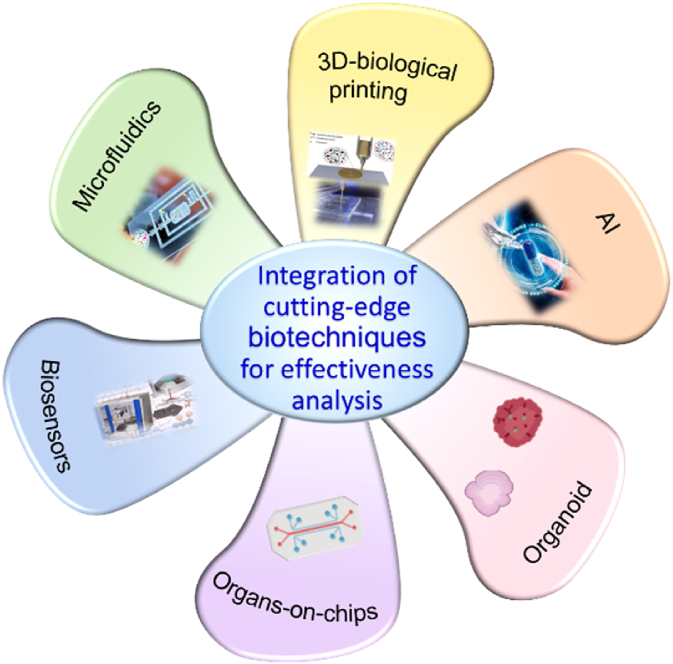
Pharmaceutical analysis is a discipline based on chemical, physical, biological, and information technologies. At present, biotechnological analysis is a short branch in pharmaceutical analysis; however, bioanalysis is the basis and an important part of medicine. Biotechnological approaches can provide information on biological activity and even clinical efficacy and safety, which are important characteristics of drug quality. Because of their advantages in reflecting the overall biological effects or functions of drugs and providing visual and intuitive results, some biotechnological analysis methods have been gradually applied to pharmaceutical analysis from raw material to manufacturing and final product analysis, including DNA super-barcoding, DNA-based rapid detection, multiplex ligation-dependent probe amplification, hyperspectral imaging combined with artificial intelligence, 3D biologically printed organoids, omics-based artificial intelligence, microfluidic chips, organ-on-a-chip, signal transduction pathway-related reporter gene assays, and the zebrafish thrombosis model. The applications of these emerging biotechniques in pharmaceutical analysis have been discussed in this review.
药物分析是一门基于化学、物理、生物和信息技术的学科。目前,生物技术分析在药物分析中是一个较薄弱的分支;然而,生物分析是医学的基础和重要组成部分。生物技术方法可以提供有关生物活性甚至临床疗效和安全性的信息,这些都是药物质量的重要特征。由于它们在反映药物的整体生物学效应或功能以及提供直观结果方面的优势,一些生物技术分析方法已逐渐从原材料分析应用于药物制造和最终产品分析,包括DNA超级条形码技术、基于DNA的快速检测、多重连接依赖探针扩增技术、结合人工智能的高光谱成像技术、3D生物打印类器官、基于组学的人工智能技术、微流控芯片、芯片器官、信号转导通路相关报告基因检测以及斑马鱼血栓形成模型。本文综述了这些新兴生物技术在药物分析中的应用。