Department of Immunobiology, Yale School of Medicine, New Haven, Connecticut, United States of America.
Ministry of Health, Santo Domingo, Dominican Republic.
PLoS Biol. 2022 May 24;20(5):e3001506. doi: 10.1371/journal.pbio.3001506. eCollection 2022 May.
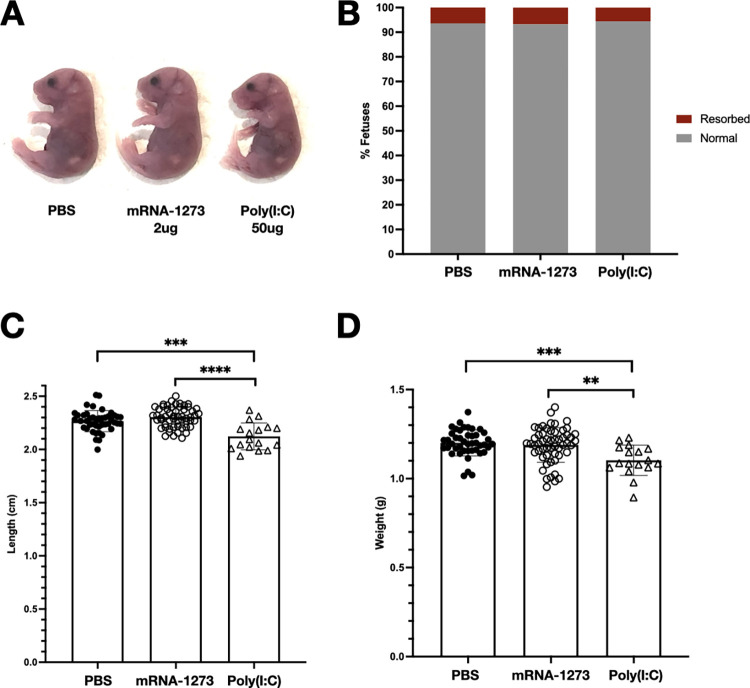
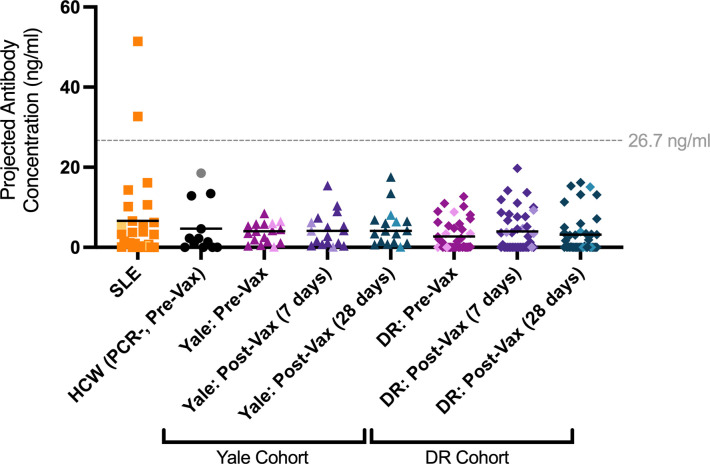
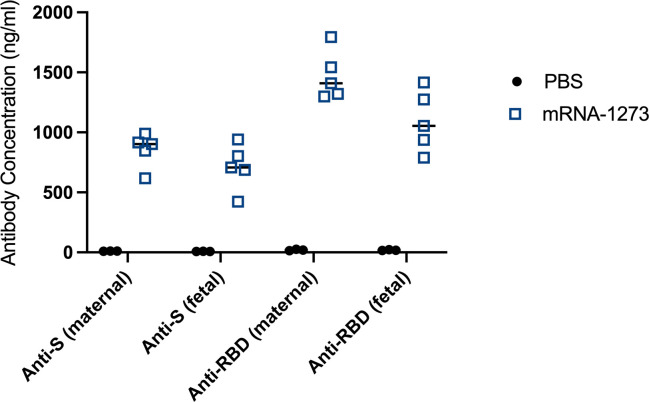
The impact of Coronavirus Disease 2019 (COVID-19) mRNA vaccination on pregnancy and fertility has become a major topic of public interest. We investigated 2 of the most widely propagated claims to determine (1) whether COVID-19 mRNA vaccination of mice during early pregnancy is associated with an increased incidence of birth defects or growth abnormalities; and (2) whether COVID-19 mRNA-vaccinated human volunteers exhibit elevated levels of antibodies to the human placental protein syncytin-1. Using a mouse model, we found that intramuscular COVID-19 mRNA vaccination during early pregnancy at gestational age E7.5 did not lead to differences in fetal size by crown-rump length or weight at term, nor did we observe any gross birth defects. In contrast, injection of the TLR3 agonist and double-stranded RNA mimic polyinosinic-polycytidylic acid, or poly(I:C), impacted growth in utero leading to reduced fetal size. No overt maternal illness following either vaccination or poly(I:C) exposure was observed. We also found that term fetuses from these murine pregnancies vaccinated prior to the formation of the definitive placenta exhibit high circulating levels of anti-spike and anti-receptor-binding domain (anti-RBD) antibodies to Severe Acute Respiratory Syndrome Coronavirus 2 (SARS-CoV-2) consistent with maternal antibody status, indicating transplacental transfer in the later stages of pregnancy after early immunization. Finally, we did not detect increased levels of circulating anti-syncytin-1 antibodies in a cohort of COVID-19 vaccinated adults compared to unvaccinated adults by ELISA. Our findings contradict popular claims associating COVID-19 mRNA vaccination with infertility and adverse neonatal outcomes.
新型冠状病毒病 2019(COVID-19)mRNA 疫苗接种对妊娠和生育的影响已成为公众关注的主要话题。我们调查了两个传播最广的说法,以确定:(1) 在妊娠早期对小鼠进行 COVID-19 mRNA 疫苗接种是否会增加出生缺陷或生长异常的发生率;以及 (2) COVID-19 mRNA 疫苗接种的人类志愿者是否表现出对人类胎盘蛋白合胞素-1 的抗体水平升高。使用小鼠模型,我们发现妊娠早期(妊娠龄 E7.5)肌内 COVID-19 mRNA 疫苗接种不会导致胎儿大小通过头臀长或体重在足月时出现差异,也未观察到任何明显的出生缺陷。相比之下,注射 Toll 样受体 3 激动剂和双链 RNA 模拟物聚肌苷酸-聚胞苷酸或 poly(I:C),会导致宫内生长受限,从而导致胎儿大小减小。无论是接种疫苗还是 poly(I:C)暴露后,均未观察到明显的母体疾病。我们还发现,在形成明确胎盘之前接受这些鼠类妊娠疫苗接种的足月胎儿表现出高水平的针对严重急性呼吸系统综合征冠状病毒 2(SARS-CoV-2)的刺突和受体结合域(anti-RBD)抗体,与母体抗体状态一致,表明在早期免疫后妊娠晚期存在胎盘转移。最后,我们通过 ELISA 法在 COVID-19 接种成人组中未检测到与未接种成人相比循环抗合胞素-1 抗体水平升高。我们的研究结果与将 COVID-19 mRNA 疫苗接种与不孕和不良新生儿结局联系起来的流行说法相矛盾。