Department of Applied Physics, Nagoya University, Nagoya 464-8601, Japan.
Department of Complex Systems Science, Nagoya University, Nagoya 464-8601, Japan.
Proc Natl Acad Sci U S A. 2022 May 31;119(22):e2109838119. doi: 10.1073/pnas.2109838119. Epub 2022 May 26.
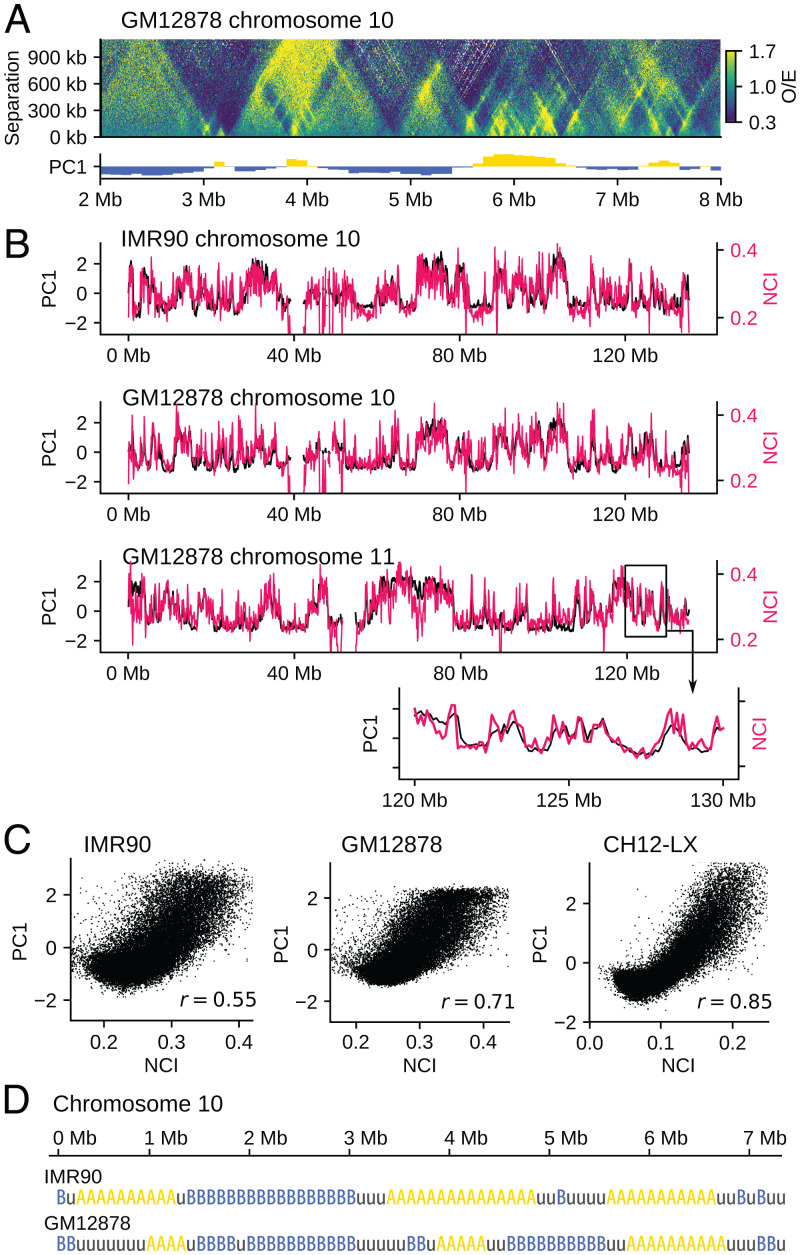
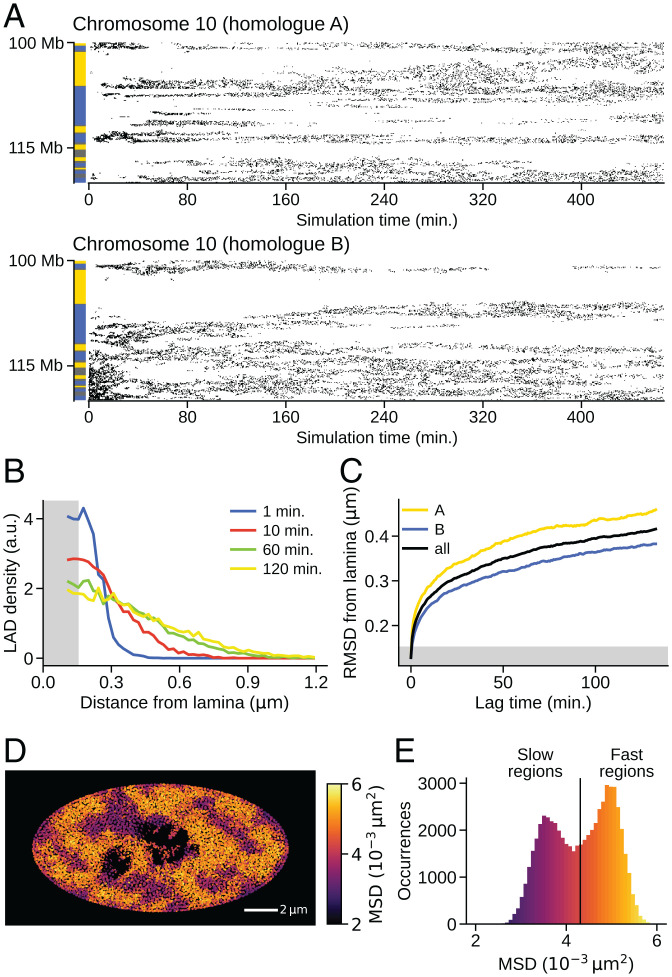
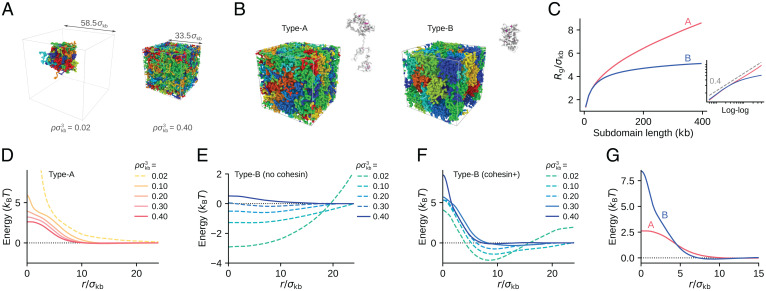
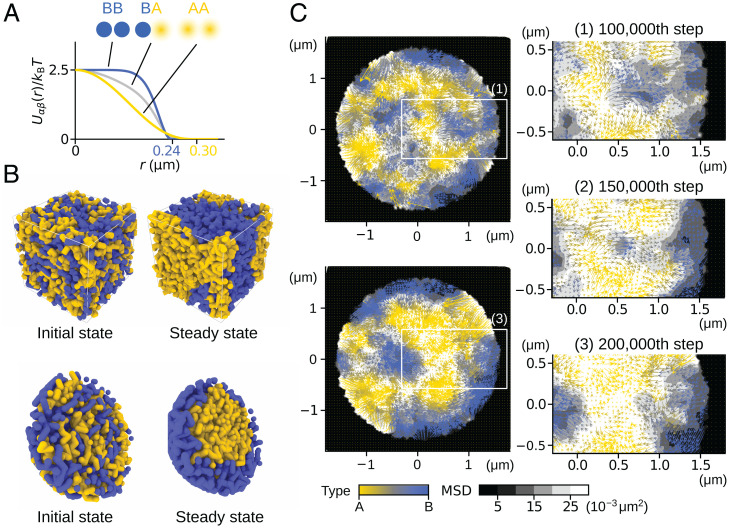
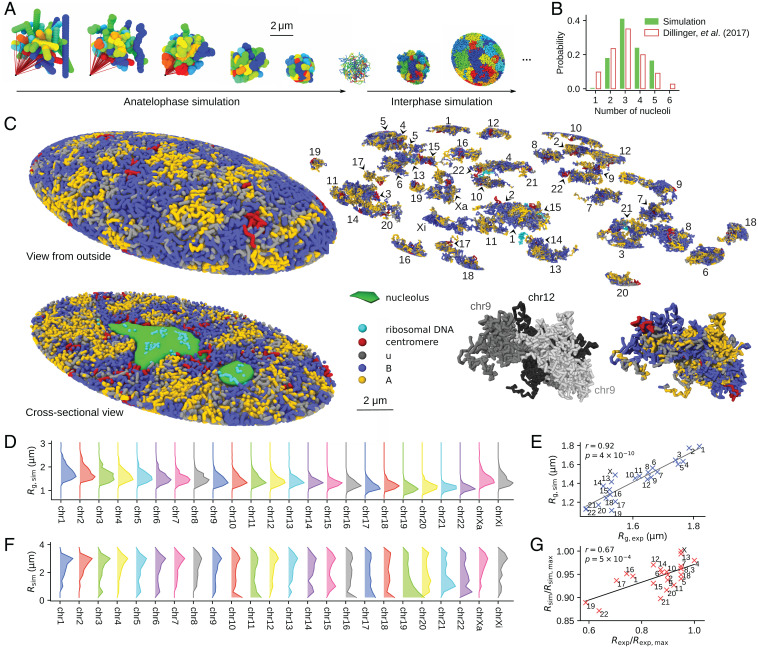
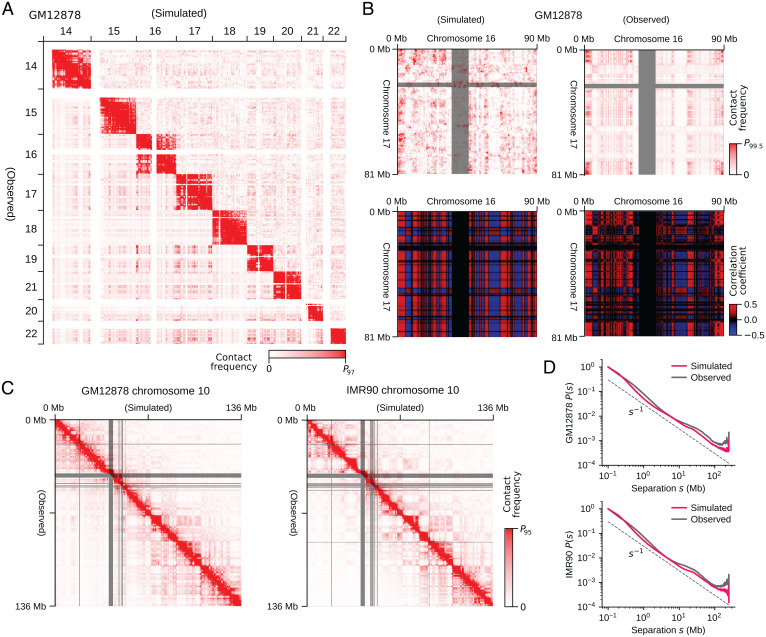
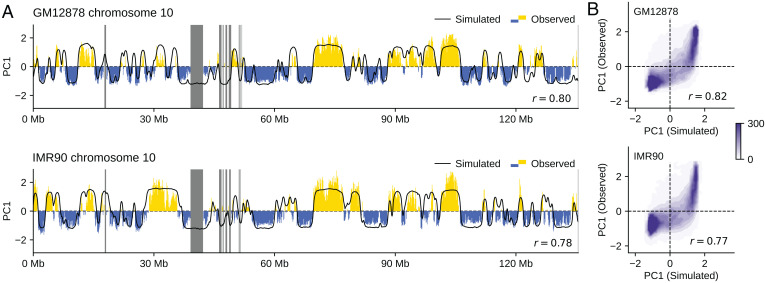
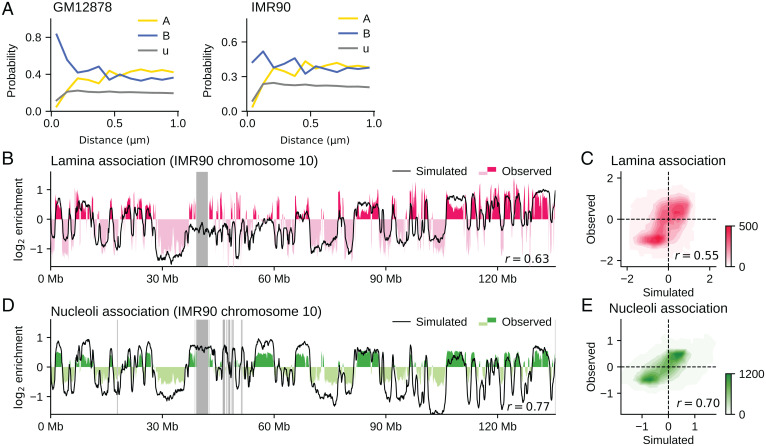
Three-dimensional genome structure and dynamics play critical roles in regulating DNA functions. Flexible chromatin structure and movements suggested that the genome is dynamically phase separated to form A (active) and B (inactive) compartments in interphase nuclei. Here, we examine this hypothesis by developing a polymer model of the whole genome of human cells and assessing the impact of phase separation on genome structure. Upon entry to the G1 phase, the simulated genome expanded according to heterogeneous repulsion among chromatin chains, which moved chromatin heterogeneously, inducing phase separation of chromatin. This repulsion-driven phase separation quantitatively reproduces the experimentally observed chromatin domains, A/B compartments, lamina-associated domains, and nucleolus-associated domains, consistently explaining nuclei of different human cells and predicting their dynamic fluctuations. We propose that phase separation induced by heterogeneous repulsive interactions among chromatin chains largely determines dynamic genome organization.
三维基因组结构和动态在调节 DNA 功能方面起着关键作用。灵活的染色质结构和运动表明,基因组在有丝分裂核中动态地相分离形成 A(活性)和 B(非活性)隔室。在这里,我们通过开发人类细胞整个基因组的聚合物模型来检验这一假设,并评估相分离对基因组结构的影响。进入 G1 期后,模拟基因组根据染色质链之间的异质排斥而扩张,这导致染色质异质运动,诱导染色质相分离。这种斥力驱动的相分离定量再现了实验观察到的染色质域、A/B 隔室、核纤层相关域和核仁相关域,一致地解释了不同人类细胞的核,并预测了它们的动态波动。我们提出,染色质链之间的异质排斥相互作用诱导的相分离在很大程度上决定了动态基因组组织。