Blossom Vandana, Gokul Megha, Kumar Nayanatara Arun, Kini Rekha D, Nayak Shyamala, Bhagyalakshmi K
Department of Anatomy, Kasturba Medical College, Mangalore, Manipal Academy of Higher Education, Manipal, Karnataka, India.
Department of Physiology, Kasturba Medical College, Mangalore, Manipal Academy of Higher Education, Manipal, Karnataka, India.
Vet World. 2020 Sep;13(9):1870-1874. doi: 10.14202/vetworld.2020.1870-1874. Epub 2020 Sep 15.
Depression and anxiety are the most prominent neuropsychiatric disease and have been considered as the most burdensome diseases of society. The hippocampus and prefrontal cortex have a prominent role in stress-induced neurological disorders. Chronic unpredictable stress exposed rats are a perfect model in understanding comorbid depression and anxiety disorders. The inflammatory response occurring in the body has been linked to C-reactive protein (CRP) in many diseased conditions. The present research primarily focus on the possible correlation of Cortisol, CRP level and neuronal assay in different regions of hippocampus, dentate gyrus (DG), and prefrontal cortex.
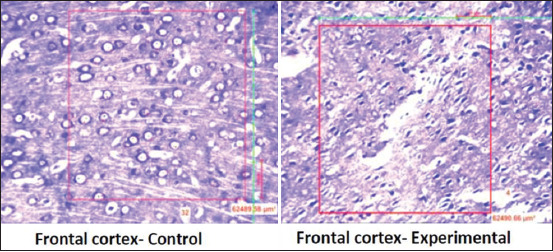
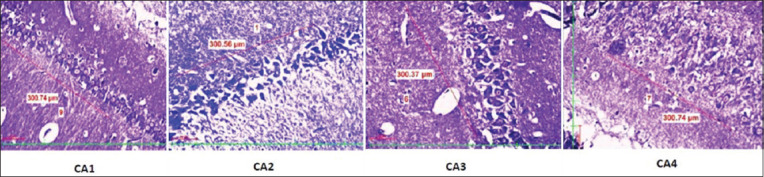
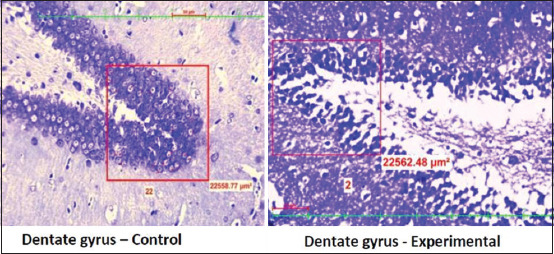
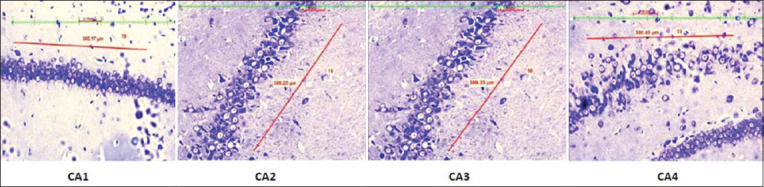
The control group of rats (n=6) was not exposed to any stress. Whereas, the experimental stress group (n=6) of rats was exposed to various stressors for 15 days. After the experimentation procedures, the blood samples were collected and brain dissection was done. The neurons in the prefrontal cortex, the DG along with various hippocampal regions was counted. Statistical analysis was performed using student's t-test and p<0.05 was expressed as statistically significant.
Animals exposed to chronic unpredictable stressors showed a significant (p<0.0001) decrease in the neuronal count in prefrontal cortex and hippocampus. A significant rise in the serum cortisol (p<0.0001) and CRP (p<0.001) was witnessed in the stressed group.
Our results demonstrate that chronic unpredictable stress exposure has affected neurogenesis in prefrontal cortex and hippocampal regions. Decreased neurogenesis was well in coordinance with the increase in cortisol and CRP. The chronic unpredictable stress-induced inflammatory response correlated to various brain regions might provoke insights into a variety of new drugs targeting neurogenesis.
抑郁症和焦虑症是最突出的神经精神疾病,被认为是社会负担最重的疾病。海马体和前额叶皮质在应激诱导的神经障碍中起重要作用。慢性不可预测应激暴露的大鼠是理解共病抑郁和焦虑症的理想模型。在许多疾病状态下,体内发生的炎症反应与C反应蛋白(CRP)有关。本研究主要关注皮质醇、CRP水平与海马体不同区域、齿状回(DG)和前额叶皮质神经元检测之间的可能相关性。
对照组大鼠(n = 6)未暴露于任何应激。而实验应激组大鼠(n = 6)暴露于各种应激源15天。实验程序完成后,采集血样并进行脑解剖。对前额叶皮质、DG以及海马体各个区域的神经元进行计数。采用学生t检验进行统计分析,p<0.05表示差异有统计学意义。
暴露于慢性不可预测应激源的动物前额叶皮质和海马体的神经元计数显著减少(p<0.0001)。应激组血清皮质醇(p<0.0001)和CRP(p<0.001)显著升高。
我们的结果表明,慢性不可预测应激暴露影响了前额叶皮质和海马体区域的神经发生。神经发生减少与皮质醇和CRP的增加密切相关。慢性不可预测应激诱导的与不同脑区相关的炎症反应可能为针对神经发生的各种新药提供思路。