Lee Hye Won, Kang Mi Ju, Kwon Young-Ju, Abdi Nansa Sama, Jung Eui Hyun, Kim Sung Han, Lee Sang-Jin, Jeong Kyung-Chae, Kim Youngwook, Cheong Heesun, Seo Ho Kyung
Department of Urology, Center for Urologic Cancer, National Cancer Center, Goyang 10408, Korea.
Research Institute, National Cancer Center, Goyang 10408, Korea.
Biomedicines. 2022 May 18;10(5):1162. doi: 10.3390/biomedicines10051162.
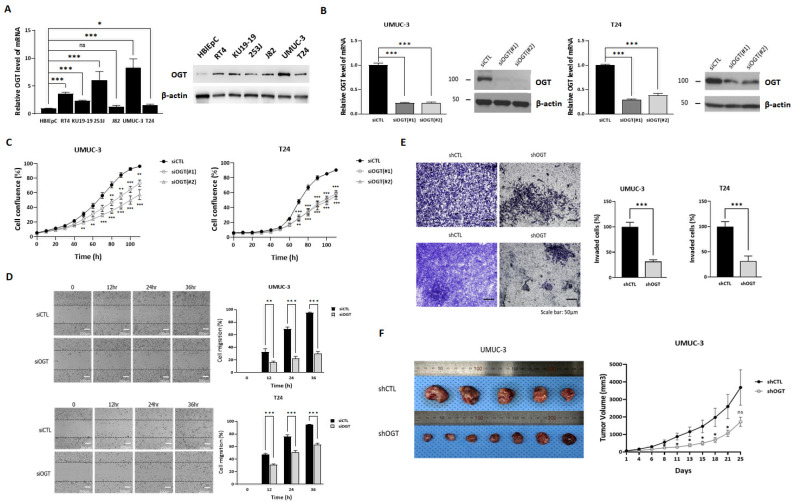
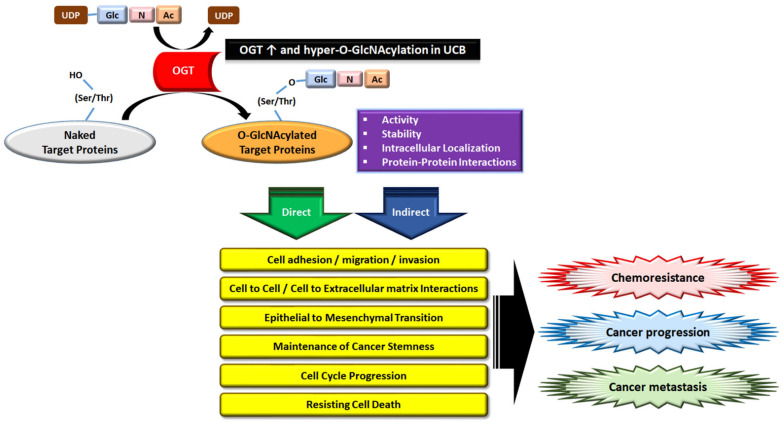
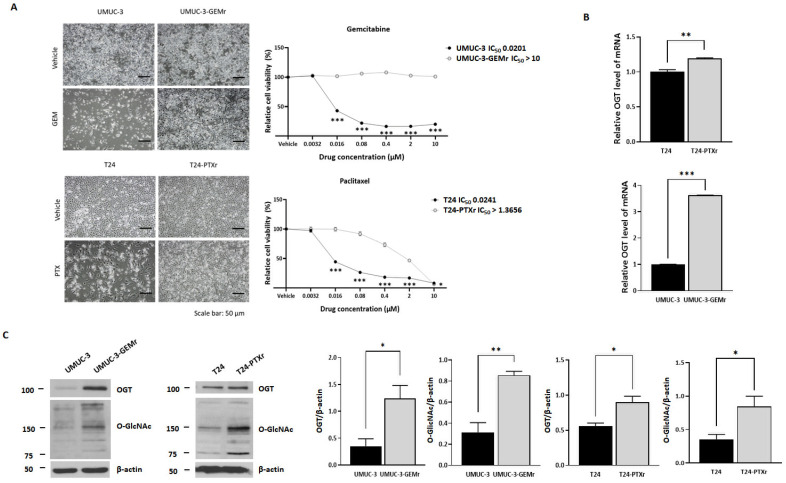
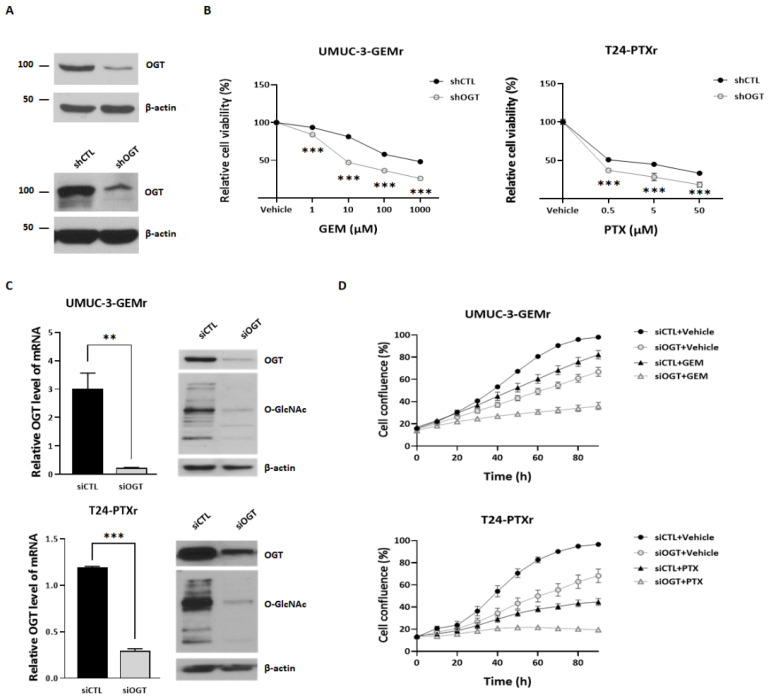
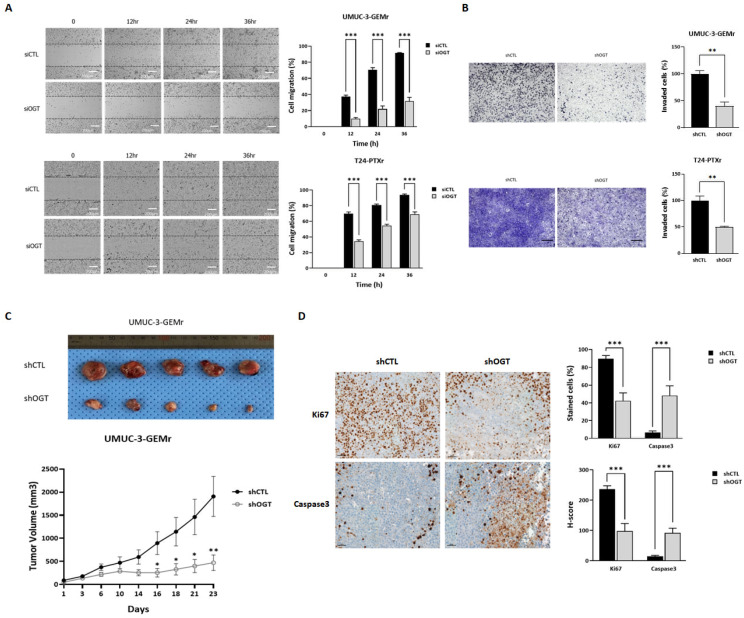
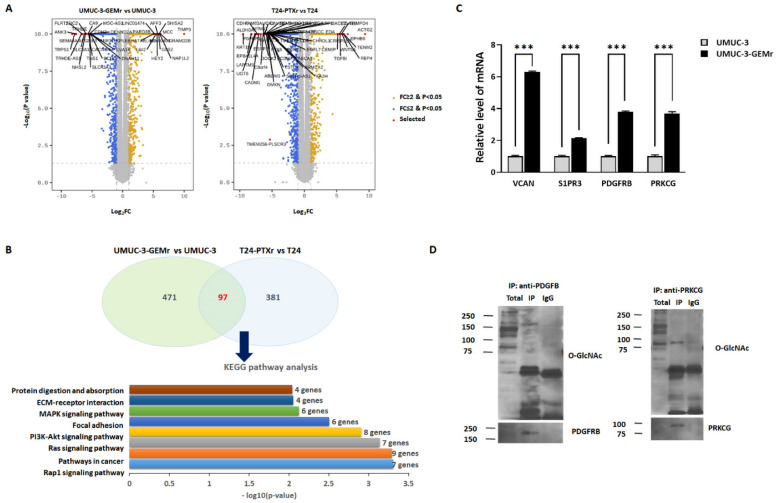
Acquisition of acquired chemoresistance during treatment cycles in urothelial carcinoma of the bladder (UCB) is the major cause of death through enhancing the risk of cancer progression and metastasis. Elevated glucose flux through the abnormal upregulation of O-linked β-N-acetylglucosamine (O-GlcNAc) transferase (OGT) controls key signaling and metabolic pathways regulating diverse cancer cell phenotypes. This study showed that OGT expression levels in two human UCB cell models with acquired resistance to gemcitabine and paclitaxel were significantly upregulated compared with those in parental cells. Reducing hyper-O-GlcNAcylation by OGT knockdown (KD) markedly facilitated chemosensitivity to the corresponding chemotherapeutics in both cells, and combination treatment with OGT-KD showed more severe growth defects in chemoresistant sublines. We subsequently verified the suppressive effects of OGT-KD monotherapy on cell migration/invasion in vitro and xenograft tumor growth in vivo in chemoresistant UCB cells. Transcriptome analysis of these cells revealed 97 upregulated genes, which were enriched in multiple oncogenic pathways. Our final choice of suspected OGT glycosylation substrate was VCAN, S1PR3, PDGFRB, and PRKCG, the knockdown of which induced cell growth defects. These findings demonstrate the vital role of dysregulated OGT activity and hyper-O-GlcNAcylation in modulating treatment failure and tumor aggression in chemoresistant UCB.
膀胱尿路上皮癌(UCB)治疗周期中获得性化疗耐药的产生是癌症进展和转移风险增加导致死亡的主要原因。通过异常上调O-连接β-N-乙酰葡糖胺(O-GlcNAc)转移酶(OGT)导致葡萄糖通量升高,控制着调节多种癌细胞表型的关键信号传导和代谢途径。本研究表明,在对吉西他滨和紫杉醇产生获得性耐药的两种人UCB细胞模型中,OGT表达水平与亲本细胞相比显著上调。通过敲低OGT(KD)降低高O-GlcNAcylation显著促进了两种细胞对相应化疗药物的化学敏感性,并且OGT-KD联合治疗在化疗耐药亚系中显示出更严重的生长缺陷。我们随后验证了OGT-KD单药治疗对化疗耐药UCB细胞体外细胞迁移/侵袭和体内异种移植肿瘤生长的抑制作用。对这些细胞的转录组分析揭示了97个上调基因,这些基因富集在多个致癌途径中。我们最终选择的疑似OGT糖基化底物是VCAN、S1PR3、PDGFRB和PRKCG,敲低这些基因会诱导细胞生长缺陷。这些发现证明了失调的OGT活性和高O-GlcNAcylation在调节化疗耐药UCB的治疗失败和肿瘤侵袭中的重要作用。