Wu Yi-Zhen, Su Yong-Han, Kuo Ching-Ying
Department of Clinical Laboratory Sciences and Medical Biotechnology, College of Medicine, National Taiwan University, Taipei 100229, Taiwan.
Department of Laboratory Medicine, National Taiwan University Hospital, Taipei 100225, Taiwan.
Biomedicines. 2022 May 23;10(5):1212. doi: 10.3390/biomedicines10051212.
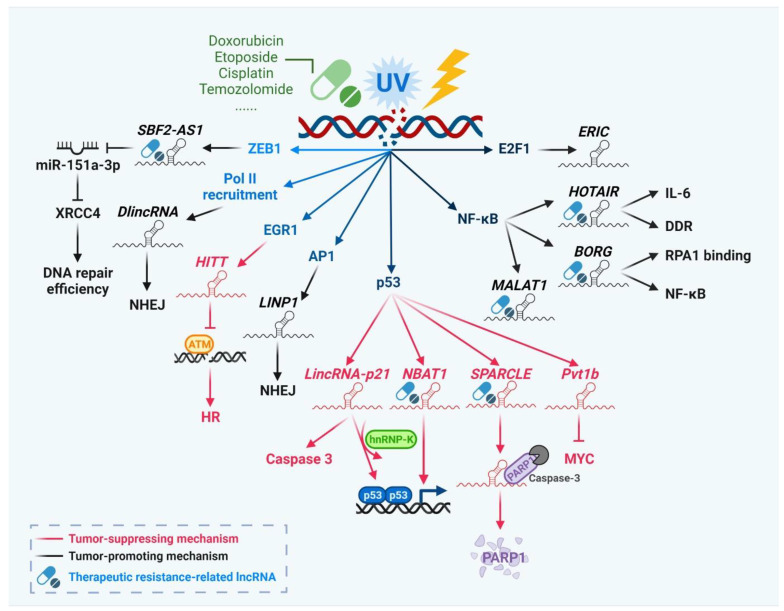
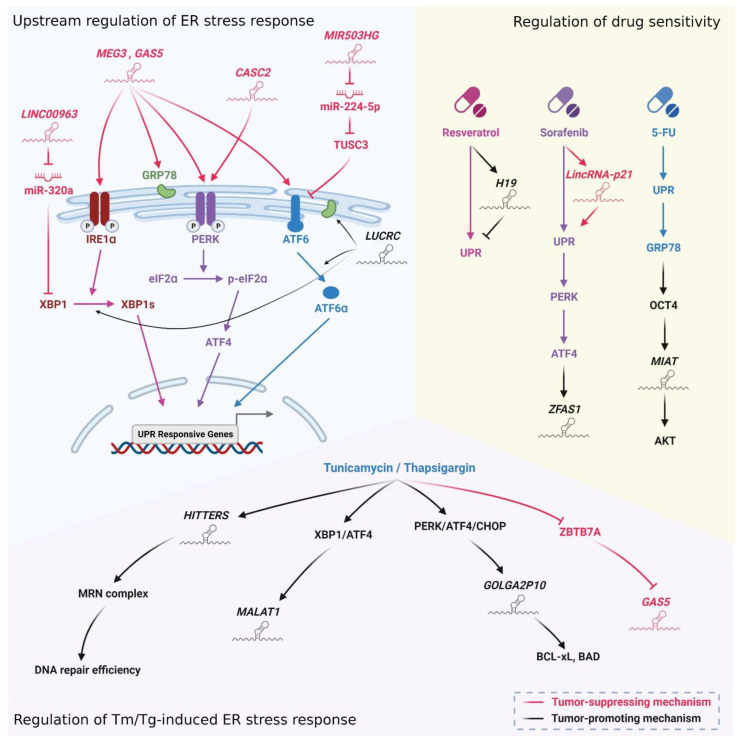
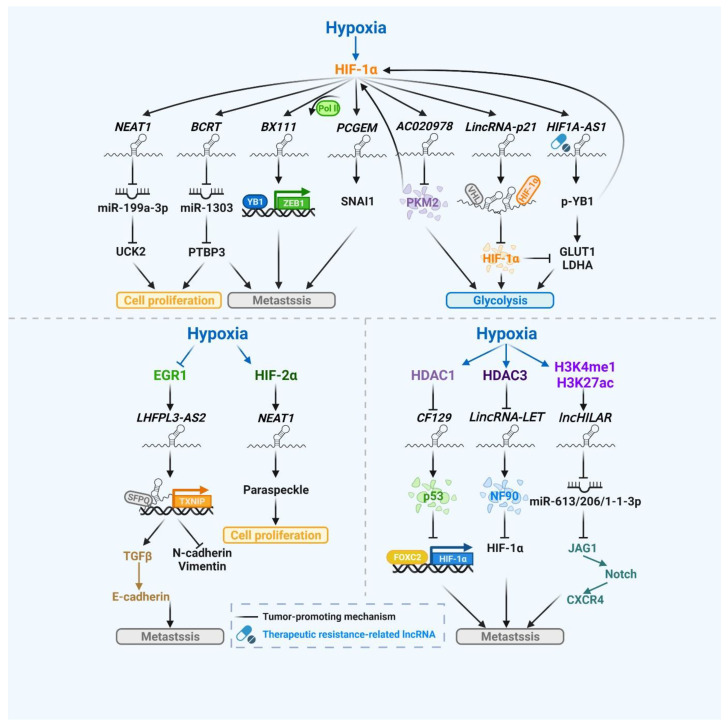
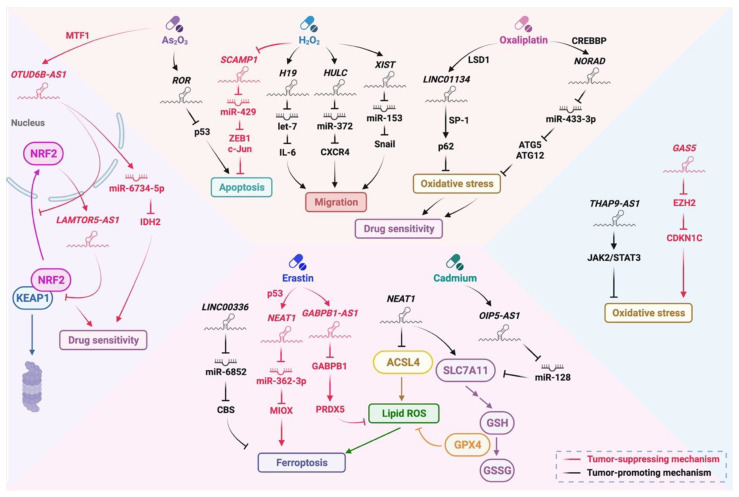
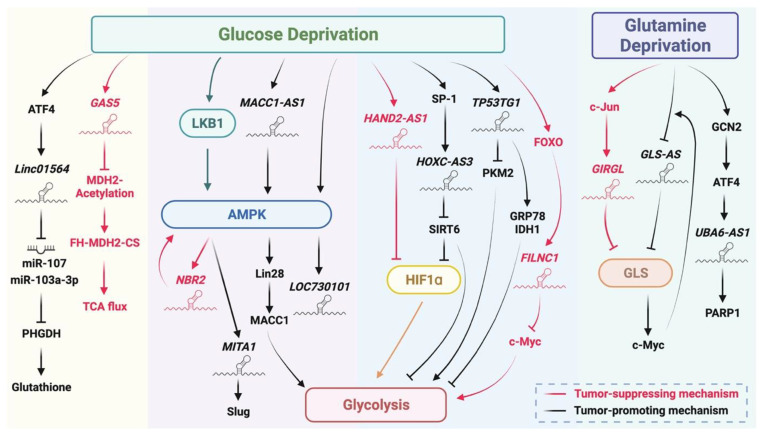
Cellular stress response is an important adaptive mechanism for regulating cell fate decision when cells confront with stress. During tumorigenesis, tumor progression and the course of treatment, cellular stress signaling can activate subsequent response to deal with stress. Therefore, cellular stress response has impacts on the fate of tumor cells and tumor responsiveness relative to therapeutic agents. In recent years, attention has been drawn to long non-coding RNAs (lncRNAs), a novel class of RNA molecules with more than 200 nucleotides in length, which has little protein-coding potential and possesses various functions in multiple biological processes. Accumulating evidence has shown that lncRNAs are also engaged in the regulation of cellular stress response, particularly in cancers. Here, we summarize lncRNAs that have been reported in the adaptive response to major types of cellular stress including genotoxic, hypoxic, oxidative, metabolic and endoplasmic reticulum stress, all of which are often encountered by cancer cells. Specifically, the molecular mechanisms of how lncRNAs regulate cellular stress response during tumor progression or the development of therapy resistance are emphasized. The potential clinical applications of stress-responsive lncRNAs as biomarkers will also be discussed.
细胞应激反应是细胞在面对应激时调节细胞命运决定的重要适应性机制。在肿瘤发生、肿瘤进展及治疗过程中,细胞应激信号可激活后续反应以应对应激。因此,细胞应激反应影响肿瘤细胞的命运以及肿瘤对治疗药物的反应性。近年来,长链非编码RNA(lncRNA)受到关注,它是一类新型RNA分子,长度超过200个核苷酸,几乎没有蛋白质编码潜能,在多种生物学过程中具有多种功能。越来越多的证据表明,lncRNA也参与细胞应激反应的调控,尤其是在癌症中。在此,我们总结了在对主要类型细胞应激(包括基因毒性、缺氧、氧化、代谢和内质网应激)的适应性反应中已报道的lncRNA,这些应激在癌细胞中经常遇到。具体而言,重点阐述了lncRNA在肿瘤进展或治疗耐药性发展过程中调节细胞应激反应的分子机制。还将讨论应激反应性lncRNA作为生物标志物的潜在临床应用。