Cho Eun Ju, Yu Su Jong, Lee Yun Bin, Lee Jeong-Hoon, Kim Yoon Jun, Yoon Jung-Hwan
Department of Internal Medicine and Liver Research Institute, Seoul National University College of Medicine, Seoul 03080, Korea.
Diagnostics (Basel). 2022 May 7;12(5):1170. doi: 10.3390/diagnostics12051170.
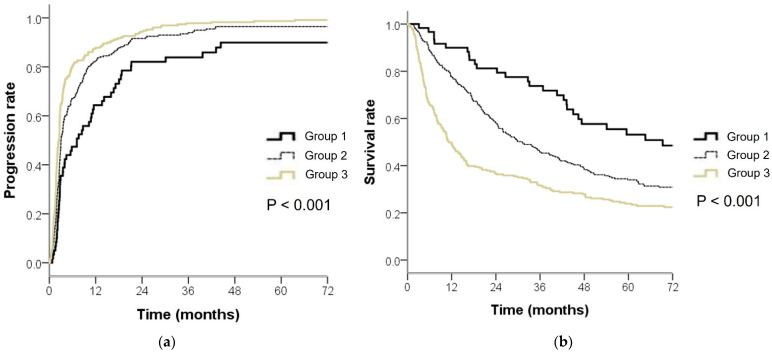
Background: Inflammation is a key feature shaping the microenvironment of hepatocellular carcinoma (HCC), and liver fibrosis is associated with the prognosis of patients with HCC. In this study, we investigated whether baseline inflammation-based scores and serum fibrosis markers can help in predicting the prognosis of HCC patients treated with transarterial chemoembolization (TACE). Methods: A total of 605 consecutive patients with HCC treated by TACE were included. The systemic immune-inflammation index (SII), neutrophil−lymphocyte ratio (NLR), platelet−lymphocyte ratio (PLR), FIB-4 index, and aspartate aminotransferase-to-platelet ratio index (APRI) were analyzed regarding their associations with disease progression and survival. Results: All tested inflammation-based scores and fibrosis markers were significantly associated with tumor progression and overall survival in the univariate analyses. In the multivariate analysis, NLR (hazard ratio [HR], 1.06; p = 0.007) and FIB-4 (HR = 1.02, p = 0.008) were independent risk factors for disease progression, along with α-fetoprotein (AFP) levels, maximum tumor size and number, and presence of vascular invasion. Furthermore, NLR (HR, 1.09; p < 0.001) and FIB-4 (HR, 1.02; p = 0.02) were independent prognostic factors for survival. Conclusions: High baseline NLR and FIB-4 levels might help the prediction of disease progression and death in patients with HCC after TACE.
炎症是塑造肝细胞癌(HCC)微环境的关键特征,肝纤维化与HCC患者的预后相关。在本研究中,我们调查了基于基线炎症的评分和血清纤维化标志物是否有助于预测经动脉化疗栓塞术(TACE)治疗的HCC患者的预后。方法:纳入605例连续接受TACE治疗的HCC患者。分析全身免疫炎症指数(SII)、中性粒细胞与淋巴细胞比值(NLR)、血小板与淋巴细胞比值(PLR)、FIB-4指数和天冬氨酸转氨酶与血小板比值指数(APRI)与疾病进展和生存的相关性。结果:在单因素分析中,所有检测的基于炎症的评分和纤维化标志物均与肿瘤进展和总生存显著相关。在多因素分析中,NLR(风险比[HR],1.06;p = 0.007)和FIB-4(HR = 1.02,p = 0.008)是疾病进展的独立危险因素,同时还有甲胎蛋白(AFP)水平、最大肿瘤大小和数量以及血管侵犯情况。此外,NLR(HR,1.09;p < 0.001)和FIB-4(HR,1.02;p = 0.02)是生存的独立预后因素。结论:高基线NLR和FIB-4水平可能有助于预测TACE术后HCC患者的疾病进展和死亡。