Khan Asiya, Milne-Ives Madison, Meinert Edward, Iyawa Gloria E, Jones Ray B, Josephraj Alex N
School of Engineering, Computing and Mathematics, University of Plymouth, Plymouth, UK.
Centre for Health Technology, University of Plymouth, Plymouth, UK.
Biomed Eng Comput Biol. 2022 May 24;13:11795972221102115. doi: 10.1177/11795972221102115. eCollection 2022.
Digital Twins (DTs), virtual copies of physical entities, are a promising tool to help manage and predict outbreaks of Covid-19. By providing a detailed model of each patient, DTs can be used to determine what method of care will be most effective for that individual. The improvement in patient experience and care delivery will help to reduce demand on healthcare services and to improve hospital management.
The aim of this study is to address 2 research questions: (1) How effective are DTs in predicting and managing infectious diseases such as Covid-19? and (2) What are the prospects and challenges associated with the use of DTs in healthcare?
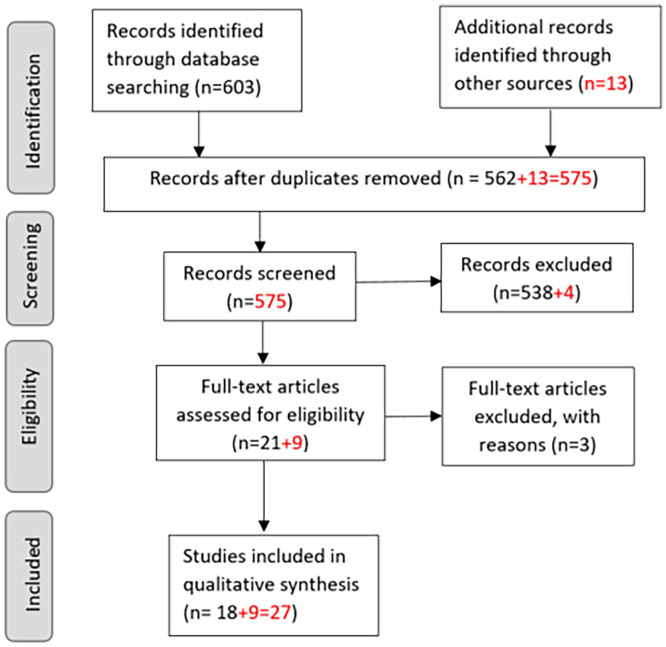
The review was structured according to the Preferred Reporting Items for Systematic Reviews and Meta-Analyses Extension for Scoping Reviews (PRISMA-ScR) framework. Titles and abstracts of references in PubMed, IEEE Xplore, Scopus, ScienceDirect and Google Scholar were searched using selected keywords (relating to digital twins, healthcare and Covid-19). The papers were screened in accordance with the inclusion and exclusion criteria so that all papers published in English relating to the use of digital twins in healthcare were included. A narrative synthesis was used to analyse the included papers.
Eighteen papers met the inclusion criteria and were included in the review. None of the included papers examined the use of DTs in the context of Covid-19, or infectious disease outbreaks in general. Academic research about the applications, opportunities and challenges of DT technology in healthcare in general was found to be in early stages.
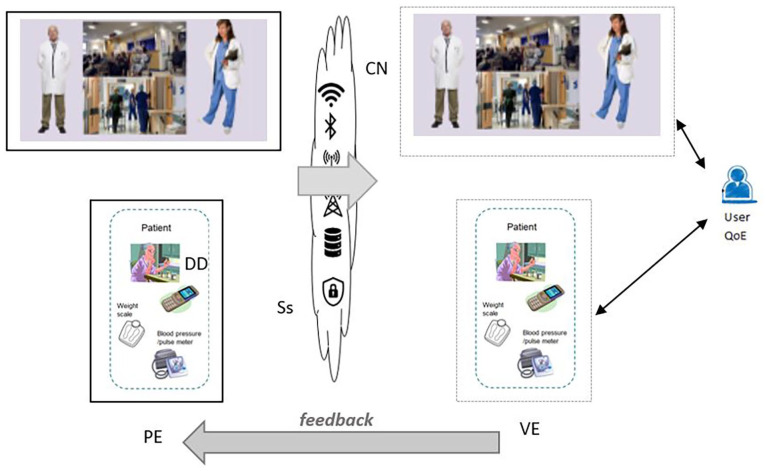
The review identifies a need for further research into the use of DTs in healthcare, particularly in the context of infectious disease outbreaks. Based on frameworks identified during the review, this paper presents a preliminary conceptual framework for the use of DTs for hospital management during the Covid-19 outbreak to address this research gap.
数字孪生(DTs)作为物理实体的虚拟副本,是一种有助于管理和预测新冠疫情爆发的有前景的工具。通过提供每个患者的详细模型,数字孪生可用于确定对该个体最有效的护理方法。患者体验和护理服务的改善将有助于减少对医疗服务的需求并改善医院管理。
本研究旨在解决两个研究问题:(1)数字孪生在预测和管理新冠等传染病方面的效果如何?(2)在医疗保健中使用数字孪生相关的前景和挑战是什么?
该综述按照系统评价和元分析扩展的首选报告项目框架(PRISMA-ScR)进行构建。使用选定的关键词(与数字孪生、医疗保健和新冠相关)在PubMed、IEEE Xplore、Scopus、ScienceDirect和谷歌学术中搜索参考文献的标题和摘要。根据纳入和排除标准对论文进行筛选,以便纳入所有以英文发表的与数字孪生在医疗保健中的应用相关的论文。采用叙述性综合分析纳入的论文。
18篇论文符合纳入标准并被纳入综述。没有一篇纳入的论文研究了数字孪生在新冠疫情背景下或一般传染病爆发中的应用。发现关于数字孪生技术在医疗保健中的应用、机会和挑战的学术研究总体上尚处于早期阶段。
该综述表明需要进一步研究数字孪生在医疗保健中的应用,特别是在传染病爆发的背景下。基于综述过程中确定的框架,本文提出了一个在新冠疫情期间使用数字孪生进行医院管理的初步概念框架,以填补这一研究空白。