Fan Hui, He Yujia, Xiang Junqi, Zhou Jing, Wan Xinyan, You Jiawei, Du Kailong, Li Yue, Cui Lin, Wang Yitao, Zhang Chundong, Bu Youquan, Lei Yunlong
Department of Biochemistry and Molecular Biology, and Molecular Medicine and Cancer Research Center, College of Basic Medical Sciences, Chongqing Medical University, Chongqing, 400016, China.
Department of Laboratory Medicine, Sichuan Provincial People's Hospital, University of Electronic Science and Technology of China, 610041, PR China; State Key Laboratory of Biotherapy and Cancer Center, West China Hospital, and West China School of Basic Medical Sciences & Forensic Medicine, Sichuan University, and Collaborative Innovation Center for Biotherapy, Chengdu, 610041, PR China.
Redox Biol. 2022 Jul;53:102339. doi: 10.1016/j.redox.2022.102339. Epub 2022 May 17.
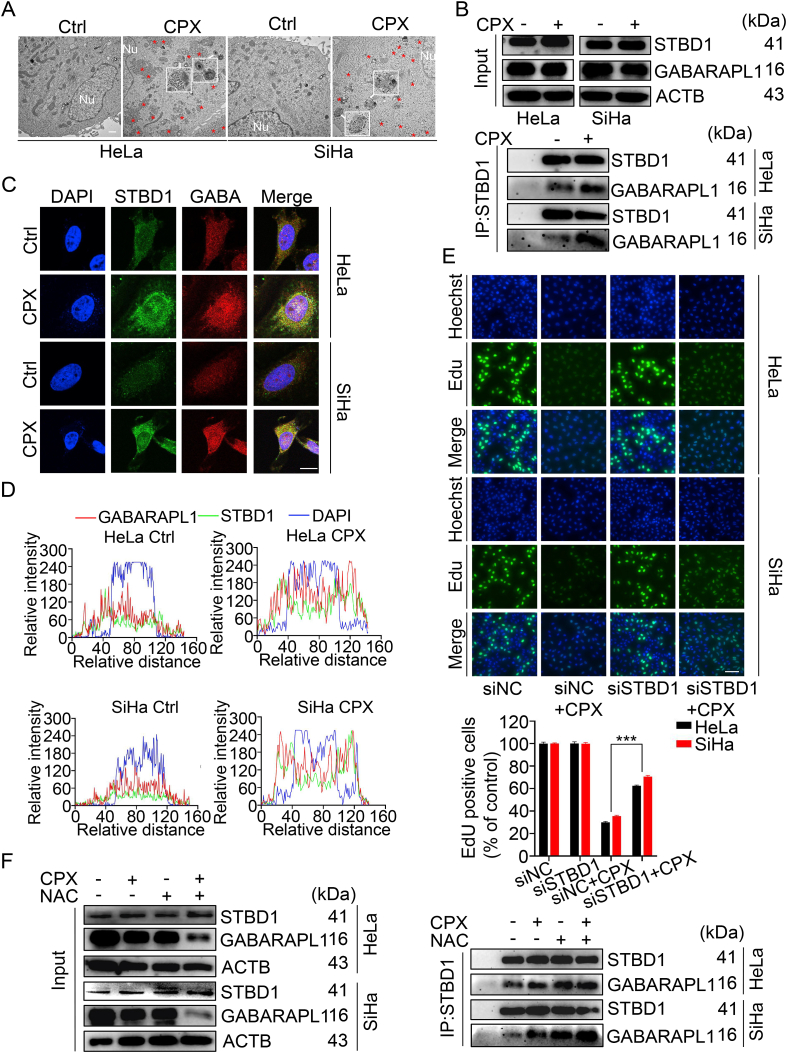
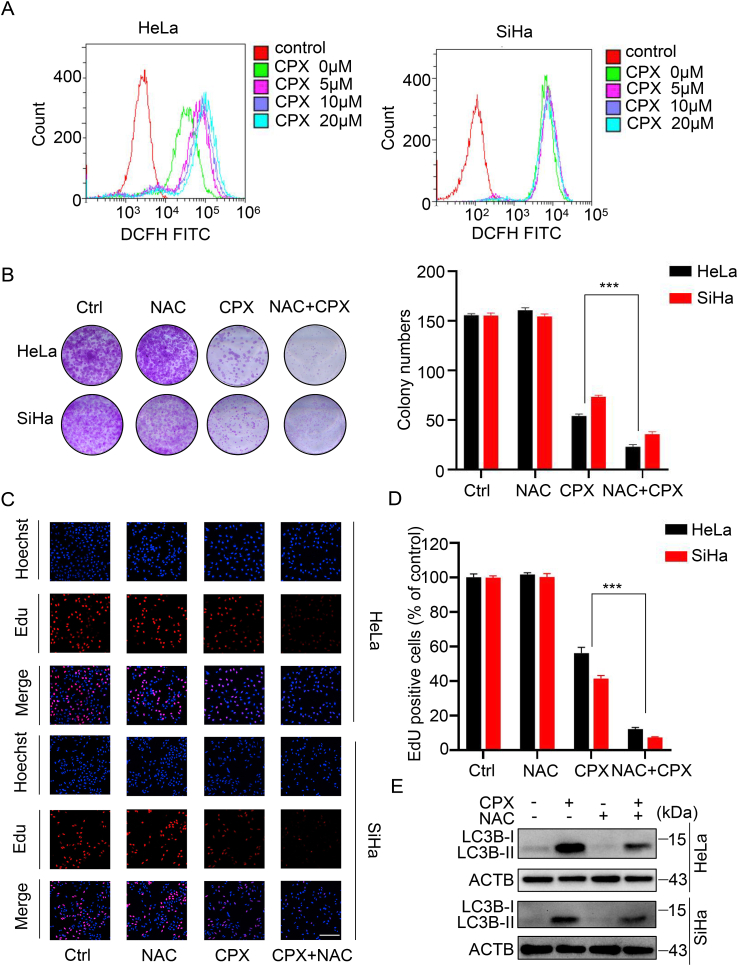
Cervical cancer is one of the most common gynecological malignancies with poor prognosis due to constant chemoresistance and repeated relapse. Ciclopirox olamine (CPX), a synthetic antifungal agent, has recently been identified to be a promising anti-cancer candidate. However, the detailed mechanisms related to its anti-cancer effects remain unclear and need to be further elucidated. In this study, we found that CPX could induce proliferation inhibition in cervical cancer cells by targeting PARK7. Further results demonstrated that CPX could induce cytoprotective autophagy by downregulating the expression of PARK7 to activate PRKAA1 or by PARK7-independent accumulation of ROS to inhibit mTOR signaling. Meanwhile, CPX treatment increased the glycogen clustering and glycophagy in cervical cancer cells. The presence of N-acetyl-l-cysteine (NAC), a ROS scavenger, led to further clustering of glycogen in cells by reducing autophagy and enhancing glycophagy, which promoted CPX-induced inhibition of cervical cancer cell proliferation. Together, our study provides new insights into the molecular mechanisms of CPX in the anti-cancer therapy and opens new avenues for the glycophagy in cancer therapeutics.
宫颈癌是最常见的妇科恶性肿瘤之一,由于持续的化疗耐药性和反复复发,其预后较差。环吡酮胺(CPX)是一种合成抗真菌剂,最近被确定为一种有前景的抗癌候选药物。然而,与其抗癌作用相关的详细机制仍不清楚,需要进一步阐明。在本研究中,我们发现CPX可通过靶向PARK7诱导宫颈癌细胞增殖抑制。进一步的结果表明,CPX可通过下调PARK7的表达以激活PRKAA1或通过与PARK7无关的活性氧(ROS)积累来抑制mTOR信号传导,从而诱导细胞保护性自噬。同时,CPX处理增加了宫颈癌细胞中的糖原聚集和糖自噬。活性氧清除剂N-乙酰-L-半胱氨酸(NAC)的存在,通过减少自噬和增强糖自噬导致细胞内糖原进一步聚集,从而促进CPX诱导的宫颈癌细胞增殖抑制。总之,我们的研究为CPX在抗癌治疗中的分子机制提供了新的见解,并为癌症治疗中的糖自噬开辟了新途径。